
U.S. and Japan Join Forces to Support Yen After Historic Currency Slump
The United States has joined Japan in a rare coordinated intervention to support the Japanese yen, marking the first joint currency operation between the two countries since 1998 as policymakers seek to stabilize financial markets and prevent broader economic disruptions.
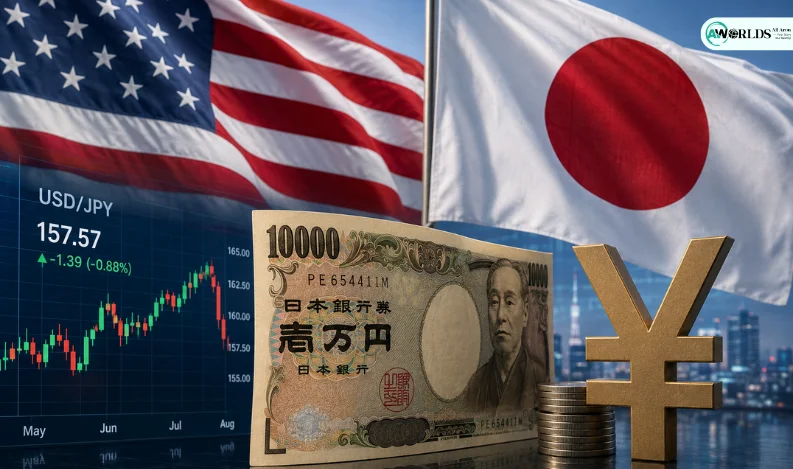
The move came after the yen weakened to 163.73 per U.S. dollar last week, its lowest level in nearly four decades, before rebounding sharply to around 157.57 following the intervention.
The coordinated action is widely viewed as one of the most significant currency market interventions in recent years, reflecting growing concerns over the stability of global bond markets and Japan's financial system.
Market analysts said Washington's participation was driven not only by currency concerns but also by the potential impact on the U.S. Treasury market.
Japan remains the largest foreign holder of U.S. government debt, and a unilateral intervention by Tokyo could have required large-scale sales of U.S. Treasury securities to finance currency purchases, potentially disrupting global bond markets.
To reduce that risk, Japanese authorities announced plans to rely on the Federal Reserve's Foreign and International Monetary Authorities (FIMA) Repo Facility, allowing Japan to obtain U.S. dollar liquidity without selling its Treasury holdings.
Economists said the decision sends a strong signal that both governments are committed to maintaining financial stability while minimizing volatility in global debt markets.
The intervention also highlights strengthening economic cooperation between Washington and Tokyo.
Analysts noted that the U.S. has repeatedly argued that the yen has become significantly undervalued, making Japanese exports more competitive in international markets. Supporting the currency could therefore help address trade imbalances while giving the Bank of Japan (BOJ) additional time to continue normalizing monetary policy.
Despite the immediate recovery in the yen, experts cautioned that intervention alone is unlikely to reverse the currency's long-term weakness.
Many believe the yen's future direction will depend largely on Japan's interest-rate policy, bond market conditions and broader investor confidence rather than repeated government intervention.
Financial markets reacted positively to the coordinated move, with investors viewing the joint action as a sign of stronger policy coordination between two of the world's largest economies.
However, analysts warned that without sustained improvements in Japan's monetary and fiscal outlook, the effects of the intervention may prove temporary.
The operation marks the first coordinated yen-buying effort between the United States and Japan in nearly three decades and underscores growing concerns among policymakers over the impact of currency volatility on global financial markets.
More News:-







Recent Comments:
No comments yet.