
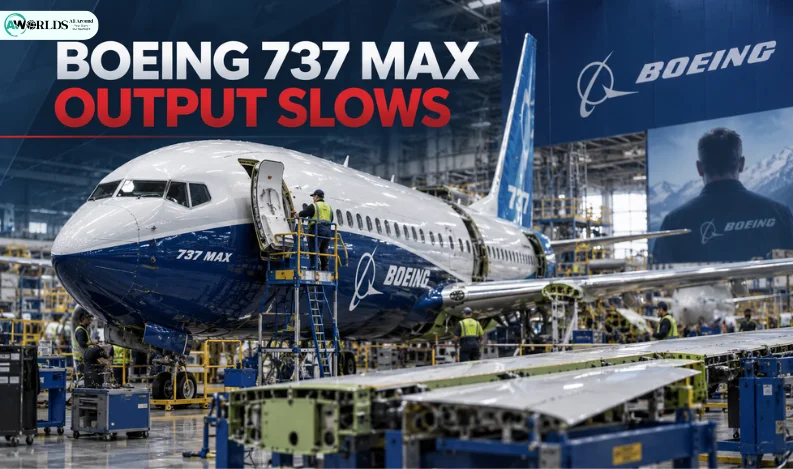
Boeing CEO: 737 MAX Production Taking ‘A Little Bit Longer’ to Stabilize
Boeing CEO Kelly Ortberg said the company is taking longer than expected to stabilize production of its popular 737 MAX aircraft, highlighting another challenge for the U.S. planemaker as it works to improve deliveries and strengthen its finances.
Ortberg said Boeing is still working toward a production rate of 47 737 MAX jets per month, but the company has not yet been able to consistently reach that level. Boeing's shares fell about 4% on Wednesday after the comments, reflecting investor concerns over the slower production recovery.
Wing Production Remains a Key Bottleneck
According to Ortberg, one of the biggest issues is Boeing's ability to produce enough 737 wings to support the higher assembly rate.
The company also needs to complete certification of its new 737 production line at Everett, Washington, before it can move toward an even higher rate. Boeing is targeting 52 737 aircraft per month next year, assuming the production system and supply chain can support the increase.
The delays show how difficult it can be to increase aircraft production even when airlines are placing strong orders and manufacturers have large backlogs.
737 MAX Output Is Critical to Boeing’s Recovery
The 737 program is particularly important to Boeing's financial recovery.
The company has been dealing with years of production disruptions, quality-related challenges and financial pressure. Boeing's net debt remains close to $26 billion, making the cash generated from aircraft deliveries especially important.
Increasing 737 production allows Boeing to deliver more aircraft, collect payments from customers and gradually improve its financial position.
Boeing had previously raised its 737 production rate to 42 aircraft per month, according to its earlier financial disclosures, as it worked toward higher output.
787 Dreamliner Also Faces Delays
The production challenges are not limited to the 737 MAX.
Boeing is also trying to increase production of the 787 Dreamliner from eight aircraft per month to 10. Ortberg said that process is taking longer than expected because of engine shortages, while certification of premium seats has also affected deliveries.
That means Boeing could see uneven 787 deliveries from month to month even if production continues at around eight aircraft per month.
The combined delays in the 737 and 787 programs are making Boeing's financial recovery more gradual than investors had hoped.
Free Cash Flow Outlook Comes Under Pressure
Slower production growth is also affecting Boeing's cash-flow expectations.
Chief Financial Officer Jay Malave said the company is now likely to generate around $2 billion in free cash flow, near the midpoint of its guidance, rather than reaching the upper end of about $3 billion.
For Boeing, improving free cash flow is important because the company needs to reduce debt while continuing to invest in production capacity, new aircraft programs and operational improvements.
737-10 Certification Nears Another Milestone
There is some positive news within the 737 program.
Ortberg said certification of the 737-10, the largest variant of the MAX family, is expected “very soon.” The aircraft has been significantly delayed, but it represents roughly 30% of Boeing's 737 orders, making its certification important for both Boeing and its airline customers.
The smaller 737-7 received U.S. regulatory certification in August, clearing another MAX variant for commercial service.
The arrival of additional certified variants could give Boeing more flexibility in meeting airline demand, provided production capacity continues to improve.
Large Order Book Provides Support
Despite the manufacturing challenges, Boeing continues to benefit from strong airline demand.
The company's commercial aircraft backlog stood at more than 6,100 aircraft at the end of 2025, according to Boeing, providing substantial visibility for future production.
The challenge is therefore not simply finding customers. Boeing must turn its huge order book into deliveries while maintaining quality, managing suppliers and increasing output at a sustainable pace.
China Expectations Remain Uncertain
Ortberg also played down expectations that China could announce a major Boeing order during the upcoming meeting between U.S. President Donald Trump and Chinese President Xi Jinping.
China had previously committed to purchase 200 Boeing aircraft during a meeting between the two leaders in May, according to Reuters.
A new order could provide another boost to Boeing's commercial business, but the CEO's cautious comments suggest the company is not relying on an immediate announcement to improve its outlook.
Boeing’s Production Recovery Remains a Work in Progress
The latest update illustrates the complicated nature of Boeing's turnaround.
Demand for its aircraft remains strong, and the company has a huge backlog of orders. But production increases are being slowed by supply-chain constraints, certification work and the need to stabilize manufacturing systems.
For now, Boeing is focused on reaching the 47-jet monthly 737 MAX target consistently before moving toward 52 aircraft per month next year.
The slower-than-expected ramp-up may delay some of the financial benefits investors were hoping for, but the company continues to work toward a more stable production system. Whether Boeing can successfully increase output while maintaining quality will remain one of the most important tests of its recovery in the months ahead.
More News:-





Recent Comments:
No comments yet.