
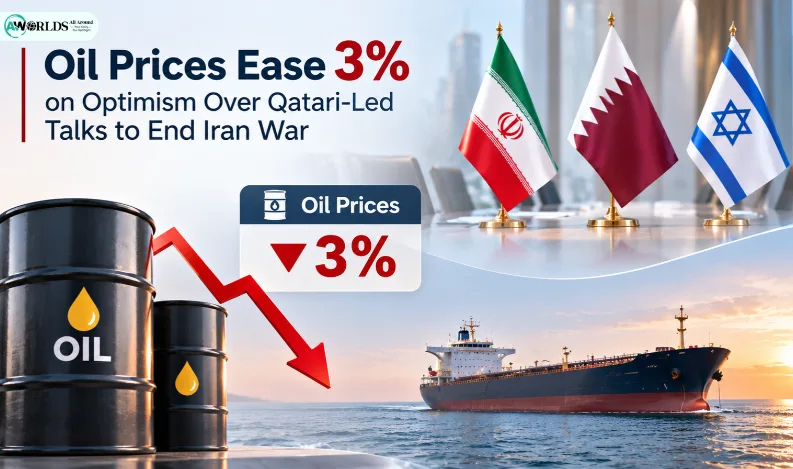
Oil Prices Ease 3% on Optimism Over Qatari-Led Talks to End Iran War
Global oil prices fell more than 3% on November 2, 2026, as investors responded to renewed diplomatic efforts involving Iran and Qatar aimed at ending the ongoing US-Israeli war on Iran. Hopes of progress in negotiations eased immediate concerns about further disruptions to global energy supplies.
Brent crude futures dropped $3.68, or 3.2%, to $109.75 per barrel, while US West Texas Intermediate (WTI) declined $3.43, or 3.3%, to $100.69 by 0407 GMT. The decline followed a strong rally in October, when Brent reached its highest level in six months.
Qatari Mediation Raises Hopes of De-escalation
Iranian and Qatari officials held a third consecutive day of discussions as diplomatic efforts continued to find a path towards ending the conflict. Iranian Foreign Minister Abbas Araqchi described the consultations as ongoing and progressing, while indicating that Tehran remained prepared for both diplomacy and defence.
Qatar has been playing a mediating role in efforts to reduce regional tensions and support discussions between the parties involved. The possibility of diplomatic progress has encouraged some traders to reduce their exposure to oil amid expectations that a settlement could eventually ease supply disruptions.
Market analysts also pointed to the absence of major military escalation over the weekend as a factor behind the decline.
Strait of Hormuz Remains a Major Concern
Despite the improved diplomatic outlook, uncertainty surrounding the Strait of Hormuz continues to influence energy markets. The waterway is one of the world's most important oil transportation routes, connecting major Middle Eastern producers with international markets.
Attacks on oil tankers passing through the region have increased shipping costs and heightened concerns about the reliability of global energy supplies. Any further disruption could quickly reverse the recent decline in crude prices.
Analysts have also warned that tensions could rise again following the US midterm elections scheduled for November 3, potentially pushing Brent crude towards $120 per barrel.
OPEC+ Keeps December Production Targets Unchanged
The Organization of the Petroleum Exporting Countries and its allies, known as OPEC+, decided to maintain production targets for December. The decision was broadly in line with market expectations as the group continues to face challenges linked to export disruptions caused by the conflict.
The unchanged production policy means that additional supply increases are not currently expected to provide immediate relief to the market.
Oil Market Outlook Remains Uncertain
The latest price decline reflects changing expectations around diplomacy rather than a confirmed resolution to the conflict. Traders will continue monitoring negotiations, developments around the Strait of Hormuz and any changes in regional military activity.
For energy-importing economies, sustained lower oil prices could reduce fuel-import costs and ease inflationary pressure. However, the market remains highly sensitive to geopolitical developments, making the direction of crude prices uncertain in the coming weeks.
More News:-






Recent Comments:
No comments yet.