
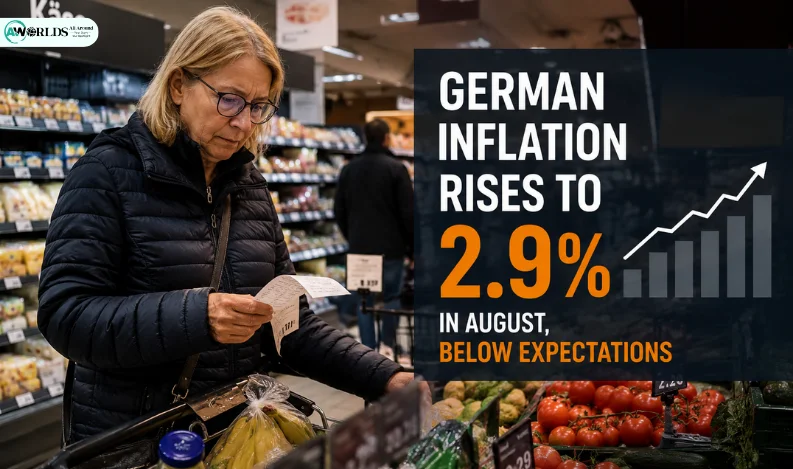
German Inflation Rises to 2.9% in August, Below Expectations
Germany's inflation rate rose again in August, but the increase was smaller than economists had expected. Consumer prices were 2.9% higher than a year earlier, up from 2.8% in July, according to preliminary data from Germany's Federal Statistical Office.
The latest figure remains above the European Central Bank's 2% inflation target, but it came in below the roughly 3.1% expected by economists. The softer-than-expected reading offers some relief to policymakers as they prepare for their next monetary policy decision.
Energy Prices Drive Inflation Higher
Energy costs were the biggest source of pressure in August. Energy prices were 10.5% higher than a year earlier, accelerating from an 8.3% increase in July. Rising oil and gas prices have added to household and business costs, particularly amid renewed tensions in the Middle East.
For consumers, higher energy prices can quickly feed into everyday expenses, from transport and heating to the cost of goods produced and delivered across the country.
Core Inflation Remains Relatively Stable
Despite the increase in headline inflation, underlying price pressures showed fewer signs of acceleration. Core inflation, which excludes food and energy, remained at 2.4% in August, while services inflation eased to 2.8% from 2.9% in July. Food prices rose only 0.1% compared with a year earlier.
That stability is important for policymakers because it suggests that the recent energy shock has not yet spread strongly across the wider economy.
ECB Faces a Difficult Balancing Act
The figures arrive just days before the European Central Bank's September policy meeting. While inflation remains above target, the weaker-than-expected German reading could reduce some pressure for a more aggressive response.
At the same time, continued increases in energy prices could keep inflation elevated in the months ahead. Economists are therefore watching closely to see whether the current energy shock remains temporary or begins to affect other parts of the economy.
Germany's final August inflation figures are scheduled to be released on September 10, 2026. Until then, the latest data offer a mixed picture: inflation is moving higher, but broader price pressures remain relatively contained.
More News:-







Recent Comments:
No comments yet.