
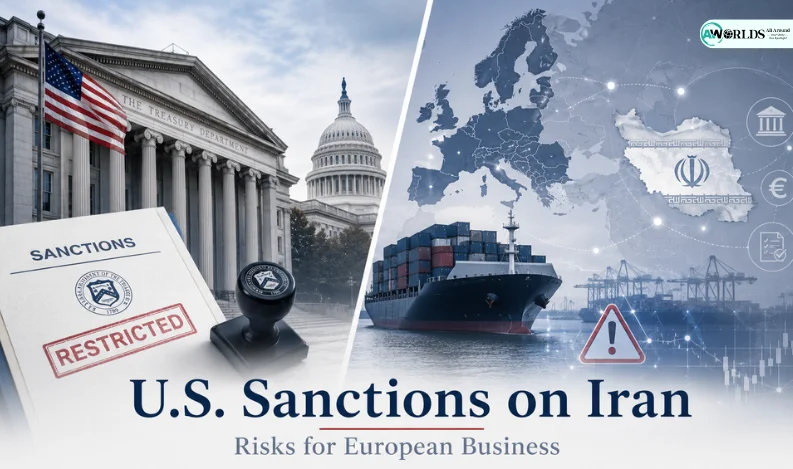
New U.S. Sanctions on Iran Raise Compliance Risks for European Businesses
European companies face increased compliance and financial risks after the United States sharply expanded its sanctions campaign against Iran, broadening the range of sectors in which foreign firms could face penalties for continuing certain dealings with Tehran.
The U.S. Treasury launched Operation Economic Outcast on August 24, widening secondary sanctions exposure across Iran-linked activities and targeting nearly 60 companies, individuals and vessels operating in several jurisdictions.
The measures expand Washington's ability to impose sanctions on foreign companies involved in five additional sectors of the Iranian economy: digital assets, technology, gold, aviation and shipping.
Those sectors join existing U.S. restrictions covering areas including Iran's financial, petroleum and petrochemical industries.
The Treasury said foreign entities that facilitate sanctions evasion or money laundering for Iran could risk losing access to the U.S. financial system.
Treasury Secretary Scott Bessent said Washington is also engaging governments around the world and expects action against Iran-related activities identified by U.S. authorities.
European trade exposure remains limited
The direct impact on European exporters is likely to be contained by the relatively small volume of trade that remains between the European Union and Iran.
Total EU-Iran trade in goods stood at about €3.7 billion in 2025, according to European Commission data. EU exports to Iran were worth approximately €3 billion, while imports from Iran amounted to about €800 million.
That represents only a small share of the European Union's overall international trade.
However, the wider implications of the U.S. measures extend beyond companies selling products directly to Iranian customers.
Banks, insurers, shipping groups, technology providers and commodity traders can face exposure through transactions involving intermediaries, vessels, financial institutions or other counterparties later identified by U.S. authorities.
The latest sanctions therefore increase the importance of screening customers, payment routes, ownership structures and supply chains for potential Iran-related links.
Banks and shipping companies face heightened scrutiny
Financial institutions are among the businesses most exposed to secondary sanctions because of their dependence on international payment networks and access to U.S. dollar clearing.
The Treasury said any entity facilitating money laundering or sanctions evasion on behalf of Iran risks being cut off from the American financial system.
Shipping companies also face greater scrutiny.
Washington has expanded its ability to sanction foreign parties operating in or providing services to Iran's shipping sector, alongside aviation and other industries.
The U.S. Treasury has previously targeted shipping networks, tanker operators and companies accused of helping Iran move oil or other goods through third countries.
For European businesses, this means transactions that do not initially appear to involve Iran directly may still create compliance risks if vessels, owners, intermediaries or financial channels have connections to sanctioned entities.
European companies face competing legal obligations
The expanded U.S. sanctions also revive a long-running legal challenge for European businesses.
The European Union maintains a Blocking Statute designed to protect EU companies from the extraterritorial application of certain foreign sanctions, including specified U.S. measures concerning Iran.
The rules generally prohibit EU operators from complying with listed foreign sanctions unless the European Commission grants authorisation in specific circumstances.
The framework also allows European companies to seek recovery of damages caused by the application of covered foreign measures.
In practice, however, companies operating internationally must also consider the commercial consequences of losing access to U.S. markets, banks or dollar-denominated transactions.
The result can leave multinational businesses balancing European legal requirements against the potential financial consequences of U.S. enforcement.
Compliance burden expected to increase
The immediate impact of the latest measures is therefore expected to be felt most strongly in corporate compliance departments rather than through a sudden collapse in European exports to Iran.
Businesses with operations in shipping, finance, logistics, energy, technology and commodities are likely to conduct more extensive checks on counterparties and transactions as Washington accelerates enforcement.
Companies may also review indirect exposure through subsidiaries, suppliers and customers in countries that maintain larger trading relationships with Iran.
The U.S. Treasury said its August 24 action marks the beginning of a sustained campaign and warned that enforcement could intensify against businesses and financial institutions that continue activities covered by the expanded sanctions framework.
For most European companies, direct commercial exposure to Iran remains relatively small.
The greater risk lies in the global reach of the sanctions regime, and in whether an otherwise routine international transaction creates an unexpected connection to a sanctioned Iranian company, bank, vessel or intermediary.
More News:-







Recent Comments:
No comments yet.