
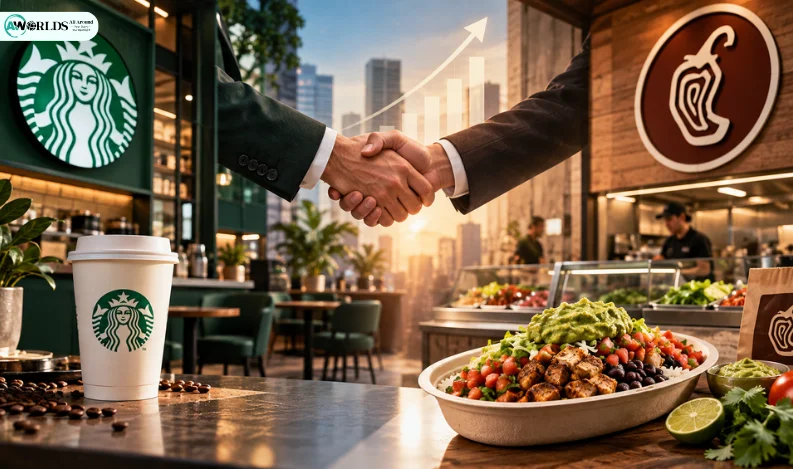
Why a Starbucks Takeover of Chipotle Would and Wouldn’t Make Sense for Both Companies
A potential takeover of Chipotle Mexican Grill by Starbucks has sparked questions about whether combining two major restaurant brands could create new growth opportunities. Although such a deal could offer strategic advantages, differences in their business models, customer experiences, and operational priorities could make a merger difficult to justify.
For now, the idea should be viewed as a strategic possibility rather than a confirmed acquisition. Any transaction would depend on the companies’ intentions, financial considerations,s and the potential benefits for shareholders.
Why Starbucks Could Benefit From a Chipotle Acquisition
Starbucks has built its business around coffee, beverages, es and quick customer visits, while Chipotle has established a strong position in the fast-casual dining market with customizable Mexican-inspired meals.
Acquiring Chipotle could give Starbucks access to a different customer segment and expand its presence beyond beverages and light food offerings. Chipotle's established menu, restaurant network, and brand recognition could provide Starbucks with another source of revenue and reduce its dependence on coffee sales.
The acquisition could also create opportunities to share expertise in digital ordering, loyalty programs, mobile applications, and customer engagement. Both companies have invested in technology to make ordering more convenient and encourage repeat visits.
How Chipotle Could Gain From the Deal
For Chipotle, becoming part of a larger restaurant group could create opportunities to benefit from Starbucks' experience in international expansion, supply-chain management,t and digital customer relationships.
Starbucks' established loyalty ecosystem and global footprint could offer potential advantages if the companies found ways to integrate selected services or expand into new markets.
However, Chipotle has developed its own brand identity around freshly prepared food, customizable meals, ls and a focused restaurant experience. Maintaining that identity would be important under any new ownership structure.
Why a Takeover Might Not Make Sense
Despite the possible advantages, combining the two companies would present significant challenges. Starbucks and Chipotle serve different customer needs and operate with distinct menus, restaurant formats, and staffing requirements.
Integrating their operations could be complicated, particularly if management attempted to combine supply chains, technology systems, or store-level processes. A transaction could also require a substantial financial commitment, potentially increasing debt or putting pressure on shareholder returns.
There is also the risk that management attention could shift away from thecompany's' existing priorities. Starbucks would need to demonstrate that acquiring a major food business would deliver greater value than investing in its own stores, products, and customer experience.
Regulatory and Financial Considerations
A deal of this scale would require careful financial evaluation and could attract regulatory scrutiny, depending on its structure and the markets involved. Investors would examine the purchase price, financing arrangements, expected cost savings,s and the time required to generate returns.
The companies would also need to consider whether their cultures and long-term strategies could work together without weakening either brand.
What It Could Mean for the Restaurant Industry
A Starbucks-Chipotle combination would represent a significant development in the restaurant sector, bringing together two well-known brands with different strengths. It could signal a broader effort to diversify revenue and build more resilient restaurant businesses, but the outcome would depend on execution rather than brand size alone.
Ultimately, a takeover could make sense if the financial benefits and strategic opportunities clearly outweighed the costs and integration risks. Without evidence of a confirmed proposal or a compelling business case, however, the idea remains speculative rather than an established corporate plan.
More News:-





Recent Comments:
No comments yet.