
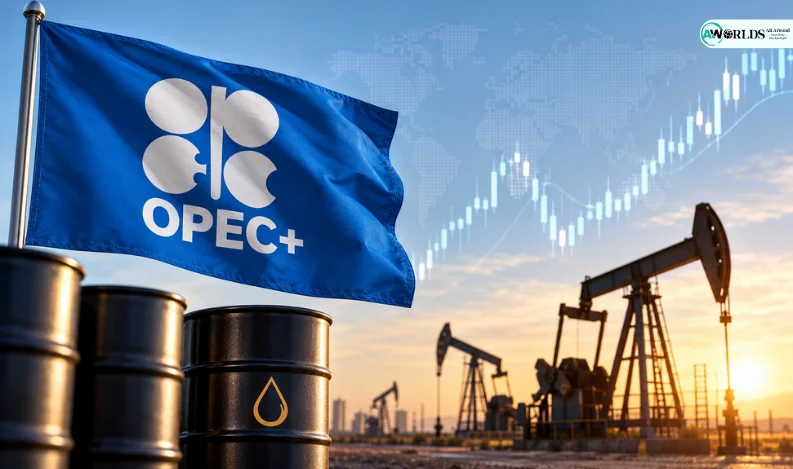
OPEC+ Holds November Oil Output Steady Amid Supply Uncertainty
OPEC+ has decided to keep its oil production targets unchanged for November, choosing caution as geopolitical tensions and disruptions to regional oil exports continue to create uncertainty in the global energy market.
Seven key OPEC+ producers, Saudi Arabia, Russia, Iraq, Kuwait, Kazakhstan, Algeria and Oman, reached the decision during a virtual meeting on October 4. The countries agreed to maintain their September 2026 required production levels for November.
OPEC+ Chooses Stability Over Another Output Change
The decision means there will be no additional increase or reduction in the group's November production targets.
OPEC+ said the move was based on its review of global market conditions and outlook. The producers also reaffirmed their commitment to maintaining market stability and complying with the group's broader production agreement.
The decision follows another month of steady production policy and reflects the group's cautious approach while the oil market faces unusually high geopolitical risks.
Middle East Disruptions Continue to Affect Supply
The oil market remains under pressure from disruptions linked to the conflict involving Iran, which have affected exports and shipping through the region.
Reuters reported that Gulf producers have continued to pump below their official quotas as exports remain disrupted, with shipments in recent months running at roughly 60% to 80% of normal levels. Although flows through the Strait of Hormuz have improved somewhat, supply remains constrained.
The situation has helped keep crude prices elevated, with Brent crude remaining above $100 a barrel despite some recent declines.
Production Capacity Review Delayed
Another factor influencing the decision is uncertainty over OPEC+'s planned review of members' oil-production capacity.
The review was originally expected to be completed by September, but the conflict in the Middle East has disrupted expansion projects and limited the ability of some producers to provide updated capacity information. Reuters reported that the assessment is now expected around mid-November.
The review is important because its findings will help determine 2027 production quotas and could affect how output is distributed among participating countries.
Oil Prices Remain Sensitive to Geopolitical Developments
Even with OPEC+ keeping its targets unchanged, oil prices remain highly sensitive to developments in the Middle East.
Brent recently moved above $100 a barrel as traders assessed disruptions to crude and refined-product supplies. At the same time, efforts by the Group of Seven and European countries to release emergency fuel stocks have helped limit some of the upward pressure on prices.
Saudi Arabia has also adjusted its pricing strategy. Saudi Aramco cut its November Arab Light official selling price for Asia by $3 a barrel to $5 above? No—the price was set at $5 a barrel, $3 lower than the previous month and its widest discount to the Oman-Dubai benchmark since June 2020.
Next OPEC+ Meeting Set for November 1
OPEC+ said its next meeting of the seven participating producers will take place on November 1, 2026, when members will again assess market conditions.
Until then, traders will be watching oil exports, shipping through key Middle Eastern routes and developments in the Iran conflict closely.
For consumers and businesses, the decision provides some near-term clarity, but it does not remove the supply risks hanging over the market. With Brent still trading at elevated levels and the 2027 capacity review delayed, the global oil outlook remains closely tied to both production policy and geopolitical developments.
More News:-






Recent Comments:
No comments yet.