
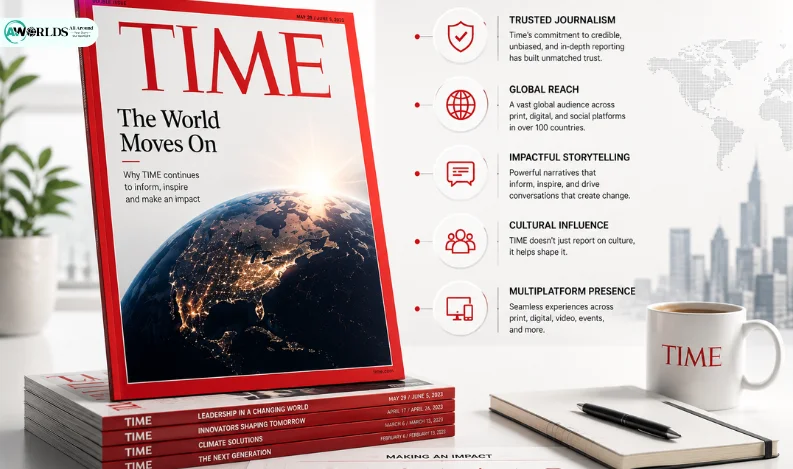
Why Is Time Magazine So Successful?
For nearly a century, Time magazine has stood as one of the most recognized, referenced, and influential periodicals in the world. From its bold red border to its iconic covers and incisive editorial voice, Time has become more than just a weekly magazine—it is a cultural institution. But what explains this enduring success in a constantly evolving media landscape?
While many publications have come and gone, Time has remained resilient, relevant, and reputable. Its success isn’t owed to a single factor, but rather a careful balance of editorial excellence, strong branding, adaptability, and an unshakable commitment to the timely delivery of global affairs.
Here’s a closer look at why Time magazine continues to thrive.
1. A Legacy of Credibility
From the beginning, Time established itself as a trustworthy source of information. Founded in 1923 by Briton Hadden and Henry Luce, the magazine positioned itself as a digestible summary of the week’s news, designed for readers who wanted to stay informed but didn’t have the time to sift through every newspaper.
This early positioning set the tone for the brand’s identity: concise, intelligent, and reliable. Over time, Time built a reputation for fact-based journalism, balanced commentary, and compelling storytelling, which cultivated a loyal readership that spans generations.
Unlike newer publications that often struggle to earn public trust, Time benefits from nearly a century of institutional credibility.
2. Editorial Excellence and Quality Journalism
Another reason behind Time’s ongoing success is its consistent editorial quality. From the sharpness of its prose to the integrity of its reporting, Time has long maintained a professional standard that resonates with both general audiences and intellectual readers.
Key editorial strengths include:
-
Deep investigative features
-
Concise global coverage
-
Balanced opinion columns
-
Engaging human-interest stories
-
A global perspective across politics, science, culture, and innovation
Many of Time’s articles are not just informative; they are thoughtful, well-researched, and presented with clarity and nuance. The magazine has never aimed to shock or sensationalize—its strength lies in its measured tone and comprehensive storytelling.
3. Powerful Visual Branding
Visually, Time is unmistakable. The iconic red border on the cover acts as a visual signature. In fact, the Time cover itself has become a cultural milestone—being featured on the cover is seen as a mark of global relevance or historical importance.
Some of the most powerful images in modern media—world leaders during crises, bold typographic statements, and haunting portraits of victims or heroes—have graced its cover.
In an age where attention spans are shrinking and readers are inundated with digital noise, Time’s instantly recognizable design ensures it doesn’t get lost in the crowd.
4. Timely and Global Coverage
The magazine’s very name—Time—promises relevance, and it delivers on that promise by covering current events with efficiency and global insight. Whether it’s a natural disaster, a political uprising, a major innovation in technology, or a cultural turning point, Time is often among the first and most thoughtful responders.
This immediacy, paired with an ability to contextualize news within broader historical or social narratives, gives readers both information and understanding.
Even when reporting on the same events as others, Time excels at connecting the dots, explaining why something matters—not just what happened.
5. Adaptation to Digital Media
While many traditional print magazines struggled to transition into the digital age, Time adapted relatively well. The magazine invested early in building a digital presence, expanding its readership through its website, mobile apps, and social media channels.
It offers a digital edition of the magazine, produces video content, and provides newsletters tailored to various interests. This has allowed Time to stay relevant across generations of readers—from baby boomers to Gen Z.
Its website is well-maintained and offers:
-
Real-time news updates
-
Archived magazine articles
-
Multimedia storytelling
-
Interactive graphics and data visualizations
The print version is still valued by many, but the online expansion ensured that Time didn’t become obsolete in the digital-first world.
6. High-Impact Special Features and Lists
Time is known not just for news reporting but for its annual lists and special editions, which have gained widespread recognition and anticipation.
Examples include:
-
Time 100 – The 100 most influential people in the world
-
Person of the Year – A tradition since 1927 that stirs global conversation
-
Best Inventions, Next Generation Leaders, and Women of the Year
These features go beyond listing names—they offer profiles, essays, and photography that celebrate influence, innovation, and change-making across industries and borders.
These lists have also become part of pop culture, often cited in conversations, social media, and news cycles.
7. Global Reach and Cultural Relevance
While headquartered in the United States, Time maintains a broad international focus. It reports from all corners of the globe and features leaders, issues, and innovations from various countries and cultures.
This internationalism helps it appeal to a global audience and ensures its relevance far beyond the American context. It also regularly includes global editions and region-specific content, allowing it to remain inclusive and diverse in its perspectives.
Moreover, Time does not merely reflect culture—it often shapes it. Through its interviews, profiles, and editorial choices, it highlights emerging voices, social movements, and global issues that might otherwise be underreported.
8. Editorial Independence and Integrity
In an era where media credibility is often under scrutiny, Time has maintained a relatively strong sense of editorial independence. Despite ownership changes—including its acquisition by Salesforce co-founder Marc Benioff and his wife Lynne—Time’s editorial decisions remain rooted in journalistic integrity rather than corporate interests.
This independence allows the magazine to tackle difficult or controversial topics without fear of reprisal, and it preserves the readers’ trust in its objectivity.
9. Intelligent Appeal to Both Print and Digital Readers
Time didn’t choose between print and digital—it leaned into both. By maintaining a high-quality printed magazine while also expanding online, Time successfully appeals to two overlapping but distinct audiences.
-
Print readers enjoy deep, uninterrupted reading with curated visuals.
-
Digital readers enjoy quick access, shareable stories, and multimedia content.
This dual strategy has helped Time maintain relevance across age groups and content preferences.
10. Influence, Not Just Readership
More than just its circulation numbers, Time’s success is seen in its influence.
-
It shapes public dialogue.
-
It gets quoted in international newsrooms.
-
It sparks political discussions and cultural debates.
-
Being featured in Time can launch a career or bring attention to a cause.
It’s not just a magazine—it’s a platform of record, and being part of its pages carries weight.
Conclusion: The Timeless Success of Time
Time magazine is successful because it understands its role in the media ecosystem—and it never stopped evolving. It combines substance with style, speed with depth, and tradition with innovation. Through careful curation of content, global awareness, consistent quality, and an eye for culture-shaping figures and ideas, Time remains not just relevant but essential.
While media platforms come and go, Time’s legacy is built on something deeper: trust, clarity, and the ability to chronicle the story of our time—one week at a time.
For more Information:-







Recent Comments:
No comments yet.