
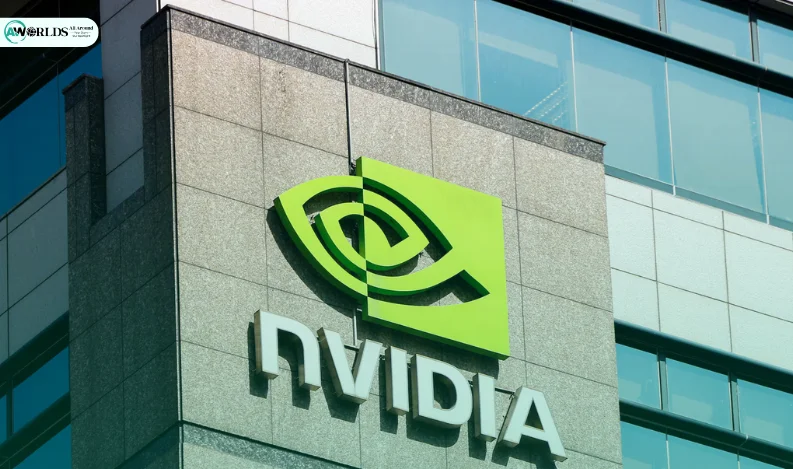
Nvidia Says It Has ‘Largely Conceded’ China’s AI Chip Market to Huawei
Nvidia CEO Jensen Huang has acknowledged that the company has effectively surrendered a significant portion of China’s artificial intelligence chip market to Huawei, highlighting the growing impact of US export restrictions on the global semiconductor industry.
Speaking in an interview with CNBC following Nvidia’s latest earnings report, Huang said the company had “largely conceded” the Chinese AI chip market as domestic technology firms rapidly strengthen their position amid tightening US trade controls.
“The demand in China is quite large,” Huang stated. “Huawei is very, very strong. They had a record year, and they will likely have another extraordinary year coming up.”
Huang added that China’s local semiconductor ecosystem has continued to advance as international competitors face mounting restrictions.
“They’re doing quite well because we’ve evacuated that market,” he said.
The comments came as Nvidia reported another exceptional financial quarter, with revenue soaring 85 percent year-over-year to $81.62 billion, compared to $44.06 billion during the same period last year. The company also announced an $80 billion share buyback program and increased its dividend, reinforcing investor confidence in the rapidly expanding AI sector.
Despite the strong earnings performance, China remains one of Nvidia’s most significant strategic challenges.
The Chinese market previously accounted for more than one-fifth of Nvidia’s data center business. However, the company’s ability to sell advanced AI chips into China has been severely restricted after the US government introduced stricter export licensing requirements earlier this year.
In April, the Trump administration informed Nvidia that special approval would be required for exports of advanced AI chips to China and several other countries, further escalating the technology dispute between Washington and Beijing.
The restrictions are widely viewed as part of broader US efforts to limit China’s access to cutting-edge semiconductor technology and advanced AI computing infrastructure.
At the same time, the measures appear to have accelerated China’s push toward technological self-sufficiency, benefiting companies such as Huawei and a growing network of domestic chip manufacturers.
Although Huang maintained a cautious tone regarding future access to the Chinese market, he emphasized that Nvidia remains willing to return if regulatory conditions change.
“We would be more than delighted to serve the market,” Huang said. “We have a lot of customers there, a lot of partners there, and we’ve been there for 30 years.”
However, he also indicated that the company is not currently expecting near-term approval for renewed large-scale chip sales into China.
“I’ve told investors to expect nothing,” Huang said while discussing potential export license approvals.
Reports emerged last week suggesting that several major Chinese technology companies, including Alibaba, Tencent, ByteDance, and JD.com, had received limited approvals from the US Commerce Department to purchase Nvidia H200 chips. Nevertheless, US officials later clarified that export controls were not part of recent trade discussions between Washington and Beijing.
Beyond geopolitical concerns, Nvidia is continuing to aggressively expand its global supply chain and AI infrastructure investments.
Huang described artificial intelligence as a transformational economic force and said Nvidia was investing heavily across multiple layers of the emerging AI ecosystem, including energy, computing infrastructure, AI models, applications, and semiconductor production.
“The idea of a much larger company is not out of the question,” Huang said.
He added that Nvidia’s immediate priority is strengthening supplier capacity to support unprecedented global demand for AI technologies.
“As we’re growing hundreds of billions of dollars at a time, we have to support our supply chain so they are able to support our growth,” he explained.
The latest developments further underline how the ongoing US-China technology rivalry is reshaping the future of artificial intelligence, semiconductor manufacturing, and global digital infrastructure.



Recent Comments:
No comments yet.