
Samsung Electronics Faces Major Strike as Wage Talks Collapse, Shares Decline
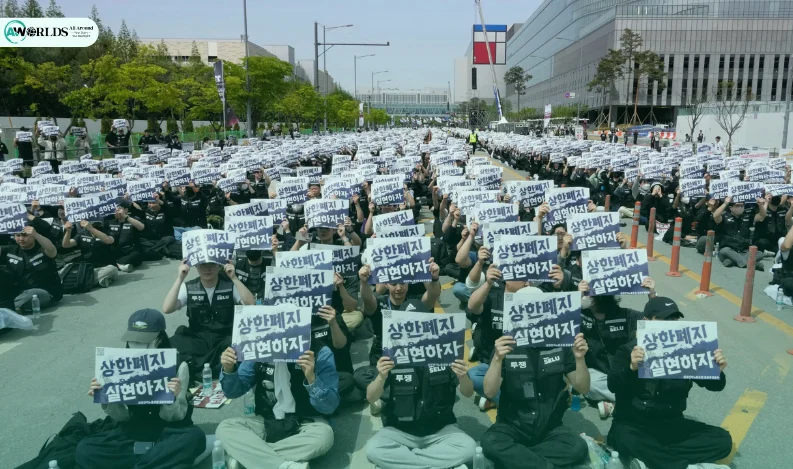
Samsung Electronics is set to face one of the largest labor actions in its recent history after more than 47,000 workers prepared to launch a strike following the breakdown of wage negotiations between the company and its labor union. The escalating dispute has intensified concerns surrounding operational stability at the global technology giant, while also triggering a decline in investor confidence.
Shares of Samsung Electronics fell nearly 3% after news emerged that mediation efforts between management and union representatives had failed, increasing uncertainty around the company’s semiconductor and manufacturing operations.
The dispute centers primarily on disagreements over Samsung’s performance-based bonus structure. The labor union has demanded bonuses equivalent to 15% of the company’s operating profit, along with the removal of bonus payout caps and the introduction of a more transparent and formalized compensation system.
According to South Korea’s National Labor Relations Commission, the union accepted the mediation proposal put forward during negotiations, while Samsung Electronics rejected the terms, ultimately leading to the collapse of discussions.
Union spokesperson Choi Seung-ho stated that Samsung had requested additional time to continue negotiations but failed to make a final decision before the mediation deadline expired. He expressed disappointment over the outcome, emphasizing that the union would continue efforts to seek a settlement even as strike action proceeds.
Samsung Electronics, however, defended its position by stating that accepting the union’s demands without modification could undermine the company’s management principles and long-term operational stability. Despite the disagreement, the company indicated that it remains open to dialogue and hopes to prevent prolonged disruptions.
The strike is expected to have a limited immediate impact due to legal restrictions imposed by a South Korean court. The court previously ruled that industrial action must not interfere with safety infrastructure, production facilities, or semiconductor wafer operations, aiming to prevent damage to critical manufacturing systems.
Nevertheless, the labor action highlights growing tensions within South Korea’s technology and manufacturing sectors, where workers are increasingly demanding greater compensation transparency and stronger participation in corporate profit-sharing models.
Government officials have also been closely monitoring the situation due to concerns about potential economic disruption. South Korean President Lee Jae Myung and Prime Minister Kim Min-seok reportedly encouraged both parties to reach an agreement before the strike announcement.
Reports suggest that government authorities may consider invoking emergency measures if the labor dispute escalates further. Under South Korean labor law, the government has the authority to temporarily suspend industrial action for up to 30 days if a strike is deemed harmful to the national economy or public welfare.
The unfolding dispute arrives at a critical time for Samsung Electronics, which continues to navigate global semiconductor competition, rising operational costs, and increasing pressure to maintain technological leadership in the artificial intelligence and advanced chip manufacturing sectors.
Industry analysts believe the outcome of the negotiations could set an important precedent for labor relations within South Korea’s technology industry, particularly as employees across major corporations seek larger shares of corporate earnings amid improving business performance.
For now, investors and global markets remain focused on whether both sides can return to negotiations quickly and avoid prolonged disruptions to one of the world’s most influential technology manufacturers.



Recent Comments:
No comments yet.