
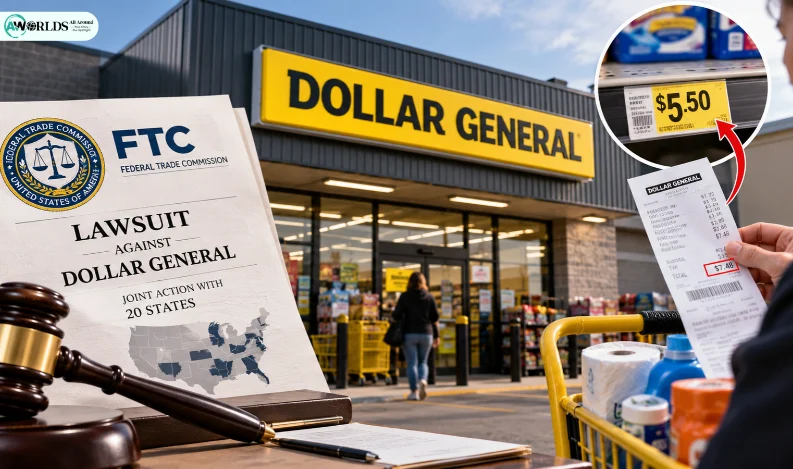
FTC and 20 States Sue Dollar General Over Alleged Shopper Overcharges
The U.S. Federal Trade Commission (FTC) and a coalition of 20 states have sued discount retailer Dollar General, alleging that the company repeatedly charged customers more at checkout than the prices displayed on store shelves, product labels and advertisements. The lawsuit, filed on October 26, 2026, claims the alleged pricing practices cost consumers millions of dollars over several years.
The case raises questions about price accuracy at one of America’s largest discount retail chains, which operates more than 21,000 stores nationwide and serves many households seeking affordable everyday essentials.
Regulators Allege Widespread Pricing Errors
According to the FTC’s complaint, Dollar General stores routinely displayed prices that did not match the amounts charged at checkout. Regulators allege that the problem affected thousands of stores and millions of purchases.
The lawsuit also points to tens of thousands of consumer complaints from shoppers who said they were charged more than advertised. The FTC argues that the volume of complaints indicated the problem was widespread and that the company had repeatedly been made aware of pricing discrepancies.
The agency alleges that Dollar General failed to implement effective measures to prevent the errors and ensure customers paid the advertised prices. These allegations have not yet been proven in court.
Twenty States Join the Federal Lawsuit
The lawsuit brings together the FTC and attorneys general or other state authorities from 20 states, reflecting concerns about pricing accuracy across multiple markets.
The participating states are Alabama, Arizona, Arkansas, California, Connecticut, Florida, Illinois, Iowa, Kansas, Louisiana, Michigan, Mississippi, Nebraska, New Jersey, North Carolina, Ohio, Oklahoma, Tennessee, Utah and Wisconsin.
The complaint was filed in the U.S. District Court for the Middle District of Tennessee, where Dollar General is headquartered. Regulators allege that the company’s practices violate federal consumer protection laws and applicable state laws.
Why Accurate Shelf Pricing Matters
Dollar General markets itself as a low-cost alternative for household goods, groceries and other everyday products. For customers managing limited budgets, even relatively small differences between displayed and checkout prices can affect spending decisions.
The FTC says inaccurate pricing can prevent consumers from comparing products fairly and planning their household expenses. The lawsuit also highlights the importance of reliable price labels and effective store-level procedures for updating outdated promotional tags.
The complaint cites state pricing inspections and other investigative evidence as support for the allegations. Such inspections have identified discrepancies between shelf labels and register prices at Dollar General locations in several states.
Legal Action Seeks Financial and Other Relief
The FTC and state partners are seeking a permanent injunction, monetary relief, civil penalties where applicable and other remedies. The requested measures are intended to address the alleged conduct and prevent further violations.
The legal action follows earlier scrutiny of Dollar General’s pricing practices. According to Reuters, the company has paid a combined $6 million in settlements to six states since 2019 over inaccurate pricing issues.
Dollar General had not immediately responded to requests for comment on the new lawsuit, according to reports published on October 26. The company will have an opportunity to respond to the allegations through the legal process.
What the Lawsuit Could Mean for Dollar General
The case could increase pressure on the retailer to strengthen price-label management, checkout accuracy and internal compliance procedures. It may also draw greater attention to how discount chains maintain accurate pricing across large store networks with thousands of products and frequent promotions.
For shoppers, the central issue is whether the price advertised on a shelf or promotional display matches the amount charged at the register. The outcome of the lawsuit will depend on the evidence presented and the court’s findings.
For now, the FTC action represents an allegation rather than a final legal determination. Its progress could have wider implications for consumer protection and pricing practices across the U.S. retail industry.
More News:-






Recent Comments:
No comments yet.