
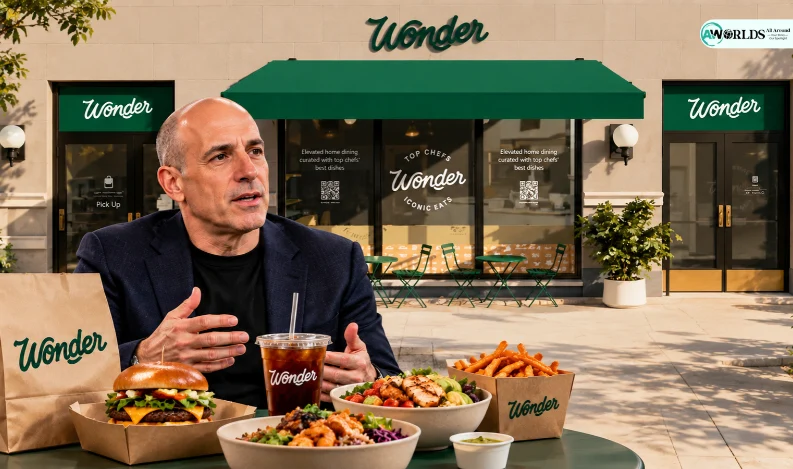
Marc Lore’s Wonder Bets on Texas Expansion, Kitchen Automation and AI as IPO Plans Advance
Wonder, the food technology company founded by entrepreneur Marc Lore, is preparing for its next phase of growth through an ambitious expansion into Texas, greater kitchen automation and an artificial intelligence platform that allows users to create their own restaurant concepts. The company is also preparing for a potential initial public offering (IPO) as it seeks to build a nationwide food preparation and delivery network.
Founded in 2018, Wonder combines multiple restaurant brands, centralised food preparation, delivery services and technology within one business. The company has attracted billions of dollars in investment and expanded its portfolio through acquisitions, including Grubhub and Blue Apron.
Texas Expansion Targets More Than 100 Locations
Wonder plans to enter Texas with a target of opening more than 100 locations by the end of 2027. The expansion would extend its business beyond its established presence in the northeastern United States and introduce its food platform to new urban, suburban and rural markets.
Unlike traditional restaurants, Wonder locations can offer meals from multiple restaurant concepts through a single kitchen. Customers can choose from different cuisines and brands while the company manages food preparation, technology and delivery.
Wonder believes this approach can help it serve more customers without requiring every restaurant brand to operate a separate kitchen. The company is also considering drone delivery to reach additional communities and improve delivery efficiency.
Automation at the Centre of Its Business Model
Wonder is investing in specialised kitchen equipment and robotics to reduce repetitive manual tasks and improve consistency. Its technology can automate certain food preparation processes, including assembling salads and bowls, while employees continue handling tasks that require greater dexterity.
Founder Marc Lore has outlined a long-term ambition to make food preparation and delivery increasingly autonomous by 2040. The company is developing equipment for additional kitchen functions, including sauce preparation and beverage production.
Automation is also central to Wonder’s pricing strategy. By reducing labour requirements and using kitchen capacity more efficiently, the company aims to offer competitively priced meals while improving operating margins. However, developing and deploying the necessary technology requires significant upfront investment.
AI Platform Will Let Users Build Restaurant Brands
One of Wonder’s planned initiatives is Wonder Create, a platform designed to let influencers, entrepreneurs and other users develop their own restaurant concepts with the help of AI.
Users will be able to generate branding, menus, recipes and other elements of a restaurant concept, while Wonder handles food preparation and fulfilment through its existing network. The model is intended to lower the barriers to launching a food business by removing the need to establish a separate kitchen and delivery operation.
The company expects this approach to attract creators with existing audiences who can promote their concepts and bring customers to the platform. If successful, it could allow Wonder to expand the number of brands available to customers without building an entirely new physical restaurant for each one.
IPO Plans Put Profitability in Focus
Wonder is preparing for a possible public listing, with Lore previously indicating that the company expects to be ready to go public in 2027. However, he has not confirmed a final IPO date, and the timing will depend on business readiness and market conditions.
The company has raised billions of dollars from investors and reported a valuation of $9 billion following its Series D funding round earlier in 2026. It has also spent heavily on acquisitions, technology and expansion as it builds its integrated food platform.
For prospective public-market investors, a key question will be whether Wonder can translate its rapid expansion into sustainable profitability. Food quality, delivery costs, customer retention and the expense of building automated kitchens will all influence its financial performance.
Can Wonder Transform the Restaurant Industry?
Wonder’s strategy brings together several businesses that traditionally operate separately: restaurant brands, food production, delivery, meal kits and digital ordering. The company believes that controlling more of the process can reduce costs and make a wider range of meals accessible to customers.
Its expansion and technology investments nevertheless carry risks. The company must maintain food quality across different concepts, attract repeat customers and demonstrate that automation can improve economics at scale.
As Wonder prepares for a potential IPO, its progress in Texas, the adoption of its AI restaurant platform and its ability to control operating costs will be important measures of whether Lore’s vision can develop into a sustainable nationwide business.
More News:-




Recent Comments:
No comments yet.