
Tesla Cuts Spending Before Potential SpaceX Deal as Musk Bets on AI and Robots
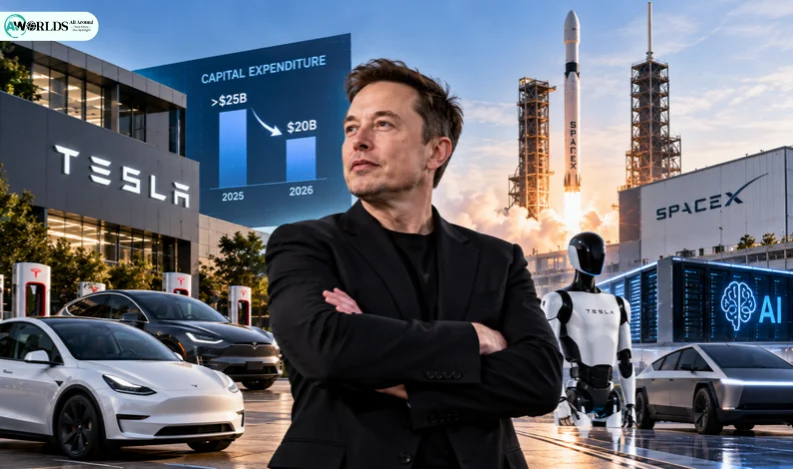
Tesla has reduced its planned capital spending for 2026 even as CEO Elon Musk continues to position the company around artificial intelligence, autonomous vehicles and humanoid robots. The electric vehicle maker lowered its annual capital expenditure forecast to approximately $20 billion from more than $25 billion after reporting better-than-expected third-quarter revenue and unexpected positive free cash flow. The move comes as Musk explores a potential combination of Tesla and SpaceX, raising questions about how the companies would finance their ambitious technology and infrastructure plans.
Tesla Lowers Its Capital Spending Forecast
Tesla spent $4.7 billion on capital expenditure during the third quarter of 2026, significantly below analysts’ expectations of around $7.5 billion. The company generated $1.53 billion in free cash flow, surprising analysts who had anticipated a substantial cash outflow.
The revised full-year spending forecast represents a reduction of roughly 20% from Tesla’s earlier projection of more than $25 billion. However, the company has not specified which projects will receive less funding or whether the adjustment reflects delayed investment, improved spending efficiency or changes to its development plans.
The unexpected cash generation could strengthen Tesla’s financial position as it prepares for further investment in technology, manufacturing and infrastructure.
AI and Robotics Remain Central to Musk’s Strategy
Despite the lower spending outlook, Musk continues to emphasise artificial intelligence, robotaxis and humanoid robots as major drivers of Tesla’s future growth.
The company is investing in autonomous-driving technology, computing infrastructure and its Optimus humanoid robot programme. Musk has argued that these businesses could eventually become increasingly important to Tesla’s long-term value, potentially extending its business beyond conventional vehicle manufacturing.
However, many of these initiatives require substantial investment and have yet to generate revenue on the scale of Tesla’s established automotive business. Investors will be watching whether the company can turn its technological ambitions into sustainable commercial operations.
Potential SpaceX Deal Adds Financial Complexity
The spending revision comes as Tesla and SpaceX consider a possible merger or other combination. Musk has expressed support for the strategic idea, but the companies have not reached a confirmed agreement.
A deal could bring together Tesla’s electric vehicles, energy storage and robotics operations with SpaceX’s launch services, Starlink satellite network and expanding artificial intelligence activities. Supporters of a combination argue that shared infrastructure and technology could create efficiencies across the businesses.
However, any transaction would face significant financial, regulatory and corporate-governance questions. Independent committees and shareholder approval would be important, particularly because Musk leads both companies and has interests in each.
Automotive Performance Remains Important
Tesla’s third-quarter revenue exceeded Wall Street expectations, although net income fell 43% from a year earlier. The company delivered 486,532 vehicles during the quarter, putting it on track to increase annual deliveries for the first time in three years.
The results highlight the balance Tesla must maintain between its core vehicle business and its longer-term investments in AI and robotics. Strong vehicle sales and energy-storage growth could help fund new projects, but competition, pricing pressure and development costs remain important considerations.
Investors Watch for Evidence of Long-Term Growth
Tesla’s lower spending forecast has created a debate over whether the company is managing its finances more efficiently or investing less aggressively than its future ambitions require.
Positive free cash flow provides additional financial flexibility, but investors will want evidence that spending decisions will not slow progress in autonomous driving, robotics and AI infrastructure.
The potential SpaceX deal adds another layer of uncertainty. Until the companies confirm a transaction and disclose its terms, Tesla’s immediate financial performance and its ability to commercialise emerging technologies will remain central to investor expectations.
More News:-


Recent Comments:
No comments yet.