
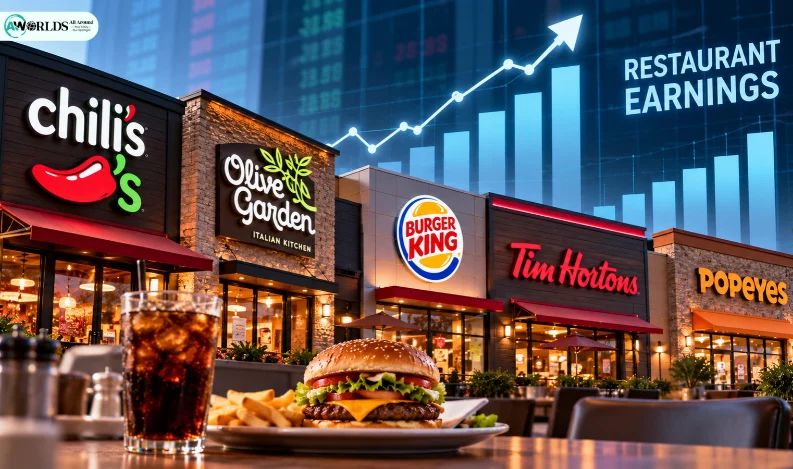
Restaurant Earnings Will Test Whether Owning More Brands Pays Off
Restaurant companies that operate multiple brands are heading into a crucial earnings period as investors assess whether diversification can deliver stronger performance in a challenging consumer market. Companies such as Brinker International, Darden Restaurants and Restaurant Brands International have outperformed several single-chain rivals in the stock market this year, raising expectations ahead of their upcoming financial results.
The results will offer fresh insight into how restaurant groups are managing changing consumer spending, rising operating costs and growing demand for affordable dining options. They will also help determine whether owning several restaurant chains provides a meaningful advantage or simply spreads the risks across different businesses.
Multi-Brand Restaurant Groups Gain Investor Attention
Brinker International, which operates Chili’s, Darden Restaurants, the owner of Olive Garden and LongHorn Steakhouse, and Restaurant Brands International, which owns Burger King, Tim Hortons and Popeyes, have benefited from investor interest in diversified restaurant portfolios.
Having several brands can help companies reach customers with different preferences, budgets and dining habits. If one chain experiences slower sales, another may be able to offset some of the weakness.
This approach can be particularly valuable when consumers become more selective about eating out. Restaurant groups with casual dining, quick-service and other formats can adjust their strategies across brands rather than relying on a single concept to drive growth.
Strong Brands Can Offset Slower Performance
Recent comparable-sales figures illustrate how performance can differ within the same company. At Darden Restaurants, LongHorn Steakhouse recorded stronger comparable-sales growth than Olive Garden in its latest reported quarter, showing how one brand can contribute more momentum than another.
Restaurant Brands International has also seen differing results across its portfolio. Burger King’s U.S. comparable sales strengthened in the second quarter, while Tim Hortons experienced slower comparable-sales growth in Canada.
These differences demonstrate both the potential benefits and limitations of diversification. A strong-performing chain can support overall results, but weaker sales at another brand may still weigh on the group.
Single-Brand Companies Can Still Outperform
Operating multiple restaurant chains does not guarantee better financial performance. Businesses built around a single brand can deliver strong results when they maintain customer loyalty, execute effectively and offer products that resonate with consumers.
Starbucks and The Cheesecake Factory have demonstrated that focused brand strategies can attract investor interest even as several other single-chain restaurant stocks face pressure.
For these companies, maintaining a clear identity and responding quickly to customer expectations may be just as important as the broader portfolio strategy used by multi-brand operators.
Upcoming Earnings Will Test the Strategy
Investors will closely examine comparable sales, customer traffic, average spending, operating margins and management forecasts as restaurant companies report their next quarterly results.
The figures will help show whether diversified groups can maintain growth while controlling labour, food and other operating costs. Analysts will also assess whether value-focused promotions are attracting additional customers or putting pressure on profitability.
The upcoming earnings season will provide a clearer picture of whether owning multiple brands creates a durable competitive advantage. Ultimately, diversification can reduce dependence on a single restaurant concept, but sustained performance will still depend on the strength of individual brands, effective cost management and the ability to meet changing consumer demand.
More News:-






Recent Comments:
No comments yet.