
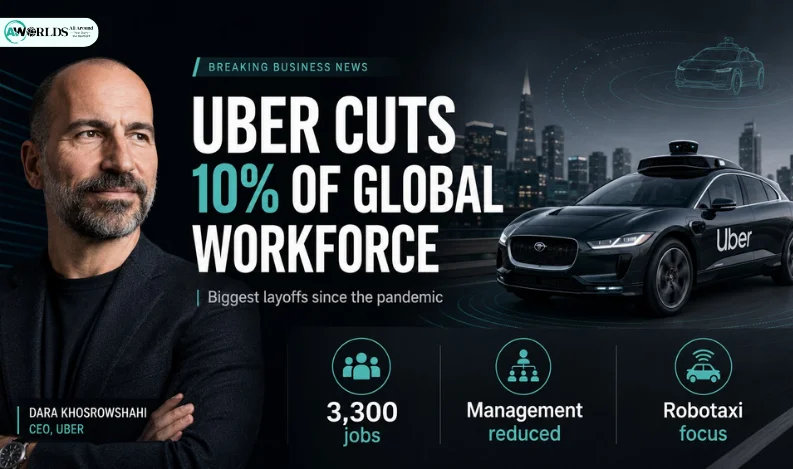
Uber Cuts 10% of Global Workforce in Biggest Layoffs Since Pandemic
CEO Dara Khosrowshahi told employees that Uber's rapid growth over recent years had also made the company more complicated, adding management layers and creating smaller teams with overlapping responsibilities. The restructuring is intended to remove some of that complexity and allow Uber to focus its resources on areas with stronger growth potential.
Uber Looks to Flatten Its Management Structure
The job cuts are expected to reduce Uber's management workforce by around 20%. The company is also eliminating many small "micro-teams" and reducing the number of employees positioned several layers below the CEO.
Some employees currently working as managers may move into individual contributor positions rather than leaving the company altogether. Uber is also combining several teams to create a simpler organizational structure.
The changes are designed to make the company more agile as it competes across ride-hailing, food delivery and other transportation services.
Robotaxis Become a Bigger Priority
One of the biggest reasons behind the restructuring is Uber's growing focus on autonomous vehicles and robotaxis.
Companies such as Waymo and Tesla are rapidly developing driverless transportation, creating a potential challenge for Uber's traditional ride-hailing model. Rather than viewing autonomous vehicles only as a threat, Uber is investing heavily to become a major marketplace for driverless rides.
The company plans to invest more than $10 billion in autonomous transportation technology and partnerships, making the sector an important part of its long-term strategy.
Delivery and Other Teams Are Being Consolidated
Uber is also reorganizing its delivery business. Its restaurant, retail and white-label delivery operations are being brought under a more unified structure.
The company says the changes will allow teams to work more efficiently and reduce duplicated responsibilities. Uber is also significantly reducing fully remote positions, with only around 1% of employees expected to remain fully remote under the new structure.
The shift comes as Uber faces strong competition in food delivery and continues to look for ways to improve efficiency across its global operations.
Layoffs Come Despite Business Growth
The cuts are notable because Uber's underlying business has continued to expand. The company has significantly increased its revenue and operations over the past five years, but that growth has also created a more complicated corporate structure.
Khosrowshahi said the restructuring is not simply about cutting costs. Instead, the company wants to redirect money and talent toward its core businesses and future opportunities, particularly autonomous mobility.
Uber's latest move reflects a broader trend across the technology industry, where companies are reducing management layers and using AI and automation to operate with smaller, more specialized teams.
A Major Turning Point for Uber
The loss of 3,300 jobs will be difficult for affected employees, but for Uber, the restructuring represents a broader attempt to prepare for the next stage of the transportation industry.
The company is betting that a leaner organization will allow it to move faster while investing heavily in ride-hailing, delivery and autonomous vehicles.
With robotaxis expected to play a growing role in urban transportation, Uber is now trying to position itself not just as a ride-hailing company, but as a major platform for the future of mobility.
More News:-






Recent Comments:
No comments yet.