
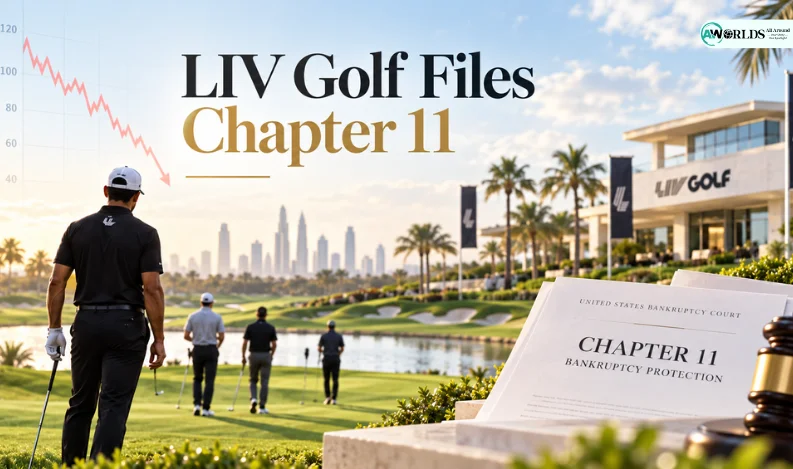
LIV Golf Files for Chapter 11 Bankruptcy Protection
LIV Golf has filed for Chapter 11 bankruptcy protection in the United States, marking a dramatic turning point for the Saudi-backed league just four years after it launched as a major challenger to the PGA Tour.
The filing was made in the U.S. Bankruptcy Court for the District of New Jersey as LIV begins a court-supervised restructuring intended to keep the league operating. The company listed assets of between $100 million and $500 million and liabilities ranging from $500 million to $1 billion.
Saudi Funding Comes to an End
LIV Golf was launched with major financial backing from Saudi Arabia's Public Investment Fund (PIF), which invested more than $5 billion into the league since its creation.
However, PIF announced earlier this year that it would stop funding LIV beyond the 2026 season, leaving the organization searching for a new financial model. The loss of its principal source of funding ultimately pushed the league toward bankruptcy protection and a major restructuring.
The PIF is still providing support during the restructuring through a $49.6 million bankruptcy loan, giving LIV additional financing while it works toward a new ownership and operating structure.
Star Golfers Among Those Owed Money
The bankruptcy filing has also revealed significant unpaid claims involving some of LIV's biggest names.
Jon Rahm is listed as being owed about $7.5 million, while Bryson DeChambeau is owed roughly $5.7 million and Dustin Johnson about $5.5 million. Several other LIV players are also among the league's major unsecured creditors.
The figures do not necessarily represent the full value of players' long-term contracts, but they highlight the financial pressure facing the league as it attempts to restructure its obligations.
LIV Plans a New Model
LIV says the bankruptcy filing is not intended to shut down the league. Instead, the organization plans to emerge with what it describes as a more sustainable, player-first ownership structure.
The restructuring agreement involves BC Partners Credit, which is expected to provide financing and support a recapitalization of the business. Under the proposed model, players could receive ownership interests in LIV as the league attempts to align its financial future more closely with its athletes.
LIV CEO Scott O'Neil has emphasized that the organization intends to continue hosting events and build a more financially sustainable business.
What Happens to LIV Golf in 2027?
The league is targeting a return in 2027 under a revamped version sometimes referred to as “LIV 2.0.”
The proposed structure would feature a smaller, more streamlined operation, with a 75-player field, traditional cuts and changes to the team format. The goal is to reduce the costs that characterized LIV's early years while keeping the elements that helped distinguish it from traditional professional golf.
The restructuring plan still requires approval from the bankruptcy court, meaning important details surrounding player contracts, ownership and the 2027 schedule could change.
LIV's Future Becomes Uncertain
LIV's bankruptcy represents a significant setback for a league that once promised to fundamentally reshape professional golf.
The circuit attracted some of the sport's biggest stars by offering enormous signing bonuses and prize purses, challenging the PGA Tour's dominance and creating a high-profile split within men's professional golf.
But the financial cost of that strategy proved difficult to sustain after Saudi funding was withdrawn. LIV has already made major staff reductions and is now attempting to rebuild around a smaller cost structure.
A New Chapter for the Golf Rivalry
Despite the bankruptcy, LIV's story is far from over. The league says it intends to continue operating and expects the restructuring process to help position it for a return in 2027.
The biggest question now is whether LIV can retain its leading players, attract new investment and establish a business model that can survive without the extraordinary levels of financial support that fueled its launch.
For professional golf, the development could prove equally important. LIV's future will influence not only its own players and tournaments but also the continuing competition between the Saudi-backed league and the established PGA Tour.
After an aggressive four-year challenge to the traditional golf establishment, LIV Golf is now entering its most consequential test yet: surviving on a sustainable financial footing.
More News:-





Recent Comments:
No comments yet.