
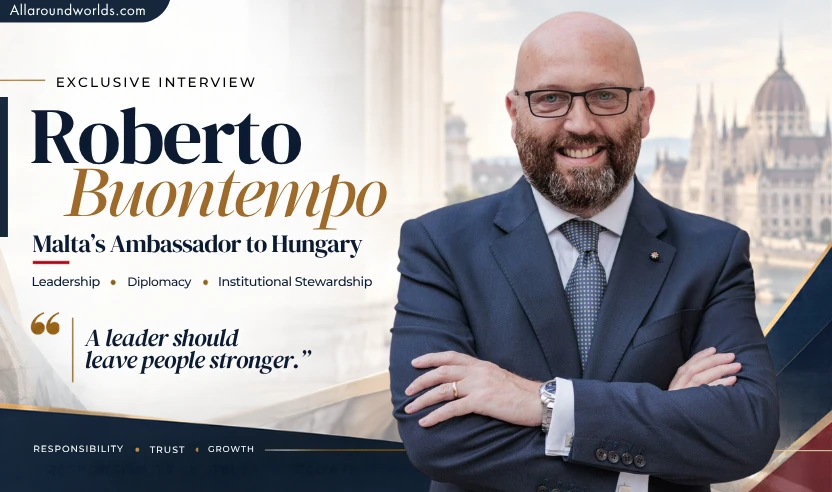
Ambition Has No Rest: Roberto Buontempo’s Journey of Leadership and Service
Leadership does not always begin with the ambition to lead. Sometimes, it emerges gradually through responsibility, difficult decisions, changing environments, and the trust others place in an individual. Roberto Buontempo’s journey reflects precisely that kind of evolution, shaped not by a single career path, but by experiences spanning international operations, property and institutional management, Church structures, public service, affordable housing, and diplomacy.
Across these different spheres, Roberto has developed a leadership philosophy grounded in responsibility, stewardship, accessibility, and the belief that authority alone is never enough. From making decisions under pressure during his earlier years as a football referee to navigating multicultural professional environments and representing Malta as Ambassador to Hungary, each chapter has strengthened his understanding of what it means to guide people while giving them the confidence to grow independently.
Today, his journey continues across diplomatic, institutional, and social responsibilities, yet a consistent principle remains at its heart: leadership should create something that lasts beyond the leader. In this conversation with AllAroundWorlds, Roberto Buontempo reflects on the experiences that shaped his approach, his priorities in diplomacy and affordable housing, the lessons gained from working internationally, and why his personal motto, “Ambition has no rest,” is about much more than professional advancement.
Leadership Shaped by Responsibility
Roberto Buontempo’s journey into leadership was never something he consciously planned. Rather, it developed gradually as different responsibilities came his way.
Over the years, he has worked in management, property, institutional settings, and international organisations before eventually moving into diplomacy. He has also spent many years working within Church structures and, as Lieutenant of the Equestrian Order of the Holy Sepulchre of Jerusalem in Malta, carrying responsibilities that extend far beyond the country itself.
All these environments are very different, but there is a common thread. They have placed him in situations where people look to him for direction, particularly when things are not straightforward.
Even his earlier years as a football referee played a small part in shaping that. The experience taught him to become accustomed to taking decisions under pressure and accepting that not everyone would agree with him. It also made him very conscious that authority on its own is never enough.
His experience within Church institutions added another dimension. For Roberto, there is a strong sense of stewardship. A person is entrusted with something for a period of time, and that naturally encourages thinking beyond oneself and beyond one’s own term in office.
That has influenced the way he sees leadership today. He has never been attracted to the idea of being a boss who simply commands. A leader, in his view, has a responsibility to shape the people around him, give them confidence and, most importantly, help them grow into responsibilities of their own.
Diplomacy fits naturally into that outlook. For Roberto, it is rarely about imposing a view. More often, it is about understanding people and knowing when to move a discussion forward.
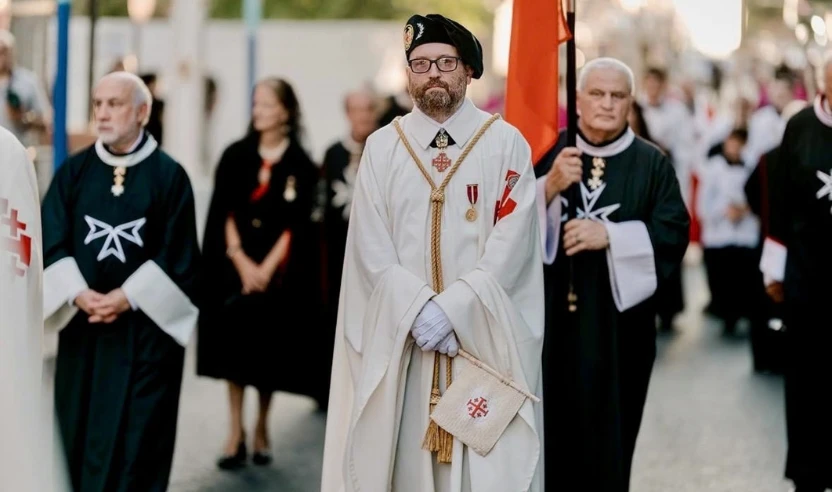
Diplomacy with Purpose
As Malta’s Ambassador to Hungary, Roberto’s priority has always been to make the relationship between Malta and Hungary practical and meaningful.
He believes diplomacy cannot be reduced to formal meetings and official photographs. Those have their place, of course, but he has always felt that an ambassador should also look for opportunities that can produce something tangible.
In Hungary, he has therefore focused strongly on areas such as education, culture, and institutional cooperation, while also encouraging opportunities in tourism and trade.
Roberto is particularly fond of cultural diplomacy because it often reaches people in a way that formal diplomacy cannot. A concert or an exchange between institutions may seem modest, but it can create relationships that continue to develop afterwards.
For Malta, visibility also matters. As a small country, Malta has to be present and proactive. Roberto’s approach has always been to open doors where possible and then keep working on the relationship until something worthwhile develops.
Beyond Property, Building Stability
Roberto’s involvement in affordable housing came quite naturally.
Much of his professional background has been connected to property and management, so the subject was already familiar territory. What changed was the perspective.
Affordable housing, in his view, forces one to look beyond property as an asset. A home represents stability for a person or a family. Once viewed from that perspective, the work takes on a very different meaning.
His present role with the Foundation for Affordable Housing has also reshaped the way he thinks about the sector. He believes it quickly becomes apparent that good social intentions are not enough. The model has to work in practice, and it has to remain sustainable. What Roberto finds particularly interesting about the Foundation is the collaboration between the State and the Church in addressing a real social need.
For him, the real satisfaction comes when policy and planning eventually become something concrete. A completed home is much more meaningful than a discussion about housing in the abstract.
Leading Across Cultures
Working internationally has made Roberto very conscious that people respond differently to leadership.
He believes one cannot walk into every organisation or every country with the same approach and expect the same result. Personalities differ. Cultures differ. Even the way people interpret authority can be very different.
His operational background probably explains why he values clarity. He wants people to understand what they are trying to achieve and what their role is in getting there.
At the same time, Roberto does not believe in over-managing people. If good people are chosen and given responsibility, he believes they should also be allowed some space to use their own judgement.
That is where he makes a strong distinction between leadership and simply being a boss. A boss can give orders. A leader should be creating people who are eventually capable of leading themselves.
Roberto finds it very satisfying when someone who was initially hesitant begins taking decisions confidently or starts assuming greater responsibility. For him, that is as much a part of leadership as achieving the objective itself.
Leadership That Strengthens Others
Responsibility is probably the leadership principle Roberto feels most strongly about.
He believes that if someone accepts a leadership role, that person has to be prepared to take decisions, including uncomfortable ones. A leader cannot enjoy the position only when everything is going well.
Roberto also believes very strongly in listening. That does not mean every view can be accommodated, nor should it. But people deserve to feel that they have been heard.
Accessibility matters to him as well. He has never believed that titles should create unnecessary distance.
Perhaps above all, Roberto believes leadership should leave people stronger. An organisation should not become dependent on one individual. If that happens, in his view, something has gone wrong.
A leader should gradually create confidence in others, give people opportunities, and allow them to develop their own judgement.
In the end, Roberto believes one of the best indicators of leadership is what happens after a leader leaves. If the people around that person are ready to carry things forward, then the leader has probably done something right.
“Ambition Has No Rest”
For professionals aspiring to lead internationally, Roberto’s first piece of advice is not to become obsessed with titles.
A title may open a door, but it does not automatically earn trust. People very quickly understand whether someone is genuine, whether they keep their word, and whether they respect others.
International work also requires a genuine interest in people. Roberto believes leaders have to be curious about how others think and why they approach things differently.
He would also encourage younger professionals not to wait until they feel completely ready. Very few people ever do. Responsibility itself often forces a person to grow.
At the same time, ambition needs perspective. Roberto has a personal motto: “Ambition has no rest.” He does not mean this in the sense of constantly chasing another position or another title. For him, it means never becoming complacent. There should always be another challenge worth taking on or something that can be done better.
If Roberto had to reduce leadership to one thought, it would be this: do not concentrate only on what you can achieve yourself. Pay attention to the people around you. If your presence helps others become more capable and more confident, that is a form of success in itself.
Conclusion
Roberto Buontempo’s journey demonstrates how leadership can evolve through experience rather than follow a predetermined path. Across international operations, institutional responsibilities, property and affordable housing, Church structures, and diplomacy, each role has added another dimension to his understanding of responsibility and service. Yet, despite the diversity of these experiences, his approach remains consistent: leadership is not simply about holding authority, but about using it with judgement, listening to others, and creating the conditions for people to grow.
That philosophy is particularly evident in the way Roberto measures leadership beyond individual achievement. For him, an organisation should not become dependent on one person. The stronger legacy is found in people who gain the confidence, judgement, and ability to carry responsibilities forward themselves. Whether strengthening relationships through diplomacy or helping turn social priorities into practical outcomes, his focus remains firmly on creating something meaningful and sustainable.
His personal motto, “Ambition has no rest,” captures this outlook well. It is not about continuously pursuing titles or positions, but about refusing to become complacent and remaining open to the next worthwhile challenge. As Roberto continues his journey, that combination of ambition, responsibility, and belief in others remains central to the way he approaches leadership, and to the impact he seeks to leave behind.
- LinkedIn - Roberto Buontempo
- Instagram - robbuontempo
- Facebook - Roberto Buontempo
Also Read:-




Recent Comments:
No comments yet.