
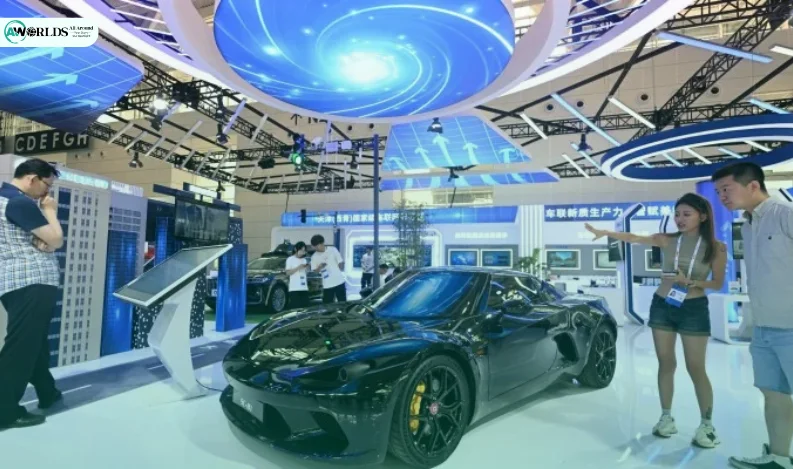
China’s EV Price War Shifts to AI Battle as Automakers Race to Innovate
China’s electric vehicle (EV) market is undergoing a major transformation, as intense price competition gives way to a new battleground centered on artificial intelligence and in-car technology.
After years of aggressive pricing strategies aimed at boosting sales, automakers are now shifting their focus toward advanced digital features, particularly AI-powered cockpit systems, to differentiate themselves in the world’s largest automotive market.
Industry players are increasingly integrating artificial intelligence into vehicles, enabling voice-based interactions, real-time assistance, and connected lifestyle services. This transition reflects evolving consumer expectations, where seamless digital experiences are becoming just as important as performance and price.
One of the most notable developments is the rapid adoption of AI chatbots within vehicles. ByteDance’s Doubao AI model has already been incorporated into over 145 car models and is deployed across millions of vehicles, highlighting the scale at which AI is being embedded into automotive ecosystems.
Similarly, Alibaba is expanding its footprint in the automotive sector through its Qwen AI model, which enables drivers to perform a range of tasks from ordering food and booking hotels to tracking deliveries using voice commands. These integrations demonstrate how vehicles are evolving into connected digital platforms rather than just modes of transport.
Despite the rapid rollout of new technologies, competition remains fierce. Industry experts note that while AI features provide short-term differentiation, they quickly become standard across the market, making it difficult for companies to maintain a lasting competitive edge.
As a result, automakers are beginning to explore broader strategies beyond in-car technology. Some brands are focusing on enhancing the overall customer experience, offering exclusive services, community access, and lifestyle-driven benefits to build stronger brand loyalty.
However, the underlying challenge persists. Oversupply and intense competition continue to put pressure on sales and margins, suggesting that the price war is far from over it has simply evolved into a more complex and technology-driven contest.
Looking ahead, the rise of AI in vehicles is expected to redefine industry standards not only within China but globally. As these features become mainstream, international markets may soon adopt similar expectations, accelerating the global shift toward smarter, more connected mobility solutions.







Recent Comments:
No comments yet.