
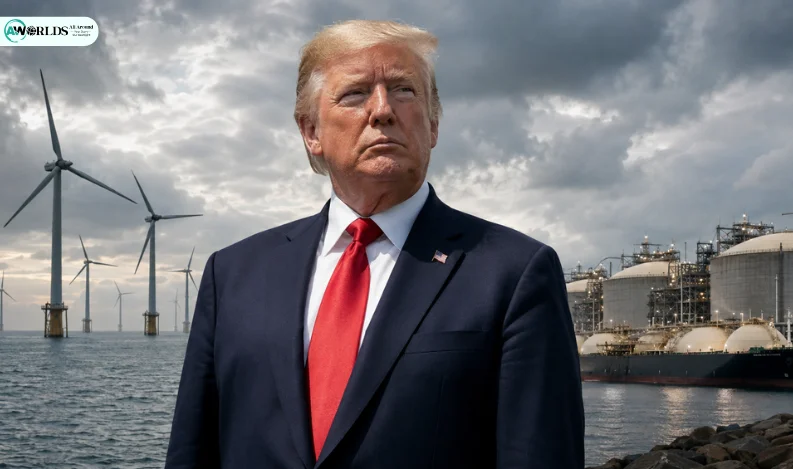
US Reaches $1.22 Billion Deal With RWE to End Offshore Wind Projects
The Trump administration has reached a $1.22 billion agreement with German energy company RWE to end three planned offshore wind developments in the United States, marking one of the largest such settlements since the administration began moving federal energy policy away from offshore wind.
Under the agreement, RWE will give up offshore wind leases covering areas near New York, California and Louisiana and redirect investment toward conventional energy infrastructure in the United States.
The company plans to invest approximately $900 million in a liquefied natural gas export project in Louisiana, while another $300 million will be directed toward natural gas turbines for power-generation facilities in the US, according to reports on the agreement.
RWE said the permitting environment had left no realistic route to advancing the offshore developments in the foreseeable future.
The decision effectively ends the company’s current US offshore wind development plans, although RWE remains a major investor in the wider American energy market.
RWE redirects US investment
The settlement represents a significant change for RWE, which had spent years building its position in the American offshore wind sector.
In 2023, the company secured an offshore wind lease near Lake Charles, Louisiana, during the US government’s first Gulf of Mexico offshore wind auction. The lease had the potential to support more than 1 gigawatt of generation capacity.
RWE had also assembled offshore wind development interests in the New York Bight and off the California coast.
Those projects were still at relatively early stages and were not expected to begin operating until the 2030s, according to Reuters.
Despite stepping away from the leases, RWE is not withdrawing from the United States.
The German utility said earlier this year that it planned around €17 billion in net US investment between 2026 and 2031, targeting an additional 9 gigawatts of generation capacity while expanding into flexible gas-fired power alongside its renewable energy and battery storage portfolio.
Trump administration accelerates offshore wind shift
The RWE agreement is part of a wider series of settlements pursued by the Trump administration as it seeks to reduce federal support for offshore wind and encourage investment in natural gas, oil and other conventional energy sources.
Earlier in 2026, the Department of the Interior reached similar agreements involving companies including TotalEnergies, Bluepoint Wind, Golden State Wind, Invenergy and Duke Energy.
Several of those arrangements link reimbursement for offshore wind lease investments to commitments to put equivalent capital into other US energy projects.
For example, TotalEnergies agreed in March to abandon offshore wind leases and redirect approximately $1 billion toward US oil, natural gas and LNG development.
In April, Bluepoint Wind agreed to end a New York Bight lease while its investor committed up to $765 million to a US LNG facility. Golden State Wind also agreed to relinquish a California offshore lease and redirect capital toward conventional energy infrastructure.
Offshore wind policy faces legal challenges
The administration’s actions have also generated legal and political opposition.
California officials have challenged a separate offshore wind agreement involving Golden State Wind, arguing that ending the lease threatens planned clean-energy development and related public investment in the state.
Separately, a federal judge recently ordered the Pentagon to resume its review of proposed onshore wind projects after finding that a broad freeze on reviews did not comply with statutory requirements.
The disputes underline the widening divide over the future of wind power in the United States.
President Donald Trump has repeatedly criticised wind energy while promoting expanded production of oil and natural gas. His administration has argued that conventional energy resources can provide more reliable and affordable electricity.
Supporters of offshore wind, meanwhile, contend that the industry can diversify the US electricity supply, support coastal investment and contribute to long-term emissions reductions.
Major change for US energy investment
The RWE agreement is the largest of several offshore wind settlements reached by the administration this year, Reuters reported.
For RWE, the decision represents a strategic reallocation rather than a broader retreat from global offshore wind.
The company continues to invest heavily in offshore wind projects outside the United States, including major developments in the United Kingdom, Germany and Denmark. In January, RWE secured UK contracts covering 6.9 gigawatts of offshore wind capacity across several projects.
The US agreement nevertheless highlights how quickly changes in government policy can alter the economics and development prospects of large energy projects.
With billions of dollars now shifting from proposed offshore wind developments toward LNG and gas-fired generation, the deal marks another significant step in the Trump administration’s effort to reshape the direction of American energy investment.
More News:-







Recent Comments:
No comments yet.