
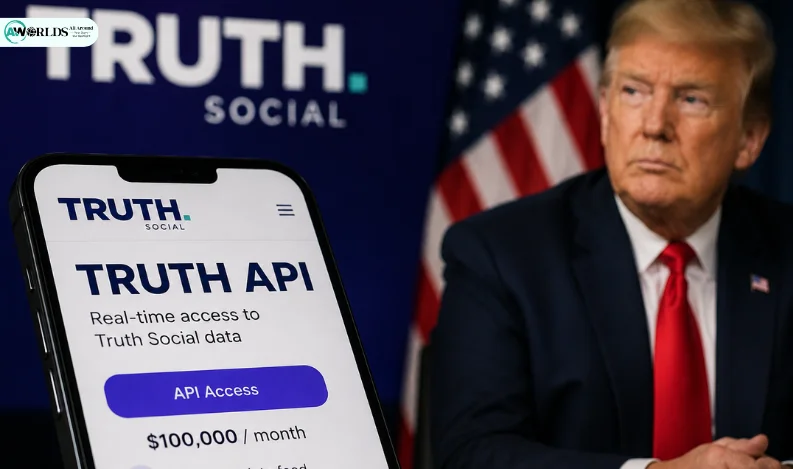
What Is Truth API? Trump Media’s $100,000 Data Feed Faces Lawsuit
A new premium data service from Trump Media & Technology Group is facing a federal lawsuit over allegations that it gives wealthy subscribers faster access to potentially market-moving posts from US President Donald Trump and other prominent Truth Social accounts.
The service, known as Truth API, was launched for institutional customers on August 1. Trump Media describes it as a business-to-business data feed providing licensed, real-time access to posts from leading accounts on Truth Social.
But its pricing and potential speed advantage have triggered questions about whether investors paying tens of thousands of dollars a month could receive important information before ordinary users.
What Is Truth API?
Truth API is designed to deliver Truth Social posts directly to institutional customers such as financial firms, media organisations and technology companies.
Trump Media disclosed this week that it has signed more than 10 customer agreements, primarily with high-frequency trading firms. Subscription rates generally range from $60,000 to $100,000 per month, according to the company's SEC-filed earnings material.
The company is also holding discussions with large technology companies, news organisations and developers of artificial intelligence and large language models, while considering broader distribution of the service.
For high-frequency traders, even extremely small differences in the time it takes to receive information can matter because automated systems can respond rapidly to news that may influence financial markets.
Why Has Truth API Been Sued?
The Intercept and the Freedom of the Press Foundation filed a lawsuit in Manhattan federal court on August 12 challenging the arrangement.
The lawsuit names Trump, members of his administration and the Executive Office of the President among the defendants. The plaintiffs argue that official presidential announcements should not effectively reach paying subscribers ahead of journalists, investors and the wider public.
They claim the arrangement violates the First Amendment, relating to access to government information, and the Fifth Amendment by allegedly attaching an unreasonable financial condition to access to official presidential communications. Those claims have yet to be ruled on by the court.
The plaintiffs are seeking to stop the use of Truth API for exclusive official government announcements while the paid-access system is operating.
Trump Media Defends the Service
Trump Media has rejected criticism of Truth API.
According to AP, the company has argued that opponents fail to distinguish between public and non-public information and has characterised the legal challenge as an effort by political opponents to target the platform.
The dispute comes at a sensitive intersection of politics, financial markets and President Trump's business interests.
Reuters reported that Trump holds approximately 41.3% of Trump Media, the Nasdaq-listed company behind Truth Social.
Lawmakers Raise Market-Integrity Concerns
The legal challenge is not the first scrutiny Truth API has faced.
On July 29, Senators Elizabeth Warren and Adam Schiff called on the US Securities and Exchange Commission to investigate the service and determine whether the arrangement could violate federal securities laws.
The senators argued that giving wealthy investors and high-frequency traders faster access to potentially market-moving posts could undermine confidence in the fairness of financial markets.
No finding of securities-law wrongdoing has been made.
Why the Case Matters
The controversy raises a broader question about the increasingly blurred boundary between social media, official government communication and financial information.
Trump frequently uses Truth Social to communicate political positions and policy-related developments. A commercial feed capable of distributing those posts rapidly to professional traders therefore has implications beyond the social-media industry.
For Trump Media, Truth API represents a new potential revenue stream from the information generated on its platform. For its critics, however, the central issue is whether official government information can be distributed through a system in which paying customers receive a technological advantage.
The federal court will now have to consider whether the arrangement crosses a constitutional line or represents a lawful commercial data service.
More News:-







Recent Comments:
No comments yet.