
Elon Musk's Business Empire Faces Regulatory Challenges as Texas Turns Blue
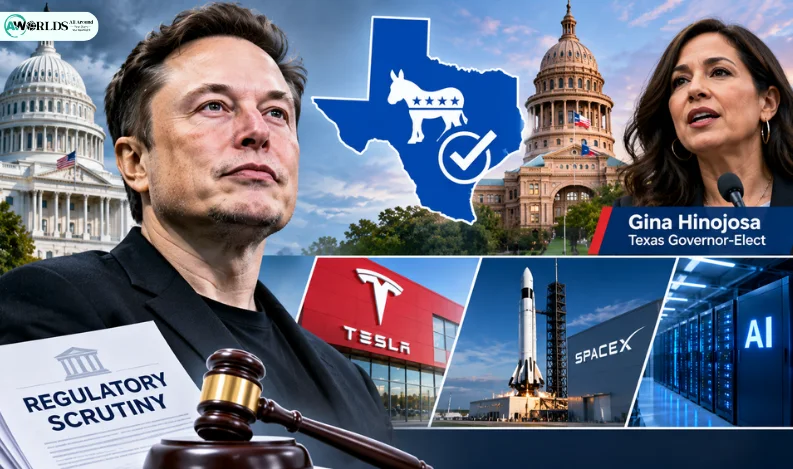
Elon Musk's business empire is facing a potentially more challenging political environment after Democrats secured major victories in the November 3, 2026, US midterm elections, including winning control of both chambers of Congress and the Texas governor's office.
The election results mark a significant setback for Musk, who spent nearly $500 million supporting Republican candidates and attempting to maintain Republican control in Texas. Democratic candidate Gina Hinojosa defeated Republican incumbent Greg Abbott, ending more than three decades of Republican leadership in the state's governor's office.
The outcome could have major implications for Musk's companies, including Tesla, SpaceX and his broader artificial intelligence infrastructure ambitions.
Democratic Victory Raises Pressure on Musk's Companies
Musk has developed substantial business operations in Texas, making the state an important base for his automotive, aerospace and technology ventures.
However, Democratic victories could bring increased congressional investigations and regulatory scrutiny involving government contracts, tax incentives, federal subsidies and the operations of his companies.
Democratic lawmakers have previously raised questions about Musk's involvement in federal government restructuring, satellite communications supporting Ukraine and the public funding received by businesses associated with him.
With Democrats preparing to take control of Congress, these issues could receive greater attention through oversight hearings and investigations.
Texas Data Centre Projects Face New Uncertainty
One of the biggest potential challenges involves SpaceX's expanding artificial intelligence infrastructure.
The company is investing heavily in large-scale data centres to provide computing capacity for AI development and commercial customers. Its facilities, including Colossus and Colossus II near Memphis, have become important parts of its AI operations.
SpaceX aims to increase its data-centre capacity from approximately 1.7 gigawatts at the end of September to as much as 3 gigawatts by the end of 2026, with a longer-term target of 13 gigawatts next year.
However, incoming Texas Governor Gina Hinojosa has called for a temporary halt to new data-centre projects until stronger protections for local communities are established. She has also opposed tax breaks for these facilities, citing concerns about electricity costs and the impact on residents.
Such restrictions could delay approvals, increase operating costs and complicate SpaceX's expansion plans.
SpaceX Starbase Expansion Could Face Opposition
Musk's plans around SpaceX's Starbase facility in Boca Chica, Texas, could also encounter political resistance.
Hinojosa has opposed a potential sale of a beachfront state park to SpaceX for its planned expansion. She has argued that public land and local interests should not be sacrificed to provide favourable arrangements for powerful business owners.
The disagreement could create additional uncertainty around the company's development plans in the state.
Musk responded to growing concerns about data-centre restrictions with a post on X suggesting that space-based data centres were becoming more appealing. However, such infrastructure would face significant technical challenges involving cooling, maintenance and operating costs.
Tesla and SpaceX Investors Watch Political Risks
The election results also affected investor sentiment. Following the results, Tesla shares declined approximately 5.1%, while SpaceX shares fell around 5.5%, according to Reuters reporting.
Investors are particularly concerned about whether political changes could affect government contracts, regulatory approvals and the economics of Musk's AI infrastructure investments.
For Tesla, potential changes in federal policies and incentives could also influence the company's operating environment, while SpaceX faces questions about its relationship with government agencies and future expansion opportunities.
A New Political Environment for Musk's Business Empire
The Democratic victories represent a major shift in the political landscape surrounding Musk's businesses. His close relationship with President Donald Trump and substantial financial support for Republican candidates had helped establish strong political connections in Washington and Texas.
However, the election results could weaken those advantages and bring greater scrutiny to the public incentives, infrastructure projects and regulatory arrangements supporting his companies.
The immediate impact remains uncertain, but the combination of congressional oversight, tighter data-centre regulations and political resistance in Texas could make Musk's next phase of business expansion more complicated.
More News:-





Recent Comments:
No comments yet.