
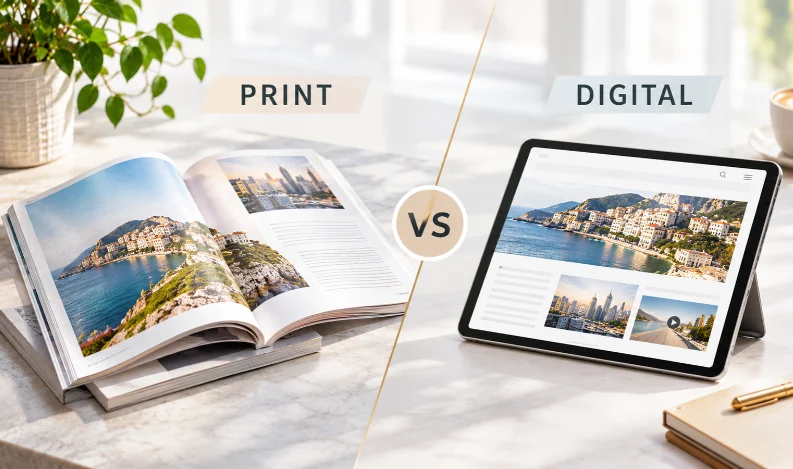
Print vs. Digital Magazines: Which Format Has the Stronger Future?
For years, the magazine industry has faced an important question: Will digital publishing eventually replace print?
As smartphones, social media, and online platforms have changed how people consume information, digital magazines have become increasingly popular. They offer faster publishing, wider reach, easy accessibility, and opportunities to connect with readers worldwide.
However, printed magazines have not disappeared. Instead, they are finding a different place in the modern publishing industry, with greater attention to premium design, quality content, and the overall reading experience.
Recent UK industry figures reflect this changing landscape. ABC's 2025 Consumer Media Report covered 155 titles across 42 sectors and recorded more than 400 million print and digital copies distributed during the year. Meanwhile, PAMCo-based figures published in late 2025 showed magazine media reaching 37.4 million UK adults monthly, with around 10 million consuming magazine brands through both print and digital formats.
These figures suggest that readers are not necessarily choosing one format over the other. Many continue to use both depending on their preferences and reading habits.
The future of magazines may not depend on print versus digital, but on how effectively publishers use both formats.
1. Why Digital Magazines Have a Stronger Advantage in Reach
Digital publishing has transformed how magazines connect with their audiences. Unlike printed editions, which require physical production and distribution, digital content can reach readers across different countries almost instantly.
This makes digital platforms particularly valuable for publishers looking to expand their international presence and attract new audiences.
Digital magazines also offer several advantages:
- Global reach and instant content distribution.
- Greater visibility through search engines.
- Faster publishing and content updates.
- Social media sharing and audience engagement.
- Integration of videos, podcasts, and multimedia.
- Access to audience analytics and performance data.
Another important advantage is the longer lifespan of digital content. A well-written interview, business feature, or industry analysis can continue attracting readers months or even years after publication through search engines, newsletters, and social sharing.
However, publishers must also adapt to changing search behaviour and AI-driven discovery. FIPP's 2025–26 Innovation in Media report highlights how AI-powered search and zero-click results are creating new challenges for traditional digital traffic models.
As a result, building direct relationships with readers is becoming just as important as attracting website visitors.
2. Why Print Magazines Continue to Matter
Despite the growth of digital publishing, printed magazines still offer something that online platforms cannot completely reproduce: a physical reading experience.
Digital readers often consume content while dealing with notifications, messages, advertisements, and other distractions. A printed magazine provides a more focused environment where readers can spend time with carefully presented stories and photography.
Print also offers physical brand value. A magazine can remain on an office desk, coffee table, reception counter, or bookshelf, giving its brand a presence beyond the moment of reading.
This is particularly valuable for publications covering:
- Business and leadership.
- Luxury and fashion.
- Art and design.
- Travel and lifestyle.
- Architecture and photography.
The industry is also witnessing a shift towards premium print editions. Some established publishers are reducing publication frequency while investing more in the quality of individual issues.
For example, Vogue moved its US print schedule to eight issues for 2026, with larger editions and upgraded paper.
This reflects an important change in strategy: print is becoming more focused on quality, exclusivity, and memorable reading experiences rather than frequent publication.
3. Print and Digital Offer Different Advertising Opportunities
Advertising remains an important source of revenue for magazine publishers, and both formats provide different commercial advantages.
Digital advertising allows businesses to reach specific audiences, measure engagement, and direct potential customers towards websites, products, and services.
Print advertising offers a different experience. A carefully positioned advertisement in a premium magazine can benefit from the publication's editorial identity, visual presentation, and physical presence.
For advertisers, the choice depends on campaign objectives.
- Digital advertising is effective for audience targeting, measurable engagement, and immediate responses.
- Print advertising can support brand positioning, premium presentation, and visibility within a carefully selected editorial environment.
Rather than treating these formats as competitors, publishers can combine them to offer advertisers a broader marketing opportunity.
4. The Challenges Facing Both Publishing Formats
Although digital publishing offers greater flexibility, it also faces increasing competition.
Magazine websites now compete with social media platforms, video creators, podcasts, newsletters, search results, and AI-generated content. Simply publishing more articles does not guarantee audience loyalty.
Publishers need distinctive editorial identities, reliable information, and content that gives readers a reason to return.
Print faces a different challenge: production costs.
Paper, printing, transportation, storage, and distribution all contribute to the expense of producing physical magazines. Unsold copies can also affect profitability, while printed information cannot be updated once an edition has been released.
These limitations make print less suitable for fast-changing news and daily updates.
Its future therefore depends on offering something worth the additional investment, such as exclusive interviews, high-quality photography, special editions, and carefully curated content.
5. Why a Hybrid Publishing Model Makes the Most Sense
The growing relationship between print and digital suggests that a hybrid approach may offer the strongest opportunities for magazine publishers.
Each platform can serve a different purpose within the same publishing strategy.
- Digital platforms can handle regular articles, industry updates, interviews, multimedia content, and search visibility.
- Print editions can focus on premium interviews, special features, annual publications, and visually distinctive editorial collections.
- Newsletters can help publishers maintain direct communication with readers and encourage repeat engagement.
- Social media can introduce magazine brands and their stories to new audiences.
- Events and communities can create opportunities for readers, professionals, and industry leaders to connect beyond published content.
By combining these channels, publishers can build stronger editorial brands rather than depending entirely on a single distribution format.
6. What Publishers Should Focus on for the Future
As audience habits continue to change, magazine publishers need to focus on more than simply choosing between print and digital.
Several priorities will become increasingly important:
- Build a clear editorial identity: Publications need to offer distinctive perspectives, relevant information, and content that separates them from generic online material.
- Develop direct reader relationships: Newsletters, memberships, registrations, and subscriptions can reduce dependence on external platforms.
- Make print editions valuable: Physical publications should offer quality, design, and editorial experiences that readers genuinely want to keep.
- Improve digital experiences: Mobile-friendly websites, multimedia storytelling, useful articles, and easy navigation can strengthen reader engagement.
- Maintain editorial trust: Accurate reporting, original perspectives, and consistent quality will remain essential as AI-generated content becomes more widespread.
These priorities can help publishers build sustainable businesses while adapting to changes in technology and reader expectations.
So, Which Format Has the Stronger Future?
Digital magazines have a stronger position when it comes to accessibility, international reach, publishing frequency, and audience engagement. Their flexibility makes them essential for publishers seeking consistent visibility in today's media environment.
However, print continues to offer value through its physical presence, premium presentation, and focused reading experience.
The future is therefore unlikely to be a complete victory for one format.
Digital will lead in reach and publishing frequency, while print will continue to create value through quality, exclusivity, and physical brand experiences.
The strongest publishers will be those that understand how to use both formats effectively and build a consistent identity across their platforms.
Final Thoughts
The magazine industry is changing, but that does not mean traditional publishing has lost its place.
Digital platforms are becoming the primary channel for everyday engagement, allowing publishers to reach wider audiences and respond quickly to industry developments. Print, meanwhile, is becoming more selective, with greater emphasis on premium editions, distinctive design, and meaningful editorial experiences.
For publishers, the opportunity lies in understanding what readers expect from each format.
A strong digital presence can build visibility and audience relationships, while carefully produced print editions can strengthen brand recognition and create lasting value.
The future belongs to magazine brands that combine digital convenience with the lasting appeal of print.
Frequently Asked Questions
1. Are print magazines dying?
Print circulation has declined in several publishing sectors, but physical magazines continue to attract readers. The industry is moving towards more specialised and premium print publications rather than the complete disappearance of print.
2. Are digital magazines better than print magazines?
Digital magazines are better suited to accessibility, regular updates, and wider distribution. Print magazines offer a physical reading experience, premium design, and collectibility. Both serve different reader preferences.
3. Why do people still buy printed magazines?
Many readers appreciate the design, photography, physical experience, and focused reading environment. Special editions and premium publications also offer collectibility.
4. Will digital magazines completely replace print?
A complete replacement is unlikely across all magazine categories. Digital will remain important for regular publishing, while print can continue serving specialist, luxury, business, and visually focused audiences.
5. What is the best publishing model for modern magazines?
A hybrid model offers a practical approach. Publishers can use digital platforms for regular engagement and audience growth while producing print editions for premium content and distinctive reading experiences.
Also Read:-






Recent Comments:
No comments yet.