
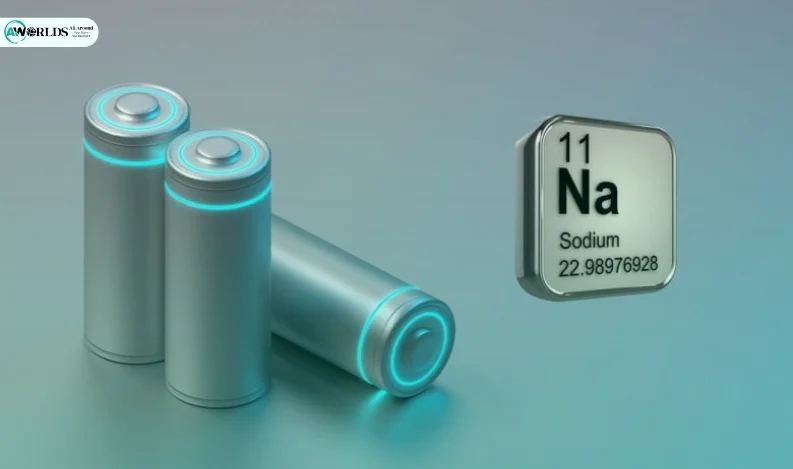
GM Advances Sodium-Ion Battery Development to Capture Growing Energy Storage Market
General Motors is accelerating its push into the energy storage sector with plans to develop next-generation sodium-ion batteries and expand vehicle-to-grid capabilities, as growing electricity demand from artificial intelligence and data center expansion reshapes the energy landscape.
The automaker announced a series of initiatives aimed at strengthening its presence beyond electric vehicles, positioning itself to benefit from increasing investments in grid infrastructure, energy storage systems, and renewable energy integration.
At the center of the strategy is a new partnership with Colorado-based startup Peak Energy to develop sodium-ion battery cells, a technology GM believes could play a significant role in future large-scale energy storage applications.
According to Kurt Kelty, GM's Vice President of Battery and Sustainability, sodium-ion batteries offer the potential to simplify energy storage systems while lowering costs.
“Sodium-ion-powered energy storage systems have the potential to operate without active cooling and with much less system complexity,” Kelty said. “In large energy storage systems, that matters.”
Unlike traditional lithium-ion batteries, sodium-ion batteries can operate across a broader range of temperatures and may require fewer cooling systems, reducing both installation and operational expenses. Industry experts view the technology as a promising alternative for stationary energy storage, particularly as electricity demand continues to rise.
GM expects the collaboration with Peak Energy to result in commercial sodium-ion battery cells becoming available after 2028.
The move comes amid growing concerns over power consumption driven by the rapid expansion of artificial intelligence infrastructure and data centers. Analysts estimate that billions of dollars will be invested globally in energy and grid systems to support increasing computational demands over the coming decade.
In addition to sodium-ion development, GM is continuing efforts to expand its energy storage portfolio through battery reuse programs and alternative battery chemistries. The company is working with Redwood Materials to repurpose electric vehicle batteries for stationary storage applications and is also advancing lithium iron phosphate (LFP) battery production through its joint venture with LG Energy Solution.
LFP batteries are currently viewed as a cost-effective solution for energy storage projects, while GM believes sodium-ion technology could offer even greater long-term advantages as the technology matures.
“Our next-generation sodium-ion cell development will drive energy density higher, with the potential to outperform more mature chemistries, including LFP, over time,” Kelty said. “In a market increasingly shaped by cost pressure, energy demand growth, and geopolitical risk, that's a real differentiator.”
GM's energy ambitions come after years of significant investment in electric vehicle development and battery manufacturing. Through its Ultium Cells joint venture, the company currently operates approximately 90 gigawatt-hours of battery production capacity across facilities in Ohio and Tennessee.
Earlier this year, Ultium Cells announced a $70 million investment to begin manufacturing LFP batteries for energy storage applications at its Tennessee facility.
The company is also expanding services designed to help electric vehicle owners manage rising energy costs. GM plans to increase vehicle-to-grid capabilities, enabling customers to send electricity from their vehicles back to the power grid during periods of peak demand or use stored energy to power their homes.
The automaker is actively pursuing partnerships with utility providers across the United States to broaden access to such programs. Existing collaborations are already underway in California and Michigan.
The initiative arrives as residential electricity costs continue to climb. According to recent projections from the U.S. Energy Information Administration, average residential electricity prices have increased by nearly 48 percent since 2020 and are expected to rise further in the coming years.
GM also introduced a new "Energy Pass" program designed to simplify public charging access for electric vehicle drivers, including compatibility with Tesla's Supercharger network. Additionally, the company confirmed that all of its fully electric vehicles beginning with the 2027 model year will be equipped with the North American Charging Standard (NACS) charging port.
As automakers increasingly look beyond vehicle sales and toward energy services, GM's latest initiatives signal a broader effort to establish a long-term presence in the rapidly evolving energy storage and grid technology market.





Recent Comments:
No comments yet.