
Canada Scraps EV Sales Mandate, Introduces $3,700 Subsidy to Support Auto Sector
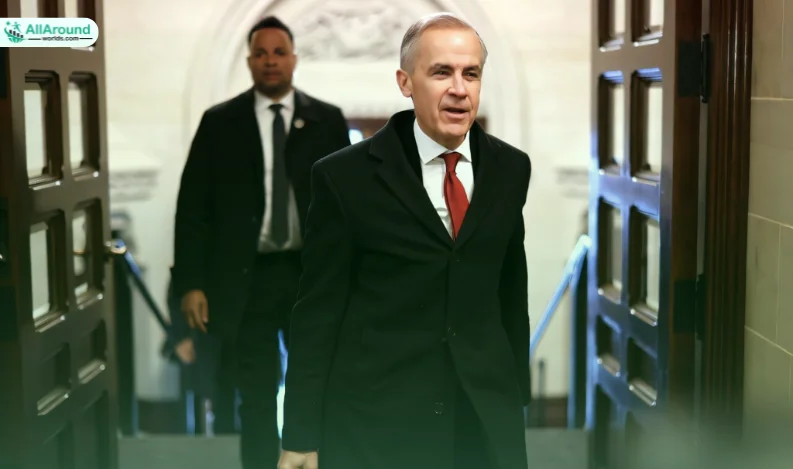
Canada has formally scrapped its mandate requiring all new vehicles sold to be electric by 2035, as Prime Minister Mark Carney unveiled a new strategy aimed at supporting the country’s auto industry while reaffirming that its long-term future remains electric.
Announcing the policy shift on Thursday, Carney said Canada must prepare for a future dominated by electric vehicles while responding to growing trade pressures from the United States that have disrupted cross-border auto manufacturing.
The decision marks a clear departure from policies introduced under former prime minister Justin Trudeau, whose government had set binding targets for electric vehicle adoption, 20 percent of new vehicle sales in 2026, rising to 60 percent by 2030 and 100 percent by 2035.
While those targets were welcomed by environmental groups, automakers had raised concerns about affordability, supply chains, and the lack of charging infrastructure across Canada’s vast geography.
Carney said the new approach would focus on “practical results” rather than rigid mandates.
Financial incentives and infrastructure push
Under the revised plan, the federal government will offer a CAN$5,000 (approximately US$3,700) subsidy to individuals purchasing an electric vehicle. The strategy also includes CAN$1.5 billion in funding to expand national charging infrastructure and CAN$3 billion to help automakers adapt, scale production, and diversify export markets.
“We know where the auto industry is going,” Carney said. “Our job is to support that transition and protect Canadian jobs.”
Carney added that Canada is targeting electric vehicles to make up 75 percent of new car sales by 2035, rising to 90 percent by 2040.
Industry and climate response
The Global Automakers of Canada welcomed the move, citing greater clarity on electrification timelines and stronger commitments to charging infrastructure. The Canadian Climate Institute described the strategy as a step toward a cleaner and more affordable transportation future.
Globally, momentum behind electric vehicles has been uneven. In the United States, President Donald Trump removed EV tax credits last year, while the European Union has proposed easing its own 2035 ban on new combustion-engine vehicles.
Since taking office, Carney has also eliminated the household carbon tax and backed plans for a new oil pipeline, drawing criticism from environmental advocates. Asked whether Canada still considered itself a climate leader, Carney responded: “Absolutely.”
Trade pressures reshape strategy
Canada’s auto sector supports nearly half a million jobs, but its future has come under pressure following the introduction of U.S. tariffs on non-American vehicle components. Since April, Canadian-made vehicles have faced a 25 percent tariff on non-U.S. parts, a move Ottawa says violates the USMCA trade agreement.
Carney acknowledged that North American auto integration, once a strength, has become a vulnerability. He said Canada must prepare for a more self-sufficient production model, from mining critical minerals to battery manufacturing and vehicle assembly.
“Our objective remains to remove all auto-sector tariffs,” Carney said, “but Canada must be ready to stand on its own.”






Recent Comments:
No comments yet.