
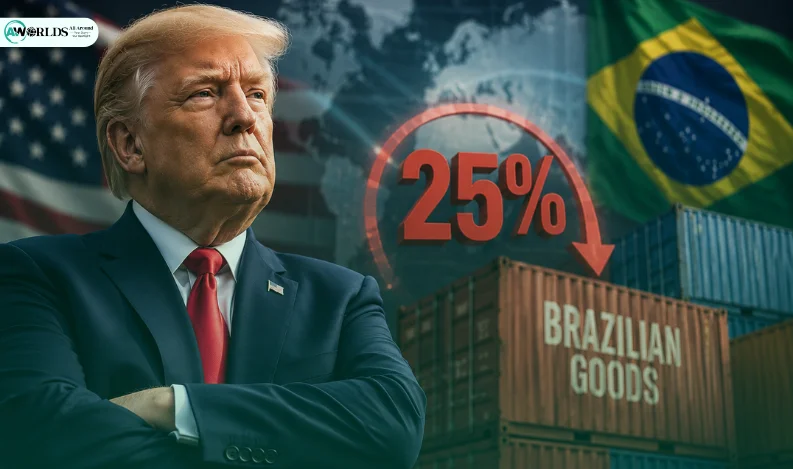
Trump Administration Proposes 25% Tariffs on Brazilian Goods Over Trade Practices
The Trump administration has proposed imposing tariffs of up to 25% on imports from Brazil after concluding that several Brazilian policies and practices unfairly burden U.S. commerce, according to the Office of the United States Trade Representative (USTR).
The proposed measures were announced following a Section 301 investigation, a trade enforcement mechanism that allows the United States to respond to foreign practices deemed unreasonable, discriminatory or harmful to American businesses.
According to the USTR, the investigation found concerns related to Brazil's anti-corruption enforcement policies, intellectual property protections, ethanol market access restrictions and issues surrounding illegal deforestation.
U.S. Trade Representative Jamieson Greer said the investigation was launched at the direction of President Donald Trump and concluded that Brazil's actions warranted further trade measures.
While noting that Trump and Brazilian President Luiz Inácio Lula da Silva have held several constructive discussions, Greer said significant differences remain between the two countries regarding the issues identified in the investigation.
The USTR has scheduled a public hearing on the proposed tariffs for July 6 before making a final decision on the measures.
The latest proposal marks another chapter in ongoing trade tensions between Washington and Brasília. In July 2025, the Trump administration imposed tariffs of 50% on Brazilian imports, a move that was partly linked to the prosecution of former Brazilian President Jair Bolsonaro.
However, the U.S. Supreme Court struck down those tariffs in February 2026, leaving in place only the broader 10% tariff applied to imports under the administration's global trade framework.
Alongside the proposed tariffs on Brazil, the White House announced adjustments to duties on certain steel, aluminum and copper-related imports.
Tariffs on some agricultural equipment, including combines and harvesters, will be reduced to 15% from 25%. The administration also expanded the range of products eligible for the lower tariff rate.
In addition, capital equipment containing at least 85% U.S.-produced steel and aluminum by weight will qualify for a reduced 10% tariff, compared with the previous requirement of 95%.
The proposed tariffs could affect a wide range of Brazilian exports to the United States if approved, potentially adding pressure to trade relations between the two countries while increasing costs for some importers and manufacturers.
Brazilian authorities have not yet issued an official response to the latest proposal.






Recent Comments:
No comments yet.