
About
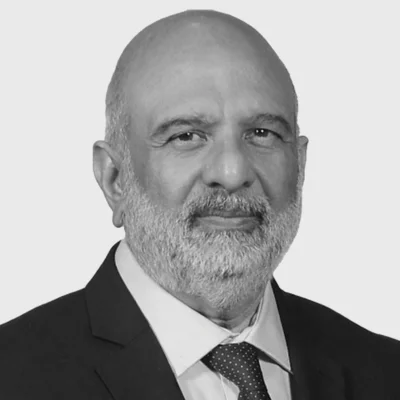
Dr. Ehsan Latif has spent more than two decades not only shaping public health policy across continents but also challenging the field to imagine what comes next. A physician by training and a strategist by instinct, he has built a career on the belief that public health must evolve faster than the threats it seeks to address. His work in tobacco control, tobacco harm reduction, and noncommunicable disease (NCD) policy reflects a rare blend of technical expertise and longrange vision, one that consistently anticipates emerging challenges and reframes them as opportunities for systemic change.
With a Master of Public Health from the London School of Hygiene & Tropical Medicine and fellowship in the Royal Society for Public Health, Dr. Latif has applied evidence-based thinking across more than 40 countries. But colleagues often note that his most defining quality is not the breadth of his experience, it is his ability to see the bigger picture before others do. Whether advising ministries of health, guiding civil society coalitions, or leading multidisciplinary teams, he has pushed institutions to think beyond short-term interventions and toward integrated, sustainable public health systems.
Today, as Managing Director of the Centre for Integrative Public Health Management (CIPHM), Dr. Latif is advancing a vision that redefines how countries confront NCDs and their risk factors. He argues that fragmented approaches, where tobacco control, nutrition, air quality, and health system strengthening operate in silos, cannot meet the needs of the next decade. Under his leadership, CIPHM is building models that bring these domains together, ensuring that policies are not only technically sound but socially grounded, politically feasible, and centred on the people most often left behind: marginalized communities, hard-to-reach populations, and those living at the intersection of multiple vulnerabilities.
This integrative approach is not new to his thinking; it is the culmination of years spent navigating the complex interface of politics, international conventions, and national implementation. At the Foundation for a SmokeFree World, where he served as Senior Vice President and Vice President for Grant Management and Development, Dr. Latif oversaw global initiatives aimed at reducing tobacco-related harm. His leadership helped shape research agendas that bridged scientific innovation with realworld public health needs.
Earlier, at The International Union Against Tuberculosis and Lung Disease (The Union), he directed the Tobacco Control Department and served as Senior Adviser for NCDs. There, he worked closely with governments to translate the WHO Framework Convention on Tobacco Control into actionable national policies, often in settings where political will, financing, and capacity were limited. His approach combined technical rigour with a deep understanding of local realities, enabling countries to build durable systems rather than temporary programs.
His early work with Pakistan’s Ministry of Health through the National Health Policy Unit, laid the foundation for this perspective. Leading policy development and research on respiratory health, child health, and health system strengthening, he saw firsthand how public health succeeds only when it aligns with the lived experiences of communities.
Across all these roles, Dr. Latif has remained driven by a clear and consistent vision: public health must be anticipatory, integrated, and equitycentred. He has long argued that the future of global health will depend on leaders who can bridge clinical insight with political strategy, research with implementation, and global frameworks with local realities. His career embodies that synthesis.
As public health enters a period of rapid transformation, shaped by shifting demographics, climate pressures, and evolving risk factors, Dr. Latif stands out as a leader who is not merely responding to change but actively shaping the direction of the field. His work continues to redefine what effective, forward-looking public health leadership can be in 2026 and beyond.

