
About
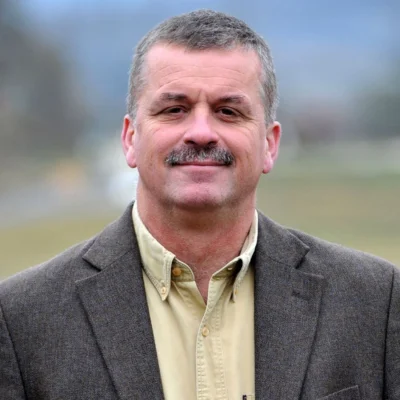
Some leaders build businesses around opportunity. Others build them around a conviction strong enough to influence every decision they make. For János Handó, Founder and Owner of Ladybird Farm Leisure Center (Katica Tanya), entrepreneurship has become a way to demonstrate that commercial success, practical innovation, and environmental responsibility can grow together.
With an MBA and an MSc in Economics, János spent 18 years as a project manager, leading business-process, systems-integration, and enterprise-transformation projects for major multinational companies across Europe, the Americas, and Asia. Managing teams ranging from five to 100 people, he earned a reputation among clients as someone who “gets things done.” Yet alongside this international corporate career, he was steadily developing an entirely different venture, one that would ultimately become Hungary’s market-leading family entertainment center.
The determination behind that journey was shaped by a life-changing experience. In 1996, at just 26 years old, newly married to his wife Eszter and building their home, János was diagnosed with a brain cyst measuring five by nine centimetres. Doctors described it as a “time bomb.” Three operations followed, and during the first, he suffered a stroke that affected the right side of his body, as well as his speech and vision. He still cannot write with his right hand and reads slowly as a result.
The aftermath brought a period of depression and isolation, but eventually János confronted a defining choice: remain consumed by what had happened or accept the circumstances and move forward. He chose the latter. He learned to write with his left hand and adapted his speech. About a year later, he began planning an extraordinary round-the-world expedition.
In 1999, János and Eszter embarked on a 418-day journey by off-road vehicle, travelling approximately 110,000 kilometres across 40 countries and four continents while living on just a few dollars a day. More than an adventure, the experience strengthened his desire to create something lasting. That ambition eventually took shape as Katica Tanya, or Ladybird Farm.
What began with a single building in 2001 has developed into a ten-hectare leisure destination covering approximately 5,000 square metres and welcoming between 72,000 and 85,000 visitors, along with around 10,000 guest nights, each year. Its growth has been guided by a principle János holds firmly: we did not inherit the Earth from our ancestors; we borrow it from our children.
At Ladybird Farm, that belief is translated into practical decisions. The business only develops attractions that either require no energy or use energy generated from renewable sources. Sugary drinks, crisps, petrol-powered go-karts, gas heating, and gas-based kitchen equipment have no place in its operating model. For János, sustainability is meaningful only when it moves beyond statements and becomes visible in everyday actions.
Dozens of environmental measures reflect this practice-oriented philosophy. Since 2022, PET-bottled beverages have been eliminated in favour of refillable flasks, paper cups, and 12 natural fruit juices. Waste is separated into 26 categories, toilets are flushed using rainwater, and sewage is treated locally through an environmentally responsible system. These efforts have earned Ladybird Farm numerous recognitions, most recently the 2026 GREEN BRANDS certification, with a score of 82%, currently the highest corporate result in Hungary.
János also contributes his experience beyond the boundaries of Ladybird Farm. He serves on the IAAPA ESA Sustainability Committee and is an active member of the Global Sustainable Tourism Council (GSTC) and Hungarian sustainability organisations. He shares his knowledge as a guest lecturer at the University of Pécs and through other speaking opportunities. His perspective has also been informed by 18 years of public service as mayor of Patca, which provided him with first-hand experience of public administration.
Despite the achievements associated with his name, János is quick to recognise the people behind them. He credits his colleagues with managing “today and tomorrow,” giving him the freedom to focus on “the day after tomorrow.” He is equally grateful to Eszter, whom he describes as his partner in everything.
His advice to others reflects the lessons of both his personal and professional journey: do not wait for perfect conditions, and never allow a setback to become a full stop. He encourages people to remain open to ideas that may initially sound unusual, because what appears unconventional today can become tomorrow’s standard. His own “Handó axiom” reinforces constructive thinking: if you dislike an idea, remain quiet until you can offer a better one, because criticism without an alternative creates little value.
Above all, János does not view money as the destination. To him, it is simply a tool for creating something more meaningful, including a more sustainable future. His journey from surviving a profound personal challenge to building a nationally recognised leisure destination demonstrates a philosophy grounded not in slogans, but in choices, persistence, and action.
For János Handó, the direction remains clear: keep moving forward while working to leave future generations a planet truly worth inheriting.

