
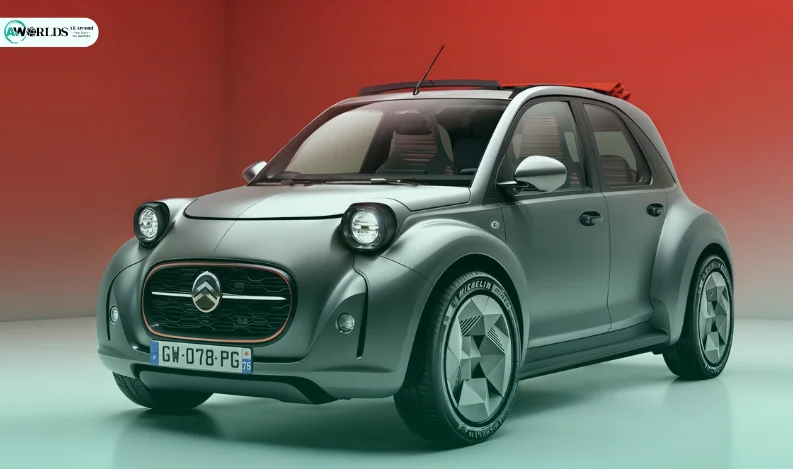
Stellantis Eyes Affordable EV Revolution With Possible Revival of the Iconic Citroën 2CV
European automotive giant Stellantis is reportedly preparing a major push into the affordable electric vehicle market with plans to introduce a budget-friendly EV priced below €15,000, approximately $17,000, by 2028. The development is being viewed as one of the company’s most ambitious efforts to compete against the rapidly growing influence of low-cost Chinese electric vehicle manufacturers.
Industry speculation has intensified around the possible revival of the legendary Citroën 2CV, one of Europe’s most recognizable economy cars. Originally launched in 1948, the minimalist vehicle became a symbol of affordable mobility across post-war France and wider Europe. If revived in electric form, the model could represent Stellantis’ strategy to reconnect with cost-conscious consumers while modernizing one of the automotive industry’s most nostalgic nameplates.
According to multiple French automotive reports and industry analysts, Stellantis executives have been evaluating ways to reclaim Europe’s shrinking entry-level car segment. Rising vehicle prices, stricter environmental regulations, and the increasing cost of electric vehicle production have made affordable cars increasingly difficult for European manufacturers to produce profitably.
The company’s reported project is expected to focus heavily on simplicity, lightweight engineering, and lower manufacturing costs rather than premium technology and luxury features. Analysts believe this approach could help Stellantis create an electric vehicle that appeals to younger buyers, urban drivers, and families seeking practical transportation without the high costs associated with many modern EVs.
The challenge, however, remains significant.
Battery technology continues to be the largest cost factor in electric vehicle production. In addition to battery expenses, automakers are facing higher labor costs, supply chain disruptions, complex safety regulations, and mounting pressure from investors to maintain strong profitability margins. Over the past decade, many European manufacturers gradually shifted away from compact budget cars in favor of SUVs and crossover models that generate stronger profits.
That transition has contributed to a steady increase in average vehicle prices across Europe, leaving many first-time buyers and lower-income consumers with limited access to new vehicles.
Automotive experts believe Stellantis is now attempting to reverse that trend by reintroducing the concept of affordable mobility for the electric era.
Reports suggest that the project internally emphasizes what some consultants describe as “industrial minimalism,” where every component, material choice, and production decision is carefully evaluated to reduce manufacturing costs without compromising functionality.
The possible return of the Citroën 2CV carries strong emotional and cultural significance, particularly in France. Much like Germany’s Volkswagen Beetle, the original 2CV became an icon because of its simplicity, low maintenance costs, and practical design suited for everyday drivers.
Speculation surrounding the model gained further momentum after Citroën CEO Xavier Chardon publicly acknowledged interest in reviving the 2CV as an electric vehicle. Although Stellantis has not officially confirmed the project, industry observers believe the company recognizes the branding power and nostalgia attached to the historic model.
Still, automotive analysts caution that the success of the project will depend heavily on pricing and execution. If the new model is perceived as too expensive, overly complicated, or disconnected from the simplicity that made the original 2CV famous, it could struggle to gain acceptance among consumers and long-time enthusiasts.
Reports also indicate that there may be internal competition within Stellantis regarding which brand will lead the affordable EV initiative. Both Citroën and Fiat are reportedly interested in overseeing the platform, a decision that could influence the vehicle’s design language, production strategy, and market positioning.
One facility frequently linked to the project is Stellantis’ Pomigliano d’Arco plant near Naples, Italy. The factory has historically been associated with the Fiat Panda, another iconic European city car recognized for affordability and practicality.
Producing the vehicle within Europe could also hold strategic and political importance.
European governments have increasingly expressed concerns about dependence on Chinese electric vehicles and battery supply chains. In response, European Union officials have already introduced tariffs on selected Chinese EV imports amid fears that heavily subsidized foreign manufacturers could disrupt domestic automotive markets.
At the same time, Stellantis maintains strong connections with China through its investment in Chinese EV manufacturer Leapmotor, in which the company holds a 21% stake. This relationship has fueled speculation that Chinese battery technology or components could potentially contribute to the affordable EV project.
Stellantis is not the only manufacturer competing in the growing low-cost EV segment.
French automaker Renault has already attracted significant attention with the revival of the electric Renault 5 and plans for an affordable city EV inspired by the classic Twingo. Meanwhile, Chinese brands including BYD and MG continue to expand aggressively across Europe with competitively priced electric models.
Industry analysts believe the coming years will determine whether European manufacturers can continue producing truly affordable electric vehicles domestically or whether the market will increasingly shift toward Chinese dominance.
If Stellantis successfully launches a practical electric vehicle near the $17,000 price point without depending heavily on government subsidies, it could reshape pricing strategies across the European automotive industry and redefine the future of entry-level electric mobility.
However, if the company fails to deliver on affordability expectations, the project could become another example of how difficult it remains for traditional automakers to make low-cost electric vehicles commercially viable.







Recent Comments:
No comments yet.