
JPMorgan Launches $50 Billion Share Buyback as Major U.S. Banks Boost Dividends After Fed Stress Test
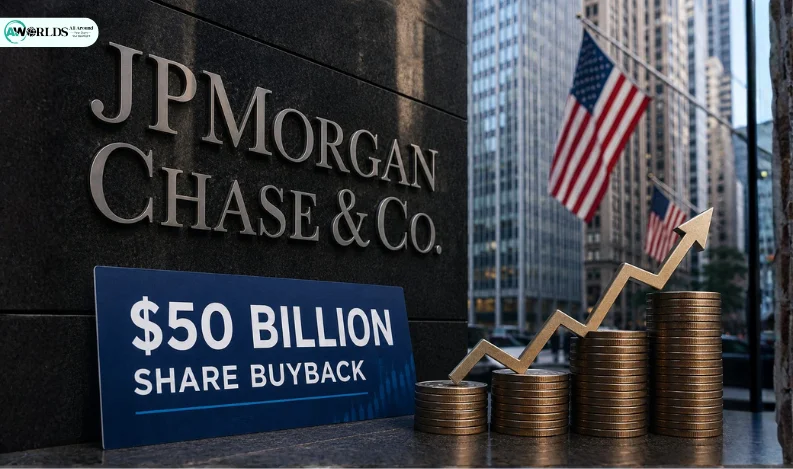
JPMorgan Chase has announced a $50 billion share repurchase program and a higher quarterly dividend after successfully clearing the U.S. Federal Reserve's annual stress test, joining several major American banks in increasing shareholder returns amid strong capital positions.
The nation's largest bank by assets said its board intends to raise the quarterly dividend by 10% to $1.65 per share, subject to final approval. The new share repurchase program will become effective on July 1, reflecting management's confidence in the bank's financial strength and long-term capital strategy.
JPMorgan Chairman and Chief Executive Officer Jamie Dimon said the planned dividend increase is supported by the bank's consistent investment strategy, strong earnings performance, and robust balance sheet. He added that the institution remains well prepared to navigate a wide range of economic conditions, including the severe recession scenarios modeled by regulators during the 2026 supervisory stress test.
The Federal Reserve's annual assessment concluded that all 32 of the country's largest banks maintained capital levels above regulatory minimum requirements, even under a hypothetical economic downturn that projected industry-wide losses exceeding $708 billion. The results reaffirmed the resilience of the U.S. banking system despite ongoing macroeconomic uncertainty.
Following the announcement, several other leading financial institutions also unveiled plans to increase capital returns to shareholders.
Goldman Sachs raised its quarterly dividend by 11% to $5.00 per share, citing strong profitability and a healthy capital position. Morgan Stanley announced a 15% dividend increase to $1.15 per share while simultaneously reauthorizing a $20 billion share repurchase program. Wells Fargo stated that it expects to increase its quarterly dividend by 11% to $0.50 per share, while Bank of America indicated that it will announce its updated dividend policy next month.
This year's stress test differed from previous exercises because the Federal Reserve decided earlier in 2026 to maintain banks' existing stress capital buffers through 2027 while it undertakes a comprehensive review of its testing methodology. As a result, the stress test outcomes did not alter individual banks' regulatory capital requirements, giving financial institutions greater certainty when planning shareholder distributions.
Market analysts had largely anticipated limited regulatory changes following the exercise. However, the broad wave of dividend increases and buyback announcements signals continued confidence among major U.S. banks regarding their capital strength, profitability, and ability to withstand potential economic shocks.
Industry observers also note that investor attention is increasingly shifting toward the Federal Reserve's upcoming implementation of the Basel III Endgame capital framework, which is expected to reshape regulatory requirements for the banking sector later this year. Until then, banks appear focused on rewarding shareholders while maintaining strong capital reserves.
The latest announcements reinforce the financial resilience of the U.S. banking industry and highlight the sector's confidence in its capacity to support future growth, even amid an evolving regulatory landscape and persistent economic uncertainty.






Recent Comments:
No comments yet.