
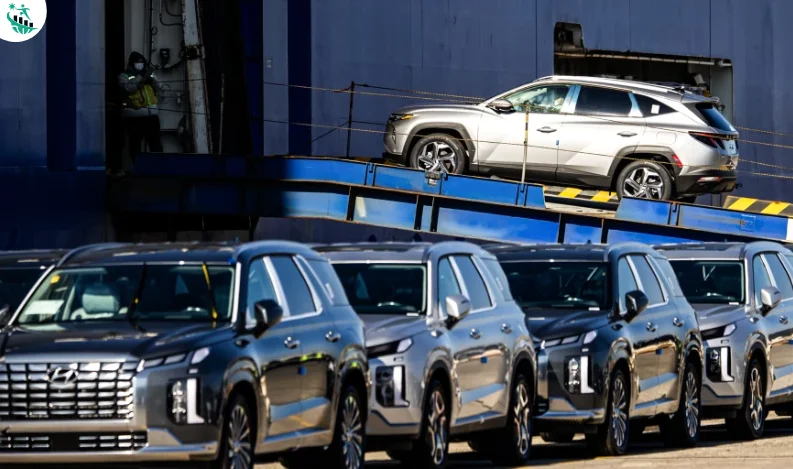
Trump’s South Korea Tariff Cuts Deliver Major Boost for Hyundai and GM
Hyundai Motor and General Motors are poised to be among the biggest winners from the Trump administration’s decision to reduce tariffs on vehicles imported from South Korea, easing a financial burden that has cost both automakers billions this year.
The administration confirmed this week that tariffs on certain South Korean imports, including cars, will be lowered from 25% to 15% under a new trade agreement. A notice detailing the changes was posted Wednesday on the Federal Register, and similar negotiations are underway with Japan and the United Kingdom.
Hyundai is the largest importer of new vehicles from South Korea into the United States, followed by General Motors, which relies heavily on Korean plants for its entry-level crossovers. The 25% tariff, imposed in the spring, sharply increased costs for both companies.
Before the reduction, Hyundai reported a tariff charge of 1.8 trillion won ($1.2 billion) in the third quarter alone, up sharply from the previous quarter. GM forecast tariff costs of between $3.5 billion and $4.5 billion for 2025, largely tied to Korean and Mexican imports. CFO Paul Jacobson said the company has already offset part of those charges and now expects the 2026 impact to drop to roughly $1 billion or less.
The tariff shift follows South Korea’s move to introduce legislation supporting a pledge to invest $350 billion in the United States over several years, a step U.S. officials said strengthens economic ties. Commerce Secretary Howard Lutnick praised the agreement, calling it a win for investment, jobs and bilateral cooperation.
Hyundai North America CEO Randy Parker said that while a 15% tariff still presents challenges, the reduction marks a significant improvement as the company targets its sixth straight year of record U.S. retail sales in 2026. Hyundai, including its Kia brand, is expected to import nearly one million vehicles to the U.S. this year, according to GlobalData. South Korea is set to account for about 8.6% of all U.S. car sales, making it America’s largest vehicle source outside Mexico.
Hyundai plans to shift more production to the U.S. over time, aiming to manufacture more than 80% of its American sales domestically by 2030, compared with about 40% today.
GM also stands to benefit significantly. It is projected to import around 422,000 vehicles from South Korea in 2025, up from last year’s record 407,000 units, including popular Chevrolet and Buick crossovers produced at its Korean plants. GM said it “appreciates” the new trade agreement and will be reviewing its details.
The tariff announcement comes after months of tension between Washington and Seoul, following a major immigration raid at a Hyundai–LG Energy Solution battery plant in Georgia in September, where more than 300 South Korean workers were among 475 people detained.
Despite the turbulence, both countries now appear aligned on reducing trade frictions, with the new tariff structure expected to support automakers, stabilize supply chains and ease cost pressures heading into 2026.






Recent Comments:
No comments yet.