
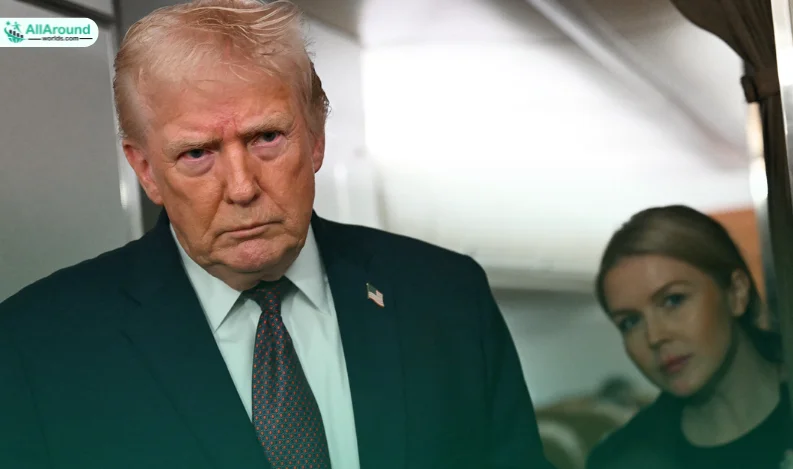
Trump Says He’d ‘Love Not To’ Attack Iran but Says Military Option Remains Possible
Washington — U.S. President Donald Trump said Friday that he would prefer not to use military force against Iran, but indicated that such action remains under consideration.
“I’d love not to use” the U.S. military to attack Iran, Trump told reporters outside the White House. “But sometimes you have to.”
At the same time, the president stressed that no final decision has been made.
“We haven’t made a final decision,” Trump said. “We’ll see what happens. We’re talking later today. We’ll have some additional talks today.”
Frustration Over Nuclear Negotiations
Trump’s remarks followed his criticism of Iran’s stance in ongoing nuclear negotiations. He expressed dissatisfaction with what he described as insufficient cooperation from Tehran.
“We’re not thrilled with the way they’re negotiating,” Trump said. “They cannot have nuclear weapons.”
“I’m not happy that they’re not willing to give us what we have to have,” he added, referring to U.S. demands related to Iran’s nuclear program.
When asked whether a potential U.S. attack could lead to a prolonged conflict in the Middle East, Trump acknowledged the possibility of risk.
“I guess you could say there’s always a risk,” he said, adding that it would be preferable for negotiations to move forward in good faith. “It’d be wonderful if they negotiate, really, in good conscience, good faith. They are not getting there so far.”
Later in the day, speaking in Corpus Christi, Texas, Trump described the situation as involving a “very big decision” and reiterated his preference for a diplomatic resolution.
“I’d rather do it the peaceful way,” he said, while characterizing Iran’s government as “very difficult people, dangerous people.”
Oman Mediates Talks
Efforts to avoid escalation are being mediated by Oman. Omani Foreign Minister Badr al-Busaidi met in Washington with Vice President JD Vance and other U.S. officials in discussions aimed at advancing indirect negotiations between Washington and Tehran.
Following the meeting, Oman’s government issued a statement expressing optimism.
“The meeting examined the indirect US-Iran negotiations sponsored by the Sultanate of Oman, alongside the diplomatic endeavours seeking to culminate in a just and enduring agreement concerning the nuclear file and to guarantee the peaceful character of Iran’s nuclear energy program,” the statement said.
Al-Busaidi also wrote on X that he was grateful for the engagement and looked forward to further progress. “Peace is within our reach,” he said.
In a separate interview, al-Busaidi said he could not confirm whether military action was imminent but expressed confidence in Trump’s interest in reaching a diplomatic solution.
“I think President Trump is sincerely passionate for a deal,” al-Busaidi said. “He wants to have a deal. He wants to have a diplomatic solution, and this is what we are trying to do.”
Heightened Regional Tensions
Amid the uncertainty, the U.S. Embassy in Jerusalem authorized the departure of non-emergency U.S. government personnel and their families due to safety concerns.
At the same time, the USS Gerald Ford aircraft carrier arrived off Israel’s coast, underscoring the heightened regional security posture.
The State Department also confirmed that Secretary of State Marco Rubio will travel to Israel on Monday and Tuesday to discuss Iran and broader regional matters.
The situation remains fluid, with diplomatic discussions ongoing as the U.S. weighs its next steps regarding Iran’s nuclear program.





Recent Comments:
No comments yet.