
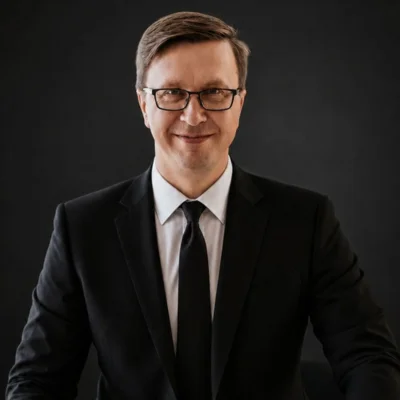
About
Some business leaders build systems that improve efficiency. Others develop strategies that accelerate growth. Kaido Kubri has spent more than two decades doing something equally important yet often overlooked, helping people understand why organizations succeed or struggle through the human experience behind every system. His career has spanned multiple industries, leadership disciplines, and international markets, yet one purpose has remained constant: understanding how people with different perspectives can work together more effectively.
From his early years in direct sales to managing international visa operations, leading executive coaching initiatives, and currently serving among his other projects as Chief Experience Officer at Reverse Resources, Kaido has consistently discovered that lasting organizational success depends not only on well-designed processes but also on understanding how people experience those processes. This realization has shaped his mission of building the intellectual and emotional infrastructure that enables individuals, teams, and organizations to thrive.
The foundation of this philosophy was established early in his career. Between 2001 and 2007, Kaido spent seven summers participating in the Southwestern Advantage educational sales program in the United States, engaging in more than 20,000 face-to-face conversations while selling educational books door to door. Although the conversations followed similar structures, every individual responded differently.
Some wanted immediate facts, while others first needed trust. Some appreciated concise discussions, while others preferred a personal connection before making decisions. Rather than treating these differences as obstacles, Kaido became fascinated by how people interpreted identical situations in completely different ways. His introduction to the DISC behavioural model provided language for observations he had already developed through practical experience.
Instead of asking why people behaved differently, he began asking a more valuable question: What might this person be paying attention to that I am not? That perspective became one of the defining principles of his leadership journey.
The same lesson resurfaced when Kaido began building and managing the European J-1 visa process for Southwestern Advantage, a responsibility he held for approximately fifteen years starting in 2005. Coordinating the successful travel of more than 6,200 university students from Estonia, Latvia, Lithuania, Poland, and Slovakia to the United States required collaboration among embassies, universities, parents, students, sponsors, and sales leaders.
While the operational processes were carefully designed, Kaido realized that even excellent systems encounter challenges when stakeholders experience them differently. A university administrator viewed the process differently from a nineteen-year-old student. Parents sought reassurance in ways experienced sales leaders did not, while government agencies carried responsibilities unlike sponsoring organizations.
This experience reinforced a lasting insight: processes explain what should happen, but organizations also need to understand how people experience what is happening. Many workplace challenges arise not from inefficient systems but from differences in communication, expectations, trust, and interpretation. Improving a process alone cannot always solve issues rooted in human relationships.
As Kaido expanded into leadership development, DISC training, and executive coaching from 2010 onward, he refined these observations into a practical framework for understanding organizational behaviour. Working with entrepreneurs, executives, educators, and leadership teams across industries, he found it increasingly valuable to evaluate challenges through three interconnected dimensions: the individual, the relationship, and the system.
Every individual brings unique behavioural patterns, communication preferences, and decision-making styles. These characteristics influence relationships, while organizational systems shape expectations and outcomes. Looking at challenges through these three lenses often reveals that apparent personality conflicts may actually be structural issues, while performance concerns sometimes originate in relationships rather than individuals.
This multidimensional perspective has become a defining element of Kaido's leadership philosophy and continues to guide organizations seeking more sustainable approaches to collaboration and change.
His appointment as Chief Experience Officer at Reverse Resources in 2025 brought these ideas into an even broader international setting. Working with teams and stakeholders across Europe, Bangladesh, India, and Vietnam has deepened his appreciation of cultural diversity while reinforcing the universal human questions shared across borders.
Although communication styles and leadership practices vary between cultures, Kaido has consistently observed that trust, belonging, responsibility, expectations, psychological safety, and meaningful contribution remain universal concerns. Recognizing these shared experiences enables organizations to build stronger cultures without overlooking cultural differences.
These international experiences have also shaped My Human Pattern, Kaido's long-term intellectual platform dedicated to helping individuals and organizations develop deeper self-awareness and stronger collaboration. Rather than serving as another consulting methodology, the initiative is being developed as an intellectual property platform that includes practical frameworks, research, assessments, educational resources, books, digital tools, and technology designed to help people better understand themselves and others.
His ambition extends beyond offering advice. Kaido aims to create ideas that can be taught, tested, adapted across cultures, and continually improved through practical application. By strengthening both intellectual and emotional infrastructure alongside operational excellence, he believes organizations can communicate more effectively, navigate differences constructively, and achieve stronger collective outcomes.
More than twenty-five years after beginning those conversations on American doorsteps, Kaido Kubri remains guided by the same curiosity that first inspired his career: What might another person be paying attention to that I am not? That question has evolved from understanding individual behaviour to exploring how organizations, educational institutions, and communities can become places where people understand themselves, and one another, with greater clarity and empathy. In an increasingly interconnected business world, where technology continues to transform how people work, his human-centred philosophy reminds us that sustainable progress is built not only through better systems but through a deeper understanding of the people who bring those systems to life.
Kaido has also translated his experience into published works that make these ideas accessible to a wider audience. His first book, Why Can't People Just Be Normal? (2024), currently available in Estonian, became the first book in the Baltics to outline the fundamentals and practical applications of the DISC personality styles model based on more than twenty years of experience. His 2026 e-book, Breaking the Self-Abuse Cycle: How to Stop Shrinking, Start Living, and Come Back to Yourself (e-book), combines insights, practical tools, and lessons gathered over twenty-five years of working with people, offering readers accessible methods to overcome self-limiting behaviours and build healthier relationships with themselves.