
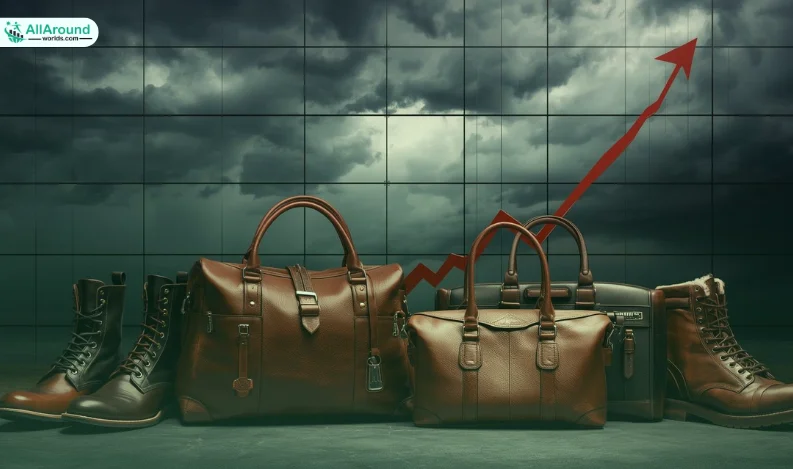
Tariffs Drive Up Leather Prices, Pushing Boots and Handbags Higher With Relief Years Away
Across the U.S. retail market, leather goods are becoming noticeably more expensive as manufacturers grapple with higher import duties, rising freight costs and a shrinking supply of raw hides. Industry data shows prices for leather footwear and accessories have already climbed at near double-digit rates in some categories this year, with further increases expected.
At Western footwear maker Twisted X, the impact was immediate. When sweeping import tariffs took effect earlier this year, the Texas-based company halted shipments mid-transit, recalculated pricing repeatedly and set up what executives described as an internal “tariff war room” to manage volatile costs.
Executives across the leather industry report similar challenges. Pre-tariff inventory has largely cleared shelves, while new products are being made with higher-priced hides, processed overseas at greater cost and shipped under elevated freight rates. The result is sustained margin pressure that is increasingly being passed on to consumers.
According to projections from the Yale Budget Lab, prices for leather goods are expected to remain elevated by nearly 22% over the next one to two years. The outlook reflects a combination of tariff exposure, lingering supply bottlenecks and structural weaknesses in the global leather trade.
Analysts note that leather has been hit particularly hard because a large share of U.S. imports comes from countries now facing some of the highest tariff rates. China, Vietnam, Italy and India play central roles in tanning, processing and manufacturing leather products for the U.S. market, leaving brands highly exposed to trade policy shifts.
Major fashion and accessories companies are already reporting material financial impacts. Executives at Tapestry, the parent company of Coach and Kate Spade, told investors that tariff-related costs could reach $160 million, warning of greater-than-expected pressure on profits.
Global supply chains under strain
Most leather goods sold in the U.S. follow a complex international supply chain. Raw hides are often sourced domestically, shipped overseas for tanning, then sent to factories in Asia or Latin America for assembly before being imported back into the U.S. as finished products.
While this system historically kept costs low, it has become a liability amid rising trade barriers. As companies attempted to exit China, many encountered new bottlenecks in alternative manufacturing hubs, including Cambodia, Bangladesh and Vietnam. In some cases, sudden tariff increases, including steep duties imposed on Indian leather exports, further complicated sourcing decisions.
By late summer, industry executives say costs had increased at every stage of production, from hides and tanning to assembly and re-importation. While some companies absorbed part of the impact, pricing buffers are thinning.
Twisted X raised prices by roughly 1% to 3% this year, a relatively modest increase compared with some competitors. However, executives caution that future price stability will be harder to maintain as higher costs continue to work their way through the system.
Luxury brands are also adjusting prices. Data from retail pricing trackers shows high-end handbags have risen again in 2025, following multiple increases over the past few years. Analysts expect the most visible consumer impact to emerge in 2026, when higher-cost inventory becomes unavoidable.
Domestic capacity and cattle shortages add pressure
The industry’s ability to pivot back to domestic production remains limited. U.S. leather manufacturing has declined sharply over the past several decades, with the number of tanneries and workers falling to a fraction of mid-20th-century levels. As a result, most companies remain reliant on overseas processing despite rising tariffs.
At the same time, raw material shortages are intensifying. The U.S. cattle herd has dropped to its smallest size since the 1950s following prolonged drought, high feed costs and herd liquidation. Since hides are a byproduct of beef and dairy production, fewer cattle directly translate into tighter leather supply.
The scarcity of high-quality hides is pushing up costs for premium footwear, handbags and upholstery. Even synthetic alternatives have not escaped the impact, as many faux-leather materials rely on petrochemical inputs sourced from tariff-exposed regions.
Industry analysts warn that companies face difficult choices ahead, whether to raise prices further, cut costs through layoffs, or reduce shareholder returns. For consumers, meaningful relief appears unlikely in the near term.






Recent Comments:
No comments yet.