
Taiwan Rejects U.S. Call to Move 40% of Chip Supply Chain
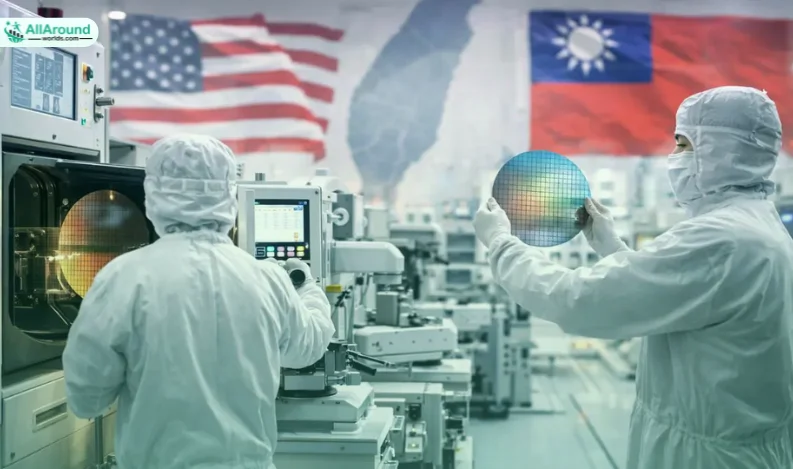
Taiwan has rejected a proposal from the United States to relocate 40 percent of its semiconductor supply chain to U.S. soil, calling the plan impossible to carry out.
Speaking in a local television interview, Taiwan’s Vice Premier and top trade negotiator Cheng Li-chiun said she had clearly told Washington that Taiwan’s semiconductor ecosystem, built over decades, cannot simply be moved abroad.
Her comments push back against recent onshoring targets outlined by Howard Lutnick, who said earlier this year that the U.S. wants a large share of Taiwan’s chip production to take place in America.
Trade Agreement and Tariff Pressure
Under a recent U.S.–Taiwan trade agreement, Taiwanese technology companies pledged $250 billion in direct investment in the United States, along with an additional $250 billion in credit support to expand production capacity.
In return, Taiwan was offered higher tariff-free export quotas for chips sold to the U.S. However, Lutnick has warned that Taiwan-based chipmakers that do not build manufacturing facilities in the U.S. could face tariffs of up to 100 percent.
TSMC Investment Plans
Taiwan Semiconductor Manufacturing Co has already made significant investments in U.S. manufacturing.
The company has committed more than $65 billion to U.S. chip plants and plans to expand that figure to $165 billion, supported by incentives under the U.S. CHIPS and Science Act. TSMC supplies advanced chips to major U.S. companies including Apple and Nvidia.
Despite these investments, Taiwan has maintained policies to protect its domestic chip industry. Taiwanese authorities require overseas TSMC plants to operate with technologies at least two generations behind those used in Taiwan, a rule commonly known as the N-2 policy.
Industry and Security Concerns
Semiconductor analysts broadly agree with Cheng’s view that relocating such a large share of Taiwan’s chip industry is not feasible. They cite Taiwan’s deeply integrated supply chain, higher costs abroad, and labor shortages in the U.S. as major obstacles.
Geopolitical analysts also point to Taiwan’s central role in global chip production, often referred to as the “Silicon Shield”, which is seen as a strategic factor in U.S. support for the island. China claims sovereignty over Taiwan, which operates as a self-governed democracy.
The U.S. Commerce Department did not immediately respond to requests for comment.
TSMC shares were trading higher in Taiwan on Tuesday.





Recent Comments:
No comments yet.