
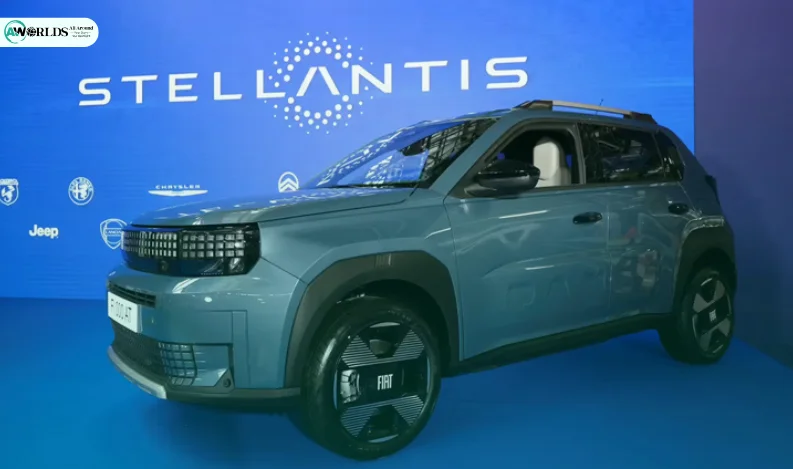
Stellantis to Invest €1 Billion in France for New Peugeot EV and Hybrid Vehicle Production
Automaker Stellantis has announced a €1 billion investment in its Mulhouse manufacturing facility in eastern France to develop and produce three new Peugeot electric and hybrid models, reinforcing its commitment to the European automotive market amid growing competition from Chinese rivals.
The investment, unveiled on Tuesday, will support the production of compact sedans and sport utility vehicles (SUVs) beginning in 2029. The new models are expected to strengthen Peugeot's position in one of Europe's most competitive vehicle segments, which accounts for approximately 30% of total car sales across the region.
The announcement comes as European automakers face mounting pressure from rapidly expanding Chinese electric vehicle manufacturers, including BYD, MG Motor and Chery, which have gained market share by offering competitively priced EVs. At the same time, traditional carmakers are navigating slowing demand in China, evolving consumer preferences and trade-related challenges.
Stellantis said the investment forms part of its broader €60 billion strategic plan aimed at restoring profitability and strengthening its product portfolio over the next five years. The decision also confirms plans previously outlined by French President Emmanuel Macron during a visit to the site last month.
The company, which owns several major automotive brands including Stellantis, Peugeot, Fiat, Jeep and Ram, is increasingly focusing its resources on key brands and next-generation vehicle technologies.
The latest investment follows a challenging period for the group. Earlier this year, Chief Executive Officer Antonio Filosa acknowledged that the company had overestimated demand for electric vehicles in several markets. Stellantis subsequently recorded a €22 billion write-down related to its EV investments and initiated a strategic review of its operations.
In response, the company introduced its STLA One electric vehicle platform, which is designed to reduce production costs and accelerate the rollout of new electric models. Industry analysts view the platform as a critical component of Stellantis' efforts to improve efficiency while competing in an increasingly crowded EV market.
Alongside investments in new products, Stellantis is restructuring parts of its European manufacturing network. The automaker plans to reduce production capacity in Europe by around 20%, equivalent to roughly 800,000 vehicles annually, while concentrating investments on its strongest-performing brands.
The company is also deepening cooperation with Chinese automotive partners to expand its global reach. Recently, Chinese automaker Dongfeng Motor Corporation entered into a joint venture agreement with Stellantis covering manufacturing, engineering and sales activities in Europe.
Industry experts say the Mulhouse investment highlights the growing importance of hybrid and electric vehicles in Stellantis' long-term strategy as European manufacturers race to remain competitive against lower-cost Chinese rivals and meet increasingly stringent emissions regulations.
The new Peugeot models are expected to play a key role in the company's efforts to strengthen its market position while supporting France's ambitions to remain a major hub for automotive manufacturing and innovation in Europe.






Recent Comments:
No comments yet.