
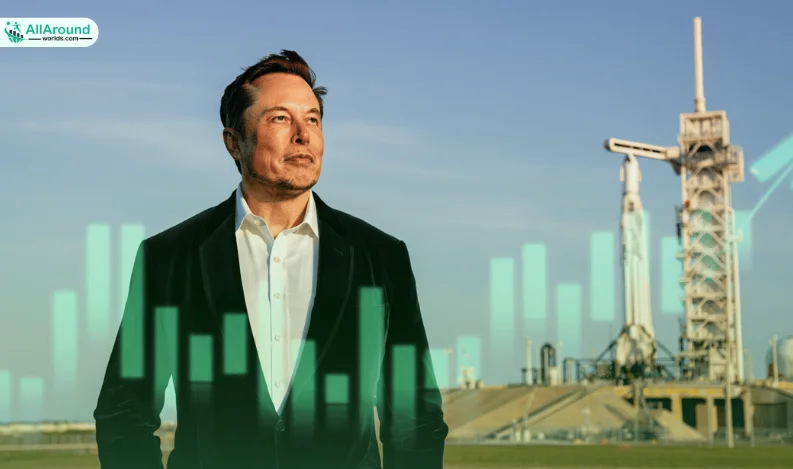
The $1.5 trillion question: Can SpaceX deliver the biggest IPO in history?
Wall Street is beginning to take seriously a question that once sounded like science fiction: could SpaceX go public at a valuation as high as $1.5 trillion?
Recent signals from SpaceX founder Elon Musk, combined with a major secondary share sale, have pushed the prospect of a SpaceX initial public offering from speculation into active market discussion.
According to CNBC, bankers and large institutional investors are already positioning for what could become the largest IPO ever, surpassing the record set by Saudi Aramco.
A private valuation that changed the conversation
The renewed IPO buzz follows a recent secondary share sale that valued SpaceX at approximately $800 billion, Reuters reported, citing a shareholder letter. The transaction allowed existing investors and employees to sell shares, offering one of the clearest signals yet of how the private market views the company’s worth.
That valuation alone has reshaped expectations. A company once viewed as a capital-intensive rocket builder is now being discussed as a potential trillion-dollar public enterprise, a shift driven by both operational scale and future revenue ambitions.
Musk added fuel to the speculation late last month, saying reports of SpaceX’s IPO plans were “accurate,” according to CNBC. While no timeline has been announced, the acknowledgment has been enough to send analysts and investors running the numbers.
Why investors see room for a record debut
Launch dominance and Starlink scale
SpaceX continued to expand its operational lead in 2025, setting new annual launch records and deploying more than 3,000 satellites as its Starlink network grew, according to Space.com’s year-end data.
The pace matters to markets. High-frequency, repeatable launches suggest a business moving beyond bespoke missions toward infrastructure-level reliability. For investors, that transition changes the valuation conversation from aerospace risk to scalable platform economics.
The next frontier: data and compute in orbit
Another layer of investor interest is tied to the idea that space-based infrastructure could play a role in future data and AI workloads. CNBC and Reuters have reported that SpaceX is exploring ambitions related to space-based data centres, an idea still constrained by engineering realities but closely watched amid the global AI investment boom.
Even optimistic analysts acknowledge the technical challenges. The question for markets is whether SpaceX can move fast enough for these ambitions to influence an IPO narrative rather than remain long-term optionality.
Big money is already positioned
Several high-profile investors have already secured exposure through private markets. CNBC noted that funds linked to Ron Baron and Cathie Wood hold SpaceX stakes, positioning them ahead of any public listing.
While those holdings do not guarantee broad IPO access, they help shape investor sentiment and reinforce the perception that SpaceX is no longer just a speculative moonshot.
A shifting Musk portfolio
The timing is notable. A potential SpaceX IPO would come as Musk’s electric-vehicle flagship faces headwinds. Tesla reported weaker-than-expected deliveries in 2025, and China’s BYD overtook Tesla as the world’s top EV seller, Reuters reported earlier this week.
That contrast, cooling momentum at Tesla and rising enthusiasm around SpaceX, has sharpened investor focus on SpaceX as Musk’s most compelling growth story.
No date yet, but expectations are set
For now, SpaceX remains private, and any IPO would likely hinge on market conditions, regulatory considerations, and Musk’s broader strategic priorities. Still, the numbers being discussed, $800 billion privately, $1.5 trillion publicly, suggest expectations are already being priced in.
Whether SpaceX ultimately delivers on that scale or not, the debate itself signals how far the company has traveled from startup launch pads to the center of global capital markets.




Recent Comments:
No comments yet.