
South Korea Prosecutors Seek Death Penalty for Former President Yoon Over 2024 Martial Law Attempt
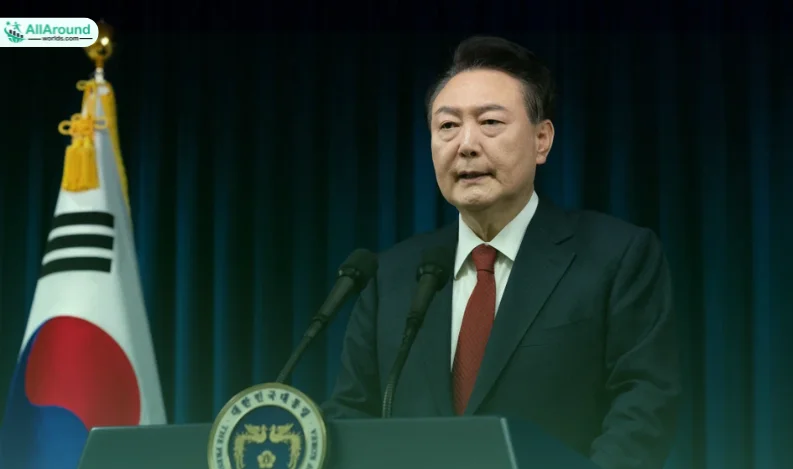
South Korea’s special prosecutor has formally requested the death penalty for former president Yoon Suk Yeol, accusing him of leading an insurrection through his failed attempt to impose martial law in late 2024.
The request was submitted as Yoon’s trial concluded late Tuesday, with the court scheduled to deliver its verdict on February 19. Prosecutors argue that Yoon’s actions amounted to an unconstitutional seizure of power, a charge that carries the maximum punishment under South Korean law and is not protected by presidential immunity.
If the sentence were carried out, it would mark South Korea’s first execution in nearly three decades. The country has not carried out capital punishment since 1997, despite retaining the death penalty in its criminal code.
According to prosecutors, Yoon declared martial law with the intent of consolidating power by undermining the judiciary and legislature. During final arguments, special counsel Cho Eun-suk’s team said the former president sought to extend his hold on authority by force, citing South Korean media reports from the hearing.
Yoon has denied the accusations, maintaining that the declaration was lawful and within his constitutional authority. He told the court the move was intended to protect national sovereignty and public order. At the time of the declaration, Yoon accused the then-opposition Democratic Party of Korea of engaging in anti-state activities and colluding with North Korean elements.
The events stem from a late-night address on December 3, 2024, when Yoon ordered troops to the National Assembly after declaring martial law. Soldiers blocked access to the building and clashed with protesters and lawmakers as special forces attempted to enter the chamber.
Within three hours, however, 190 of the Assembly’s 300 lawmakers managed to convene and unanimously voted to overturn the order. Yoon formally lifted martial law approximately six hours after its announcement.
Human rights groups have closely followed the case. Amnesty International classifies South Korea as “abolitionist in practice,” noting that while capital punishment remains legal, the country has maintained a de facto moratorium on executions for almost 30 years.
The case has revived memories of South Korea’s authoritarian past. The country’s last successful military coup occurred in 1979, when then-army general Chun Doo-hwan seized power following the assassination of President Park Chung-hee. Chun later expanded martial law nationwide in 1980, triggering the Gwangju uprising, during which hundreds, and possibly thousands, of civilians were killed during a violent military crackdown.
Chun was sentenced to death in 1996 for his role in the coup, though the sentence was later commuted to life imprisonment.
Legal analysts say the outcome of Yoon’s case could carry profound implications for South Korea’s democratic institutions, presidential accountability, and the future application of capital punishment.






Recent Comments:
No comments yet.