
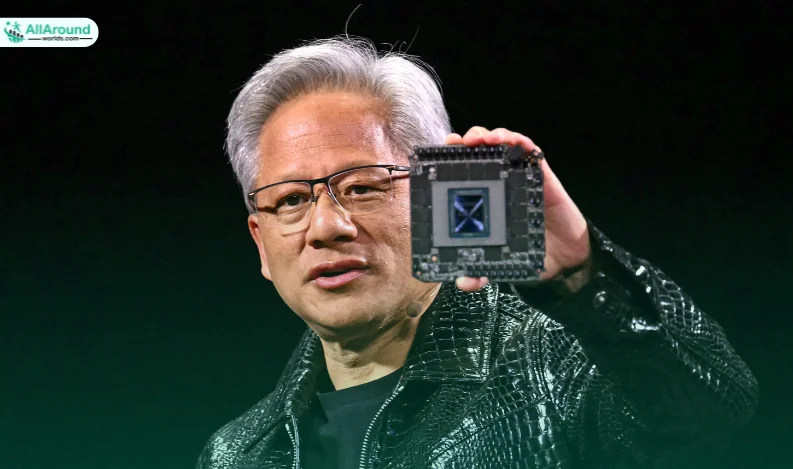
Nvidia’s Jensen Huang Says Markets ‘Got It Wrong’ on AI Threat to Software Firms
Nvidia Chief Executive Jensen Huang said markets have misjudged the impact of artificial intelligence on software companies, arguing that fears of widespread disruption are overstated.
Speaking to CNBC following Nvidia’s latest earnings report, Huang pushed back against concerns that AI agents would cannibalize the enterprise software industry.
“I think the markets got it wrong,” Huang said, responding to investor anxiety that rapid advances in AI could undermine traditional software providers.
Instead, Huang described a future where so-called “agentic AI” systems act as tool users, relying on existing enterprise software platforms to complete tasks more efficiently. He said AI agents would enhance productivity by using established software tools rather than replacing them.
He cited commonly used platforms such as Microsoft Excel and enterprise systems developed by companies including ServiceNow, SAP, Cadence Design Systems, and Synopsys.
“These tools exist for a fundamentally good reason,” Huang said. “These agentic AI systems will be intelligent software that uses these tools on our behalf and helps us be more productive.”
The comments came shortly after Nvidia reported strong quarterly results. Revenue for the fiscal fourth quarter rose 73% year-on-year to $68.13 billion, surpassing analyst expectations of $66.21 billion.
The company also issued upbeat guidance for the current quarter, forecasting revenue of $78 billion, plus or minus 2%, well above Wall Street estimates of $72.6 billion.
Investor concerns have grown in recent months over whether heavy spending on AI infrastructure and hardware can be sustained. The rapid rise in valuations across the AI ecosystem has prompted warnings of potential overcapacity and a speculative bubble.
Software stocks have been particularly volatile. The S&P 500 software and services index has fallen nearly 23% this year, reflecting fears that AI could automate workflows, compress pricing and lower barriers to entry.
Following Huang’s remarks and Nvidia’s earnings release, software shares were mixed in after-hours trading. Synopsys declined 3.6%, Cadence fell 0.9%, ServiceNow was little changed, and SAP edged higher.
Some market participants remain cautious. Dan Niles, founder of Niles Investment Management, said not all software firms would withstand the shift toward AI-driven automation. He warned that some companies could struggle if unable to adapt.
However, others argue that established software providers have the scale and resources to evolve alongside technological change. CNBC host Jim Cramer dismissed more pessimistic forecasts, saying software companies are capable of restructuring and adapting to new competitive pressures.
Nvidia shares rose as much as 2% in extended trading following the results, as investors reacted positively to the company’s outlook and continued strength in AI-related demand.
Huang’s remarks highlight the broader debate in financial markets over whether artificial intelligence represents an existential threat to traditional software businesses or an opportunity for transformation and growth.






Recent Comments:
No comments yet.