
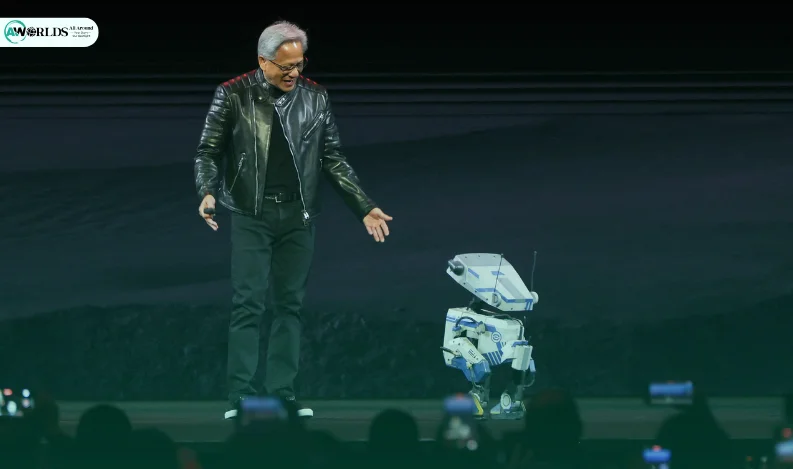
Nvidia to Showcase New AI Technologies at Annual GTC Developer Conference
Nvidia is expected to unveil a series of new artificial intelligence technologies and partnerships at its annual developer conference this week as the company faces increasing competition in the rapidly expanding AI chip market.
Chief Executive Jensen Huang is scheduled to open the event on Monday, where he is likely to present updates on Nvidia’s latest developments in AI chips, data-centre infrastructure and software platforms.
The four-day conference, known as Nvidia GTC, has become one of the most closely watched events in the technology industry. Each year the company uses the platform to introduce new hardware, software tools and research aimed at advancing artificial intelligence.
Analysts say the event will be closely monitored by investors as Nvidia seeks to demonstrate that its heavy investments in AI infrastructure are continuing to drive growth.
Growing Competition in AI Chips
Nvidia currently dominates the global market for chips used to train and run artificial intelligence systems. The company’s graphics processing units (GPUs) power large data centres used by governments, technology companies and AI research groups around the world.
However, competition is growing as some of Nvidia’s biggest customers begin designing their own chips.
Companies such as OpenAI and Meta are developing custom processors designed specifically for AI workloads. These specialised chips, known as application-specific integrated circuits, can be more efficient for certain tasks.
Despite the emerging competition, analysts estimate Nvidia still holds more than 90 percent of the market for AI training and inference chips.
Industry experts believe Nvidia’s market share could gradually decline after 2027 as large technology companies expand their in-house chip programs.
Focus on AI Inference and ‘Agentic AI’
Analysts expect Nvidia to focus heavily on the next phase of artificial intelligence known as AI inference, where trained models perform tasks for users in real time.
The company is also expected to highlight developments in “agentic AI,” systems capable of carrying out tasks across different applications on behalf of human users.
As AI agents become more widespread, technology companies are developing new layers of computing infrastructure to coordinate these systems. This process, known as AI orchestration, manages communication between users and large networks of AI agents.
Experts say the shift toward inference computing could reshape the AI chip market in the coming years.
Nvidia Strengthening Its Technology Portfolio
To expand its capabilities in inference computing, Nvidia recently agreed to acquire AI chip startup Groq in a deal valued at $17 billion.
Groq specialises in processors designed to perform inference tasks quickly and efficiently.
Analysts expect Nvidia to introduce new server systems at the conference that combine Groq’s technology with Nvidia’s networking hardware.
Such systems could help data centres process AI workloads faster while reducing energy costs.
CPUs Returning to the Spotlight
While Nvidia is best known for its GPUs, analysts believe the company may also highlight a renewed focus on central processing units (CPUs).
CPUs are increasingly important for coordinating AI agents and managing the orchestration layer between multiple systems.
Some analysts expect Nvidia to introduce servers that rely primarily on CPUs to address these workloads.
New Data-Centre Connectivity Technology
Nvidia may also discuss recent investments in advanced optical communication technologies used to link processors inside large data centres.
The company has invested $2 billion each in Lumentum and Coherent, firms that produce laser technology capable of transmitting data between chips using beams of light.
These technologies, known as co-packaged optics, could significantly improve the speed of connections between processors in large AI clusters.
However, analysts say one of the main challenges will be producing the technology at a scale large enough to match demand for AI computing infrastructure.
AI Market Continues to Expand
Demand for AI computing power continues to grow rapidly as companies invest heavily in data centres and AI applications.
Nvidia’s processors remain central to much of this investment, powering systems used for machine learning, robotics, and digital assistants.
Industry analysts say the announcements expected at the GTC conference will provide insight into how Nvidia plans to maintain its leadership in the evolving AI ecosystem while responding to growing competition in the sector.





Recent Comments:
No comments yet.