
Nvidia CEO Sees $1 Trillion Demand for AI Systems at GTC 2026
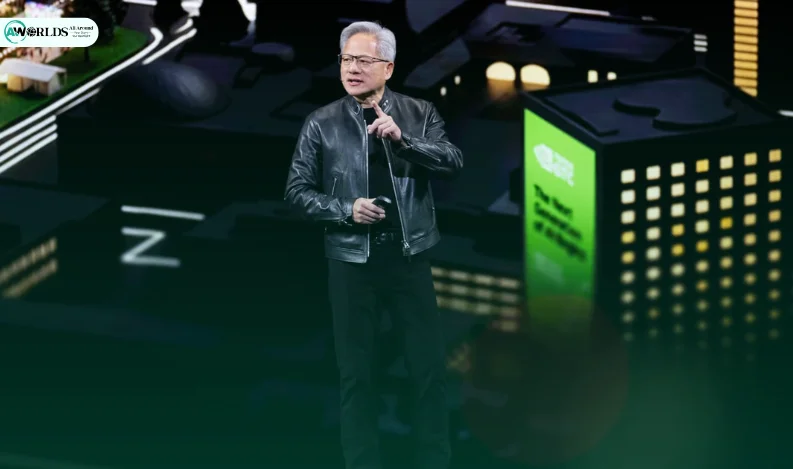
Nvidia CEO Jensen Huang announced that the company expects up to $1 trillion in purchase orders for its next-generation AI systems, Blackwell and Vera Rubin, through 2027, signalling continued explosive growth in the artificial intelligence sector.
Speaking at Nvidia’s annual GTC developer conference in San Jose, Huang highlighted surging demand from both startups and large enterprises, driven by rapid advancements in AI applications. The projection significantly exceeds the company’s earlier estimate of a $500 billion revenue opportunity tied to the same technologies.
The strong outlook reflects a broader shift in computing, as AI evolves beyond chatbots into more advanced “agentic” systems capable of performing tasks autonomously. This transition is increasing demand for faster processing, higher efficiency, and greater computing capacity.
Nvidia, now one of the world’s most valuable companies, has benefited from the growing need for high-performance graphics processing units (GPUs) used in AI workloads. The company reported continued revenue growth momentum, with expectations of another sharp increase in the current quarter.
Huang also introduced several new developments during the conference. Nvidia is set to launch its Vera Rubin system later this year, which is designed to deliver significantly improved performance while reducing energy consumption — a key concern in large-scale AI deployment.
In addition, the company unveiled the Groq 3 Language Processing Unit (LPU), a new chip designed to complement its existing GPU architecture. The technology is expected to improve efficiency and accelerate AI processing capabilities, particularly in handling large volumes of data.
Nvidia showcased a new rack system that integrates these chips, aiming to enhance performance and scalability for enterprise-level AI applications. The system is designed to optimise both high-throughput and low-latency processing requirements.
Looking ahead, Huang revealed early details of the company’s next-generation architecture, Kyber, expected to launch in 2027. The design focuses on increasing computing density and improving system efficiency, further strengthening Nvidia’s position in the AI infrastructure market.
Beyond hardware, Nvidia is expanding its ecosystem with tools for developers. The company introduced new software frameworks to support emerging AI applications, enabling businesses to build more advanced and autonomous systems.
In the automotive sector, Nvidia announced progress in its partnerships, including plans to deploy autonomous vehicle technology across multiple global markets. Several major car manufacturers are developing advanced driverless systems using Nvidia’s platforms.
The announcements at GTC 2026 underline Nvidia’s central role in the global AI boom, as demand for computing power continues to rise. With large-scale investments and new product rollouts, the company is positioning itself to remain a key driver of innovation in artificial intelligence over the coming years.





Recent Comments:
No comments yet.