
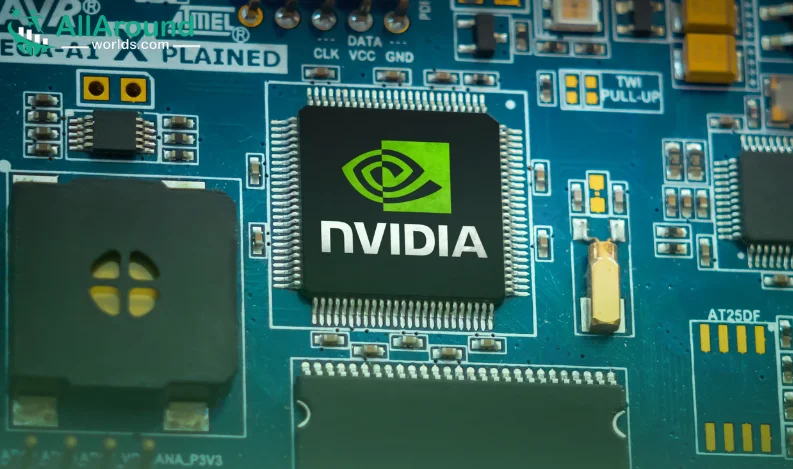
MetaX and Moore Threads IPOs Highlight China’s Growing Challenge to Nvidia
Shanghai: The blockbuster stock market debuts of Chinese chipmakers MetaX Integrated Circuits and Moore Threads are underscoring investor confidence in China’s push to build homegrown alternatives to Nvidia, even as significant technological gaps remain.
MetaX shares surged more than 700 percent on their first day of trading in Shanghai on Wednesday, following a similarly strong debut by Moore Threads, which climbed over 400 percent during its market listing earlier this month. The rallies reflect rising domestic investment in local AI chip developers as China accelerates efforts to reduce reliance on foreign semiconductor technology.
Both companies are developing graphics processing units (GPUs), the critical chips that underpin advanced artificial intelligence workloads and have helped propel Nvidia to global dominance.
Investor optimism meets geopolitical reality
Chinese investor enthusiasm is being driven by expectations that Beijing will ultimately succeed in building a self-sufficient semiconductor ecosystem amid prolonged technology tensions with the United States.
“Long-term expectations around semiconductor self-reliance are shaping how investors view these IPOs,” said Eugene Hsiao, equity analyst at Macquarie. “The belief is that China will continue to support domestic champions in strategic technologies like AI.”
Washington continues to restrict China’s access to Nvidia’s most advanced processors. While the United States has relaxed some export curbs, Chinese firms remain barred from purchasing Nvidia’s highest-performance chips. At the same time, Chinese regulators are seeking to limit domestic dependence on foreign AI hardware as part of broader industrial policy goals.
Despite rapid progress, none of China’s AI chipmakers has yet produced processors comparable to Nvidia’s most advanced offerings.
Progress despite structural constraints
Export controls continue to create bottlenecks in parts of China’s semiconductor supply chain, particularly in advanced manufacturing equipment. However, analysts note that China has made meaningful advances in other areas, including memory technologies and system-level integration.
Rather than competing chip-for-chip, some Chinese firms are pursuing alternative strategies that leverage large-scale computing clusters to offset performance gaps.
Huawei’s system-level approach
Huawei remains one of the most prominent players in the domestic AI chip landscape. The company develops the Ascend series of processors, with its next-generation Ascend 950 expected to launch in 2026.
While earlier Ascend chips have lagged Nvidia on individual performance metrics, Huawei has focused on building high-performance clusters by linking a larger number of processors together.
“This approach relies on high-speed interconnects to move data efficiently across large clusters,” said Brady Wang, associate director at Counterpoint Research. “It plays to China’s strengths by reducing dependence on cutting-edge chips.”
Nvidia itself has acknowledged Huawei as a growing competitor at the system level.
Baidu and Alibaba expand in-house chip efforts
Baidu, China’s largest search engine, has increasingly invested in AI hardware through its chip subsidiary Kunlunxin. In November, the company outlined a five-year roadmap for its Kunlun AI processors, with new generations planned for release in 2026 and 2027.
The company operates a hybrid model, combining self-developed chips with Nvidia products in its data centers. Analysts at Deutsche Bank describe Kunlunxin as one of the leading domestic AI chip developers, particularly for large language model training, inference, and cloud workloads.
Alibaba has also been developing AI chips since the late 2010s, with recent designs focused more on inference rather than training. Analysts say improved performance from its in-house chips has supported growth in the company’s cloud computing business.
Cambricon posts strong growth
Another notable player is Cambricon, which reported record profits in the first half of 2025 as revenue surged more than forty-fold year-on-year. The company focuses on chips for AI training and inference and is increasingly viewed by investors as a leading domestic alternative for AI accelerators.
“We see Cambricon as one of the most plausible winners in China’s AI accelerator market,” said Jamie Mills O’Brien, investment director at Aberdeen, noting that ecosystem maturity and client adoption will be critical over the next two years.
New entrants gain momentum
MetaX, founded in 2020 by former AMD executive Chen Weiliang, raised nearly $600 million in its IPO. Moore Threads, established by a former head of Nvidia’s China operations, is often referred to by investors as “China’s Nvidia” and plans to unveil its latest GPU architecture at a developer conference in Beijing later this week.
Other emerging firms include Enflame, which designs AI training chips for data centers, and Biren Technology, a high-performance GPU developer that recently received regulatory approval for an IPO.
A long road ahead
While China’s AI chip sector is attracting significant capital and policy support, analysts caution that closing the gap with Nvidia will take time. Challenges around manufacturing maturity, ecosystem development, and software compatibility remain substantial.
For now, the soaring IPOs of MetaX and Moore Threads reflect confidence in China’s strategic direction rather than parity in performance. Whether that confidence translates into sustained competitiveness will depend on how quickly domestic chipmakers can convert capital inflows into technological breakthroughs.






Recent Comments:
No comments yet.