
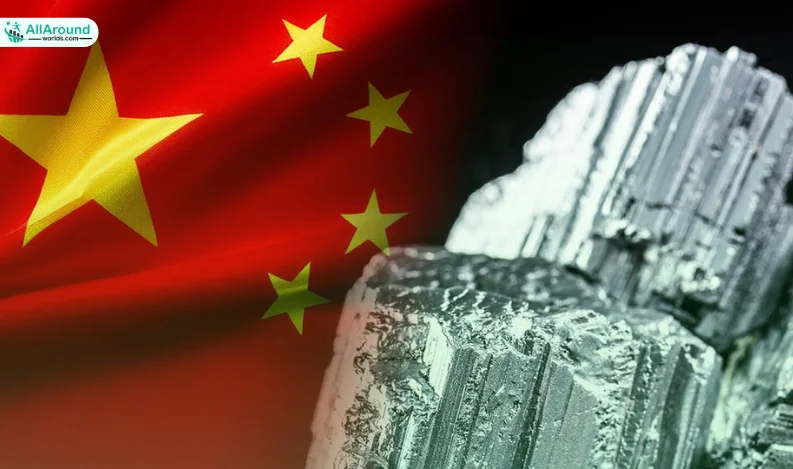
China to Tighten Silver Export Controls, Echoing Rare Earths Strategy
Beijing: China is set to impose tighter controls on silver exports starting Thursday, extending its regulatory grip over a metal that has become increasingly critical to global industrial, energy, and defence supply chains.
The new measures place silver under export oversight similar to that applied to rare earth elements, according to reporting by China’s state-run Securities Times, which cited an industry insider familiar with the policy framework. While Beijing has not announced an outright ban, the changes elevate silver from an ordinary commodity to a strategically managed material.
The move underscores China’s growing use of export controls as a policy tool at a time of heightened geopolitical and economic competition.
Strategic metal under tighter oversight
China’s Ministry of Commerce first announced the revised export regime in October as part of broader efforts to strengthen oversight of rare and strategic metals. The announcement coincided with high-level diplomatic engagements between Xi Jinping and then-US President Donald Trump, during which Beijing agreed to temporarily pause certain rare earth restrictions while Washington eased some tariffs.
Earlier this month, Chinese authorities published a list of 44 companies authorised to export silver under the new framework for 2026 and 2027. The same rules also tighten export controls on tungsten and antimony, two materials in which China holds dominant global supply positions and which are widely used in advanced manufacturing and defence technologies.
Industry and market reaction
The decision has drawn attention from global industry leaders. Elon Musk criticised the move over the weekend, warning that silver is essential to many industrial processes, including electronics, energy systems, and advanced manufacturing.
China is one of the world’s largest producers of silver and also holds some of the biggest known reserves. According to official data cited by Wind Information, the country exported more than 4,600 tonnes of silver in the first 11 months of the year, compared with imports of roughly 220 tonnes over the same period.
The EU Chamber of Commerce in China said in a November survey that a majority of its members have been or expect to be affected by China’s expanding export controls on strategic materials.
In the United States, silver was added to the national list of critical minerals in November, reflecting its importance in electrical circuits, batteries, solar panels, and medical equipment. Analysts say China’s tightening grip on supply could heighten vulnerabilities in Western supply chains.
Prices surge as investors hedge
The policy shift comes amid a sharp rise in silver prices. Investors have increasingly turned to precious metals as a hedge against a weakening US dollar, which has fallen nearly 9.5% in 2025, its worst annual performance since 2017.
Silver prices have more than doubled this year, putting the metal on track for its strongest annual performance since 1979. Prices briefly climbed above $80 an ounce earlier this week before retreating to around $73.
Market participants say physical supply has tightened. David Stein, chief executive of Canada-based Kuya Silver, said his firm was recently approached by buyers from China and India offering to purchase silver at premiums of $8 to $10 above market prices, highlighting growing competition for physical supply.
Economists warn that the price surge reflects broader macroeconomic unease. Tyler Cowen, a professor at George Mason University, said rising demand for silver and gold signals a shift away from dollar-denominated assets, calling it a warning sign for the US economy.
Echoes of the rare earths playbook
Analysts say China’s approach to silver mirrors its long-standing strategy with rare earths, maintaining export flows while using licensing, approvals, and compliance requirements to exert influence over global markets.
While Beijing insists the measures are aimed at improving oversight rather than restricting trade, the precedent suggests that strategic metals are increasingly being integrated into China’s economic and geopolitical toolkit.



Recent Comments:
No comments yet.