
China Holds Benchmark Lending Rates Steady as Beijing Signals Tolerance for Stronger Yuan
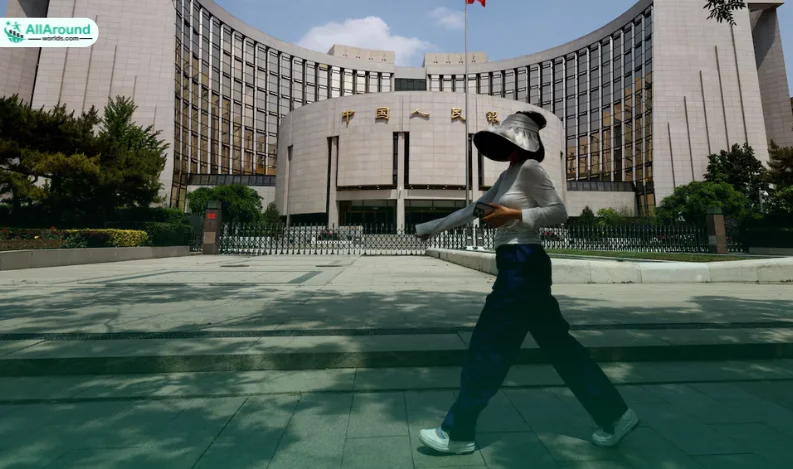
China’s central bank left its benchmark lending rates unchanged on Tuesday, underscoring Beijing’s cautious approach as it balances economic support with currency stability.
The People’s Bank of China (PBOC) maintained its one-year loan prime rate (LPR) at 3 percent and its five-year LPR at 3.5 percent. The decision marked the tenth consecutive month that authorities have opted to hold rates steady, despite mounting pressure from slowing economic momentum.
The one-year LPR serves as the benchmark for most corporate and household loans, while the five-year rate is widely used as a reference for mortgage lending. By keeping both rates unchanged, policymakers signaled a preference for targeted support measures rather than broad monetary easing.
Slowing Growth, Persistent Deflation Pressures
China’s economy expanded 4.5 percent year-on-year in the final quarter of last year, its slowest pace since the country lifted strict Covid-19 restrictions in late 2022. While growth remains within the government’s broader targets, the slowdown has highlighted structural weaknesses in domestic demand.
Consumer sentiment has been dampened by a prolonged real estate downturn, a challenging labor market, and uncertain income expectations. Retail sales growth slipped to 0.9 percent in December, marking a three-year low. At the same time, the GDP deflator, a broad measure of price changes across goods and services, has remained negative for 11 consecutive quarters, reflecting entrenched deflationary pressures.
In response, authorities have shifted focus toward boosting services consumption. Policymakers are promoting sectors such as elderly care, tourism, and leisure services in an effort to offset weak goods demand and reinvigorate overall spending.
Stronger Yuan Adds Policy Complexity
Alongside economic challenges, currency dynamics have added another layer of complexity for policymakers.
The Chinese yuan has strengthened in recent months, with the offshore yuan appreciating from around 6.974 per U.S. dollar at the beginning of the year to approximately 6.889 on Tuesday morning, according to market data. The central bank has signaled tolerance for gradual currency appreciation, particularly as the U.S. dollar has weakened.
Under China’s managed exchange rate system, the PBOC sets a daily midpoint for the yuan and allows it to trade within a 2 percent band on either side. In late January, authorities set the midpoint below the symbolic 7-per-dollar level for the first time in nearly three years, reinforcing expectations of a firmer currency stance.
A stronger yuan can help ease imported inflation and support capital stability. However, it may also pose challenges for exporters, who are already facing pressure from U.S. tariffs and intensifying competition from other manufacturing economies. Currency appreciation could erode price competitiveness at a time when external demand remains uncertain.
Outlook for 2026
Economists at ING forecast the yuan will fluctuate within a range of 6.85 to 7.25 per U.S. dollar this year, as Beijing continues efforts to internationalize its currency while maintaining macroeconomic stability. Analysts note that the key uncertainty for 2026 lies in whether policymakers maintain their strong commitment to exchange rate stability or allow greater flexibility if economic conditions deteriorate.
For now, the central bank’s decision to hold rates steady suggests a measured approach. Rather than deploying aggressive monetary stimulus, Beijing appears focused on preserving financial stability, managing currency strength, and implementing structural reforms aimed at strengthening domestic demand.
As global economic uncertainties persist, China’s policy path will remain closely watched by investors and trading partners alike, given its role as the world’s second-largest economy and a critical engine of global growth.






Recent Comments:
No comments yet.