
China Condemns U.S. Action in Venezuela as It Seeks to Protect Economic Interests
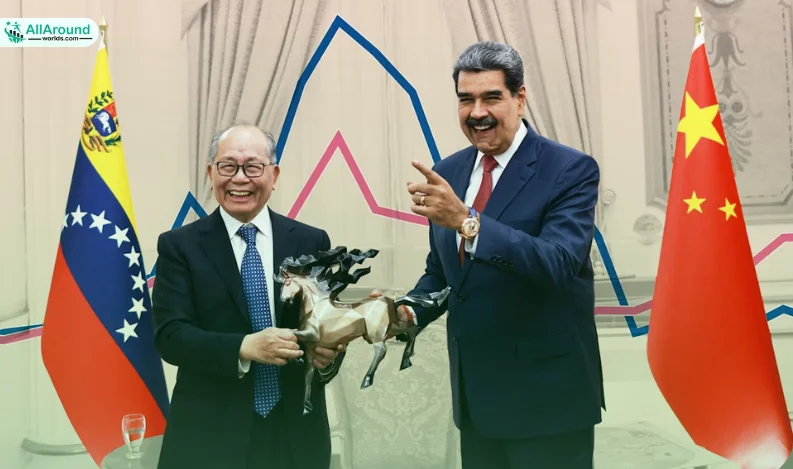
Beijing: China has condemned the United States’ military action in Venezuela, calling for dialogue and restraint, while analysts say Beijing’s immediate priority is safeguarding its economic and commercial interests in the country.
China reacted swiftly following the U.S. strike over the weekend, expressing shock and opposition to the move. Beijing urged Washington to release deposed Venezuelan leader Nicolás Maduro and his wife, and called for a peaceful resolution to the crisis.
At a press briefing on Monday, Chinese Foreign Ministry spokesperson Lin Jian said China maintains “positive communication and cooperation” with the Venezuelan government. He added that Beijing’s willingness to deepen cooperation, including in oil trade, would remain unchanged regardless of developments on the ground.
Lin said Chinese interests in Venezuela would continue to be protected under the law and reiterated China’s opposition to what it described as violations of national sovereignty.
Analysts said the U.S. action places China’s commercial exposure in Venezuela under renewed scrutiny. China is Venezuela’s largest buyer of crude oil, according to industry data, though Venezuela accounts for a relatively small share of China’s overall energy imports.
Zichen Wang, a research fellow at the Beijing-based Center for China and Globalization, said the situation could help China portray itself as a stabilising force globally but also poses risks due to Beijing’s business interests in the country.
“How this unfolds is concerning because China has significant commercial exposure there,” Wang said, warning that uncertainty could affect Chinese businesses across Latin America.
Chinese companies, largely state-owned, have invested about $4.8 billion in Venezuela over the past two decades, according to data from the U.S.-based research firm Rhodium Group. Much of that investment focused on energy projects, particularly during the years following the global financial crisis.
State-owned China National Petroleum Corporation has joint ventures with Venezuela’s national oil company, while private firm China Concord Resources Corp. announced plans last year to invest more than $1 billion in a Venezuelan oil project.
Protecting Chinese nationals and companies remains Beijing’s top priority, said Dong Shaopeng, a senior researcher at Renmin University of China. The Chinese Foreign Ministry said it had received no reports of Chinese citizens being harmed following the U.S. strike.
China has also criticised what it described as “bullying actions” and reaffirmed its policy of non-interference in the internal affairs of Latin American countries. Lin said China does not seek spheres of influence and does not target third parties.
Oil trade imbalance
China remains the top destination for Venezuelan crude oil, according to S&P Global. However, Venezuela accounted for only about 2% of China’s crude oil and condensate imports in 2024, with the bulk coming from the Middle East, according to data from the U.S. Energy Information Administration.
Imports from Iran and Iraq rose during the same period, while shipments from Venezuela declined.
“China is likely to be cautious about being drawn into this conflict,” said Yue Su, principal economist for China at The Economist Intelligence Unit, noting Venezuela’s limited economic importance to Beijing.
Analysts said the episode is unlikely to alter China’s broader geopolitical posture, including its stance on Taiwan. Beijing continues to regard Taiwan as part of its territory and recently conducted military drills around the island.
“This crisis does not change China’s playbook,” said Dan Wang of Eurasia Group, adding that U.S.-China dynamics and expectations around Taiwan remain largely unchanged.




Recent Comments:
No comments yet.