
Most Powerful Women Leaders to Watch Out in 2026
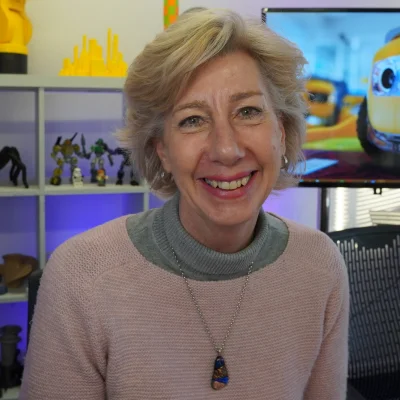
Company: Kai’s Education
Designation: CEO
Country: New Zealand
Being recognised among the Most Powerful Women Leaders to Watch Out for in 2026 is, for Ronel Schodt, less about celebration and more about reflection. It is not a milestone marked by applause, but by perspective. Her journey has never followed a predictable corporate script. Instead, it has unfolded through bold pivots, creative recalibrations, and deliberate risk-taking that shaped her into the leader she is today.
Ronel’s professional path spans film, television, game development, and technology startups, industries where storytelling, systems thinking, and human behaviour intersect in dynamic ways. These formative experiences deeply influenced her leadership philosophy. She learned to design with people at the centre, to build systems capable of scaling, and to prioritise engagement as a non-negotiable element of innovation. What may have once seemed like unconventional career moves ultimately became the foundation of her approach to building meaningful educational technology.
Today, as CEO of Kai’s Education, a New Zealand-founded EdTech company operating across the United States and globally, Ronel leads with a clear and compelling mission: ensuring every child has access to meaningful, future-ready learning, regardless of background, ability, or starting point. Under her leadership, Kai’s Education has evolved from an ambitious concept into an internationally recognised platform delivering screen-free and hybrid robotics tools. These tools teach coding, STEM, and critical problem-solving skills to learners from Kindergarten through secondary school, bridging the gap between theory and hands-on experience.
Building a hardware-plus-software education company comes with complexity. Ronel has navigated global supply-chain disruptions, logistics hurdles, capital constraints, and the intricate realities of working within public education systems. Each challenge demanded resilience and strategic clarity. Leading teams across countries, cultures, and time zones added another dimension to her responsibilities, reinforcing the importance of communication, adaptability, and trust.
One of her most defining leadership lessons has been understanding the balance between momentum and mindfulness. While rapid growth can be appealing, Ronel emphasises that clarity must guide expansion. At Kai’s Education, this principle translates into thoughtful product testing, close collaboration with educators, and solutions designed to function effectively in real classrooms rather than existing merely as compelling concepts. Listening to teachers, observing students, and refining products through real-world application remain central to the company’s growth strategy.
The impact of this approach is evident. Kai’s Education products are now present in thousands of classrooms and have received recognition from global education bodies. A particularly meaningful area of progress has been the company’s work supporting blind and low-vision learners. Through accessible design and strong partnerships, Ronel has helped position Kai’s Education at the intersection of innovation and inclusivity. The company has established strong traction in the United States, secured a solid investor base, and continues to expand its presence in conversations around accessibility and workforce readiness.
Yet for Ronel, success is measured less by scale and more by transformation. It is reflected in moments when a child who struggles with traditional learning discovers confidence through interactive robotics, or when educators share that a solution finally works for their diverse classroom needs. These experiences reinforce her belief that technology in education must serve human potential first.
Her advice to emerging women leaders is grounded and direct: do not wait for complete certainty before stepping forward. Growth often happens alongside learning. Seeking support early, building iteratively, and recognising that leadership is about enabling others rather than possessing all the answers are principles she lives by. Confidence, in her view, is built through action rather than anticipation.
As 2026 approaches, Ronel Schodt exemplifies a new generation of leadership in education, one that blends technology with empathy, ambition with accessibility, and growth with genuine impact. Her work continues to shape how young learners engage with STEM, coding, and problem-solving in ways that are inclusive, engaging, and future-ready. Through courage, curiosity, and an unwavering commitment to meaningful learning, she stands out as a leader whose influence will continue to expand in the years ahead.