Most Powerful Women Leaders to Watch Out in 2026
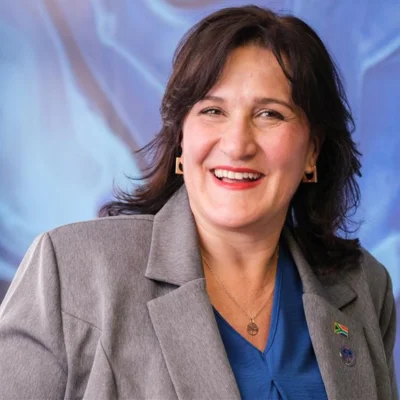
Company: Financial Planning Institute of Southern Africa (FPI)
Designation: CEO
Country: South Africa
When Lelané Bezuidenhout became CEO of the Financial Planning Institute of Southern Africa in June 2019, the milestone attracted attention as a woman stepping into a leadership role within a professional body representing CERTIFIED FINANCIAL PLANNER® professionals. For her, however, the appointment was never about the headline. It was about responsibility. It marked a commitment to upholding professional standards, strengthening ethical accountability, and ensuring that financial planning continues to serve society with integrity and trust.
Her career in financial services began in 1999, when she entered an industry that was technical, competitive, and at times intimidating. From the outset, she was driven by curiosity. She sought to understand not only how financial products functioned, but how financial decisions shaped the lives of individuals and families. This early focus on real-world impact became a defining thread in her professional journey.
A pivotal chapter came during her time at the FAIS Ombud’s office, where she worked within the regulatory framework of the industry. There, she witnessed firsthand the consequences of financial advice gone wrong. Those experiences shaped her perspective profoundly. Regulation, she learned, is not merely procedural compliance; it is protection. Ethics are not abstract principles; they are deeply personal commitments that affect retirement dreams, family security, and life plans. Behind every complaint stood real people whose futures depended on responsible advice. That understanding continues to guide her leadership.
When she joined the Financial Planning Institute in 2014, she did so because she believed in professional standards. She believed financial planning should be recognised as a true profession, grounded in competence, ethics, and accountability. By the time she assumed the CEO role in 2019, she had developed a clear understanding of both the technical architecture of the profession and the human responsibility of leading it forward.
Leadership, she acknowledges, stretches you. It requires decisions that are not always popular and demands the ability to balance the expectations of regulators, members, partners, and staff simultaneously. It calls for resilience, particularly when scrutiny is high and the stakes are significant. Just months into her tenure, the world faced a global pandemic. The Institute had to pivot quickly, protecting members’ professional standing, ensuring continuity of standards, and maintaining trust in a period of uncertainty. That experience reinforced her belief that strong institutions are built not in easy seasons, but in difficult ones.
Throughout her career, she has navigated leadership spaces that have historically been male-dominated. Early on, being the only woman in the room felt daunting. Over time, she reframed it as an opportunity. She recognised that women often bring different perspectives to leadership, asking broader questions and considering long-term societal impact alongside immediate outcomes. Rather than adjusting her approach to fit existing structures, she chose to bring her strengths confidently to the table.
Her leadership philosophy is grounded in preparation, principle, and consistency. It is not about being the loudest voice in the room, but about being informed, ethical, and steady. She acknowledges that leadership comes with moments of doubt and exhaustion, yet she embraces growth as something that rarely happens within comfort.
Under the Institute’s Vision 2030 strategy, “Building Better Futures,” her focus is on elevating financial planning as a respected profession that genuinely serves society. For her, financial planning is not about products or sales metrics. It is about helping individuals retire with dignity, protect their families, and make confident financial decisions. The profession’s role, she believes, is both technical and profoundly human.
One of her greatest sources of pride is seeing more young professionals, particularly women, entering and succeeding in financial planning. Representation matters. If her journey makes the path clearer or more attainable for someone else, she considers that meaningful progress. Leadership, in her view, is not about legacy in name but legacy in systems. It is about building strong governance structures, ethical accountability, education pathways, and partnerships that strengthen the profession long-term.
Balancing leadership and personal wellbeing remains an intentional discipline. As women often carry multiple roles across professional and personal spheres, she focuses on intentional prioritisation rather than striving for perfection. Boundaries, she believes, are not selfish; they are sustainable. Rest is strategic. Vulnerability reflects authenticity rather than weakness. Mentorship has played an important role in her journey, and she is intentional about paying that forward.
To aspiring leaders, particularly young women entering finance, her advice is clear: invest in deep competence and know your craft thoroughly. Protect your integrity, as reputation compounds over time. Do not shrink to make others comfortable. Build networks rather than ladders. Lead with purpose, not position. And allow yourself to grow into leadership rather than trying to perform it.
Becoming CEO in 2019 was not a destination for Lelané Bezuidenhout; it was the beginning of a broader responsibility. Shaping a profession that impacts millions of lives requires sustained commitment and principled leadership. As one of the Most Powerful Women Leaders to Watch Out in 2026, she represents leadership rooted in service, grounded in standards, and dedicated to building better futures for the profession and the communities it serves.