
About
The future of work is being rewritten by artificial intelligence, autonomous systems, aviation, and intelligent technologies. Yet the real measure of progress will not be determined by technology alone. It will also depend on who is prepared to participate in that future, who has access to the skills required to contribute, and who is empowered to turn emerging opportunities into sustainable careers and businesses.
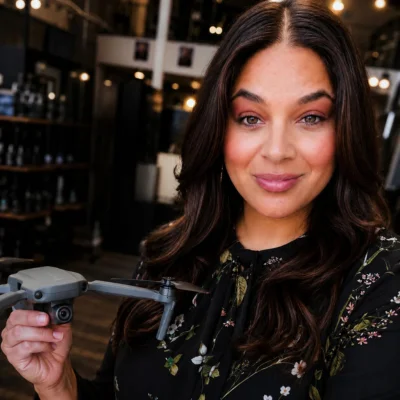
Jamme Alexander, Founder and CEO of Engineering Women, is working to ensure that women and the next generation have a meaningful place within this transformation. An FAA Part 107 Remote Pilot, commercial drone software developer, and AI engineer, Jamme combines technical expertise with a broader commitment to workforce development. Her work focuses not simply on teaching emerging technologies, but on creating pathways that can take individuals from learning and certification to applied experience, workforce readiness, entrepreneurship, innovation, and economic opportunity.
Founded in 2018 and rebranded in 2025, Arizona-based Engineering Women operates at the intersection of technology, workforce development, aviation, artificial intelligence, and emerging technology. Jamme’s vision is particularly focused on expanding opportunities for women and young people who have historically had limited access to technical career pathways. Beginning in Arizona, she is building programs and frameworks with the potential for national scalability as demand grows across AI, aviation, aerospace, autonomous systems, and advanced technology industries.
At the heart of Engineering Women is a clear workforce progression: Learning → Certification → Applied Skills → Workforce Readiness → Employment & Entrepreneurship. Rather than viewing education as an endpoint, the model connects knowledge with practical application and long-term economic possibilities.
This philosophy is reflected in the company’s flagship FAA Part 107 Drone Pilot Academy, an eight-week workforce development program. Participants receive FAA certification preparation alongside hands-on flight training and exposure to AI applications, GIS and mapping, advanced sensors, data collection, career readiness, entrepreneurship, and financial literacy. The intention is to ensure that passing an examination is only one milestone. Jamme wants participants to understand how a credential can become the foundation for practical skills, professional opportunities, innovation, or business creation.
Her approach also recognizes an important reality: technical competence alone does not always translate into lasting career success. People entering rapidly evolving industries must also develop the professional habits, financial understanding, leadership abilities, resilience, and support systems necessary to navigate the workplace and continue progressing.
That understanding led to the Engineering Women Quality of Life Wheel, a whole-person workforce development framework designed to complement technical education. It incorporates effective workplace skills such as AI and machine learning, decision-making, business ethics, time management, and professional development. Behavioral intelligence and leadership are addressed through areas including communication, conflict management, empowering leadership, positive reinforcement, and learning to work through frustration.
The framework also connects participants with career discovery through certifications, internships, educational pathways, industry exposure, and career exploration. Its focus on life systems and wealth building extends the model further through financial literacy, community resources, workshops, economic mobility, and personal and professional support systems.
Engineering Women’s Execution & Output System then encourages participants to translate development into measurable progress. Through S.M.A.R.T. goals and portfolio building, research and project showcases, intellectual property development and scholarships, and future technology deployment, participants are encouraged to create tangible evidence of what they can do. The objective is for them to leave with more than information, with credentials, applied skills, projects, portfolios, professional exposure, career direction, and a framework for continued advancement.
Jamme is also extending this vision to younger generations through NexGen Voice, a youth-focused platform centered on leadership, technology, entrepreneurship, media and storytelling, mentorship, financial literacy, career exploration, innovation, and community engagement. Through publications, projects, events, mentorship, technology experiences, and entrepreneurial opportunities, NexGen Voice introduces young people to possibilities before they formally enter the workforce.
The idea is to encourage them to see themselves not simply as consumers of tomorrow’s technologies, but as potential creators, innovators, founders, engineers, pilots, technologists, and leaders. NexGen Voice therefore serves as an early pipeline into the larger Engineering Women ecosystem, connecting youth exposure and leadership development with future technical education and career preparation.
Together, these initiatives form a broader progression: early exposure leads into career discovery and technical education; training can lead to industry certifications; certifications are strengthened through hands-on projects and applied experience; and those experiences can evolve into portfolios, research, intellectual property, career readiness, entrepreneurship, employment, business creation, and greater economic mobility. Throughout that journey, the Quality of Life Wheel is intended to provide the professional, behavioral, financial, leadership, and life foundations that support sustainable progress.
For Jamme, this work ultimately comes back to participation in a rapidly changing global economy. As AI and autonomous technologies reshape industries, her ambition is to help ensure that emerging opportunities are accessible to people who are ready not only to understand these technologies, but to apply, develop, and lead with them.
As she puts it, “The future of work is being shaped by AI, autonomous systems and advanced technology. Our responsibility is to make sure women and the next generation are not simply watching that transformation happen, but are trained, certified and positioned to help build it.”
Through Engineering Women and its expanding ecosystem, Jamme Alexander is turning that responsibility into a practical model, one designed to connect technology with opportunity, education with application, and emerging talent with the industries shaping the future.