
About
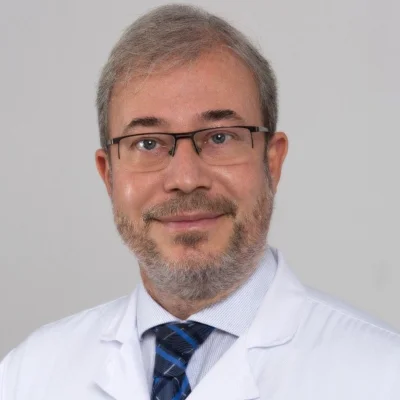
Norberto Santana Rodríguez represents a rare intersection of advanced surgical mastery, translational research, and healthcare entrepreneurship, positioning him as one of the emerging global leaders shaping the future of medicine in 2026. Trained as a thoracic surgeon and lung transplantation specialist, his professional journey reflects a consistent drive to elevate patient care through innovation, precision, and system-level impact across Europe, the Middle East, and the United States.
Graduating in Medicine and Surgery from the University of Las Palmas de Gran Canaria, Spain, he distinguished himself early by securing a top national ranking in the highly competitive MIR examination. His specialization in thoracic surgery and lung transplantation was complemented by a doctoral degree in medicine, awarded with the highest academic distinction. From the outset, his career followed an uncommon path, combining clinical excellence with a deep interest in research, hospital management, and healthcare business development.
A defining early milestone came with the founding of a private medical center in the Canary Islands in the early 2000s, which would later evolve into a high-resolution surgical and diagnostic institution. This initiative reflected not only entrepreneurial vision but also a commitment to modernizing healthcare delivery through advanced diagnostics, minimally invasive surgery, and integrated patient pathways. Over time, this organization expanded in scale, scope, and capability, eventually becoming part of a major European healthcare group, operating with international standards, advanced infrastructure, and a multidisciplinary clinical model.
Parallel to his entrepreneurial work, Norberto Santana Rodríguez played a key role in advancing thoracic surgery and lung transplantation within public healthcare systems. His tenure at leading hospitals in Spain involved active participation in pioneering lung transplant programs, including early clinical applications of donation after cardiac death, as well as experimental and translational research exploring regenerative medicine and lung bioengineering. During this period, he also led the introduction of video-assisted thoracic surgery techniques, helping to transition surgical practice toward less invasive, higher-precision approaches.
His move to the United States marked another pivotal phase, where he joined a major academic medical center in New York to further develop expertise in robotic thoracic surgery and experimental bioengineering. This period strengthened his exposure to cutting-edge surgical technologies, clinical research design, and innovation ecosystems that bridge academia, industry, and patient care.
From there, his leadership expanded significantly in the Middle East. Appointed to senior roles at one of the region’s most internationally recognized hospitals, he led thoracic surgery and lung transplantation services while establishing advanced minimally invasive and robotic surgical programs. His work included introducing novel cosmetic-conscious surgical approaches, expanding transplant capabilities, and training the next generation of regional surgeons. Alongside clinical leadership, he held academic appointments, contributing to medical education and surgical training at leading universities.
In subsequent roles in the Gulf region, Norberto Santana Rodríguez continued to shape national surgical programs, introducing uniportal and perimammary thoracic surgery techniques for the first time in new healthcare systems. His focus on surgeon training, knowledge transfer, and sustainable program development has had a lasting impact on institutional capability and patient outcomes. Recognition from international and regional professional societies reflects the significance of these contributions to both surgical innovation and capacity building.
Beyond the operating room, his influence extends into research and intellectual property, with extensive publication records, leadership of funded research projects, supervision of doctoral work, and development of patented medical technologies. His work consistently emphasizes translation, ensuring that scientific advances lead to real-world clinical improvement rather than remaining confined to academic settings.
At the core of his leadership philosophy is a belief that success in healthcare is rooted in integrity, perseverance, and service. Whether building institutions, advancing surgical science, or training future clinicians, his approach prioritizes patient benefit, ethical practice, and long-term system resilience. Through continuous adaptation to emerging technologies and evolving healthcare models, he has demonstrated how modern medical leadership can balance innovation with responsibility.
As healthcare systems worldwide navigate increasing complexity, Norberto Santana Rodríguez stands out as a global leader whose career bridges surgery, research, education, and enterprise. His work continues to influence how advanced medicine is delivered, taught, and scaled across regions, making him a compelling presence among the emerging global leaders shaping the future in 2026.