
About
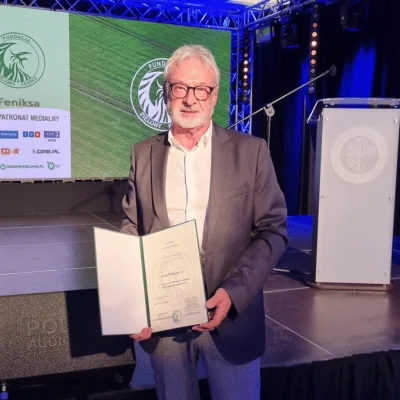
The future of renewable energy will not be shaped solely by ambitious ideas but by leaders willing to challenge long-standing assumptions, embrace rigorous engineering, and remain committed to solving problems others have chosen to accept. Peter Olek, Founder and CEO of Axowind, exemplifies this mindset. His journey is not simply the story of developing an advanced wind turbine; it is the story of redefining how innovation is approached in an industry where reliability, trust, and long-term performance matter just as much as technological breakthroughs.
Peter's professional background spans economics, entrepreneurship, business development, and real estate, providing him with a broad perspective on how industries earlier concepts from achieving lasting success. The research revealed a recurring theme: many systems had not been engineered to withstand the immense cyclic loading experienced by wind turbines operating continuously over decades.
This insight transformed Axowind's development philosophy. The objective was no longer to build another wind turbine; it was to engineer a solution capable of delivering reliable performance, structural integrity, and long-term economic value throughout a service life of 2evolve and why many promising technologies struggle to achieve commercial success. Rather than being driven solely by the appeal of renewable energy, he became fascinated by the gap between innovative concepts and practical implementation. This curiosity led him to explore one of the most overlooked areas within clean energy, Vertical Axis Wind Turbines (VAWTs).
For decades, VAWTs attracted considerable attention because of their potential advantages, yet many projects failed to achieve long-term commercial viability. Structural failures, maintenance challenges, and inconsistent performance diminished confidence across the sector. Instead of accepting these outcomes as inevitable, Peter began asking a different question: why had so many designs failed? He believed that understanding past failures would provide a stronger foundation for future success than simply creating another new product.
That philosophy became the cornerstone of Axowind. Rather than beginning with an entirely new turbine design, Peter and his team dedicated years to studying historical VAWT projects from around the world. They examined documented structural failures, fatigue behaviour, material limitations, maintenance records, and engineering decisions that had prevented 5 to 30 years.
Recognising that this ambition required expertise beyond conventional renewable energy practices, Peter brought aerospace engineering principles into the project. Axowind collaborated with aerospace structural analysis specialist Leszek Scholz, whose extensive experience includes work on globally recognised aviation programmes involving Airbus, Boeing, Lockheed Martin, Bombardier, GKN Aerospace, Hawker de Havilland, and the F-35 fighter programme. This partnership introduced an engineering culture built on validation, evidence, and precision, where every design decision is supported by rigorous testing rather than assumptions.
Peter understood from the outset that commercial success would depend not only on building a working turbine but on creating a complete engineering platform capable of supporting manufacturing, certification, quality assurance, and future product development. Working closely with Leszek Scholz, Axowind developed a comprehensive Product Definition Statement comprising more than 1100 pages of engineering documentation, organised into 36 individual Engineering Memoranda. Together, these documents define every critical aspect of the Ventus III development programme, including design philosophy, structural calculations, fatigue analysis, materials selection, manufacturing methodology, assembly procedures, testing protocols, quality assurance requirements, safety considerations, maintenance philosophy, and compliance with internationally recognised engineering standards.
Rather than relying solely on a successful prototype, Axowind established a disciplined engineering framework intended to support future certification, repeatable manufacturing, technology transfer, and long-term product evolution. This extensive documentation reflects Peter's conviction that world-class renewable energy technologies must be supported by engineering evidence and controlled processes equal to those found in the aerospace industry.
To further validate the company's approach, Axowind partnered with the University of New South Wales in Sydney. Under the guidance of Dr. Sonya Brown and her team, specially manufactured aerospace-grade carbon fibre composite materials underwent extensive static and dynamic laboratory testing. The results not only confirmed the materials' durability under demanding operating conditions but, in several areas, exceeded original manufacturer performance specifications. For Peter, this milestone reinforced an enduring belief that genuine innovation is built on scientific validation rather than marketing claims.
Another key contributor to the Axowind development programme was Ziggy Twardowski, a CATIA design specialist and composite manufacturing engineer whose expertise proved instrumental in advancing the production technology of the turbine's carbon-fibre components. Working with the engineering team, he developed an innovative composite curing process that eliminated adhesive bonding from the manufacture of all major carbon-fibre structural parts. His most significant achievement came during the final autoclave curing stage, where he optimised the interaction of three critical variables, time, temperature, and pressure, to produce integral composite components with superior structural integrity while significantly reducing manufacturing time, labour requirements, and production cost. This breakthrough became an important element of Axowind's manufacturing technology.
Years of research, engineering refinement, modelling, and testing ultimately culminated in the development of the Ventus III 15 kW Vertical Axis Wind Turbine. Every aspect of the turbine reflects the principles that have guided Axowind from the beginning: safety first, durability second, and performance third. While many renewable energy solutions prioritise peak efficiency figures, Peter focused on lifecycle performance, recognising that customers invest not merely in equipment but in dependable energy production over decades.
Yet Peter's vision extends well beyond a single turbine. He believes the future of renewable energy lies in distributed hybrid systems that seamlessly integrate wind generation, solar photovoltaic technology, Battery Energy Storage Systems, and intelligent energy management. Such integrated solutions can provide greater resilience, maximise energy utilisation, and enable businesses, industries, agricultural operations, and remote communities to become more energy independent. Rather than competing, these complementary technologies can work together to create a more reliable and sustainable energy ecosystem.
The journey behind Axowind has demanded persistence, patience, continuous learning, and unwavering discipline. Developing a commercially viable renewable energy platform required years of testing, redesign, investment, and overcoming technical challenges that many would have considered insurmountable. For Peter, these experiences have reinforced an essential leadership principle: trust is earned not through promises but through evidence, consistency, and delivering solutions that stand the test of time.
Today, Axowind stands at the threshold of commercial deployment. The engineering foundation has been established, the technology validated, and the long-term vision clearly defined. The company's next objective is to work alongside strategic investors, manufacturing partners, renewable energy developers, and EPC organisations that recognise the commercial value of integrating proven Wind, Solar PV, and Battery Energy Storage Systems into a new generation of distributed hybrid energy solutions. Peter believes that the energy transition will be accelerated not by individual technologies working in isolation, but by strong partnerships capable of bringing innovative engineering to global markets.

