
About
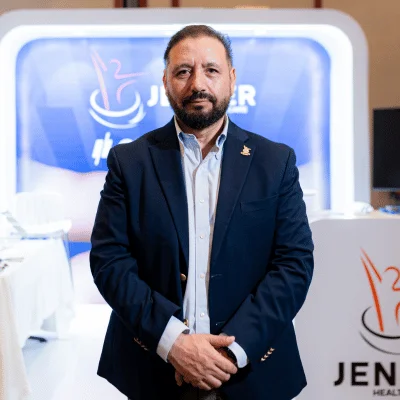
The future of healthcare will not be shaped solely by groundbreaking medical discoveries or revolutionary technologies. Its true transformation will depend on visionary leaders who can bridge the gap between innovation and real-world patient care. As artificial intelligence, medical technology, and digital health continue to redefine modern medicine, the greatest challenge is no longer developing new solutions but ensuring they reach the people who need them most. Few leaders understand this reality as profoundly as Luis Cruces Espejo, whose career has been dedicated to connecting technological advancement with accessible, high-quality healthcare across Latin America.
Luis has built a distinguished career that uniquely combines clinical experience with executive leadership. Having worked alongside surgeons in highly specialized procedures, including total gastrectomies, reconstructive urology, and cochlear implant surgeries, he gained firsthand insight into the complexities of patient care within the operating room. This rare exposure, coupled with years of experience building, scaling, and leading medical technology companies, has given him a comprehensive understanding of healthcare from both clinical and business perspectives. Today, as CEO of DOHOS & JENNER in the Dominican Republic, Founder of Jenner Healthcare in Chile, and a doctoral candidate at IE University in Spain, he continues to shape the future of healthcare innovation throughout Latin America and the Caribbean.
Throughout his journey, Luis has recognized that the greatest challenge facing healthcare is no longer scientific discovery itself. The region already possesses world-class physicians, sophisticated hospitals, and access to remarkable medical innovations. Yet countless patients still experience delays in diagnosis, treatment, and life-changing procedures. In his view, the true bottleneck lies in what he describes as the "last mile", the critical stage where approved medical technologies must successfully integrate into healthcare systems before they can positively impact patients' lives.
This belief forms the foundation of both his professional mission and his doctoral research, which focuses on improving quality within last-mile medical device distribution. His work seeks to address the often-overlooked processes that determine whether innovation ultimately reaches the bedside safely, efficiently, and sustainably. For Luis, every year a technology remains inaccessible represents lost opportunities to improve or even save lives.
Over the course of his career, Luis has helped introduce numerous advanced medical technologies to Latin American markets, including minimally invasive surgical solutions, urological laser systems, vascular endografts, and high-complexity digestive surgery technologies. These experiences consistently reinforced one important lesson: innovation alone does not transform healthcare. Its true value emerges only when technology becomes seamlessly integrated into clinical practice, supported by trained professionals, reliable logistics, sustainable financing, and coordinated healthcare ecosystems.
As artificial intelligence rapidly reshapes global healthcare, Luis sees enormous opportunities for meaningful progress. Rather than viewing AI as a replacement for physicians, he believes it serves as a powerful tool that enhances clinical judgment and improves operational efficiency. Artificial intelligence is already transforming how patients access health information, engage with healthcare providers, and make informed decisions. Within hospitals, it streamlines administrative processes, optimizes logistics, supports clinical decision-making, and allows healthcare professionals to dedicate more time to what matters most, the human connection with patients.
Looking ahead, Luis believes the next decade will not be defined by a single technological breakthrough but by the convergence of multiple innovations. Artificial intelligence, robotic surgery, personalized medicine, intelligent clinical coordination platforms, and international collaboration among healthcare specialists will collectively redefine how care is delivered. When these technologies are implemented thoughtfully and responsibly, they have the potential to create healthcare systems that are more connected, more efficient, and ultimately more compassionate.
His leadership philosophy extends beyond technology itself. Through innovation initiatives spanning Chile, the Dominican Republic, and several other regional markets, Luis actively promotes collaboration between physicians, healthcare institutions, technology companies, entrepreneurs, and industry stakeholders. He understands that lasting transformation requires more than innovation, it demands strong ecosystems capable of delivering that innovation consistently and equitably. Behind every successful medical advancement lies an intricate network of logistics, regulatory compliance, traceability, reimbursement strategies, professional training, and patient access. These interconnected elements ultimately determine whether technological progress fulfills its intended purpose.
Luis remains optimistic about Latin America's future as a growing center for healthcare innovation. He believes the region possesses extraordinary talent, expanding technological capabilities, and increasing opportunities for collaboration. By strengthening healthcare ecosystems and improving the pathways that connect innovation with patient care, Latin America can become a global leader in delivering advanced, accessible medicine.
For Luis Cruces Espejo, innovation is measured not by the sophistication of a technology but by the difference it makes in people's lives. His career continues to demonstrate that the future of healthcare depends on leaders who can successfully connect science, technology, and human care into one seamless system. By building those essential bridges between innovation and access, he is helping shape a future where advanced medicine becomes not merely an achievement of science, but a reality for every patient who needs it.

